September 30
We drive toward Shiraz now on our way to the ancient heartlands of Persia. This is a quiet day, just getting out of Yazd, into the Zagros mountains, doing some miles to get closer to Persepolis. The route out of town is easy and we manage to get some engine oil of the right thickness and another chain to fasten the spare tyre. As always the shopkeepers are interested in the car and very helpful.
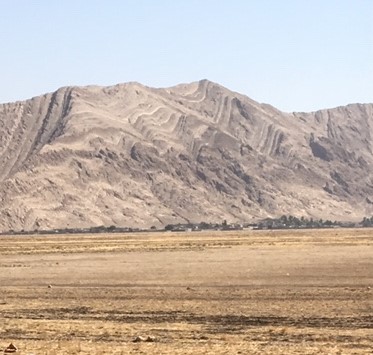
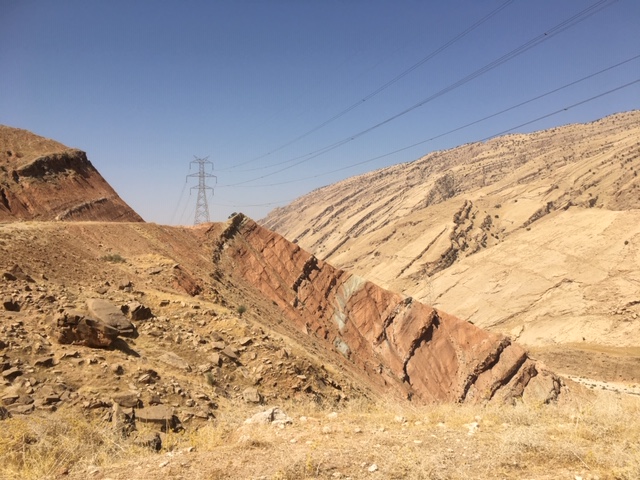
We enjoy going into the mountains, they are rough and have interesting folds and structures.
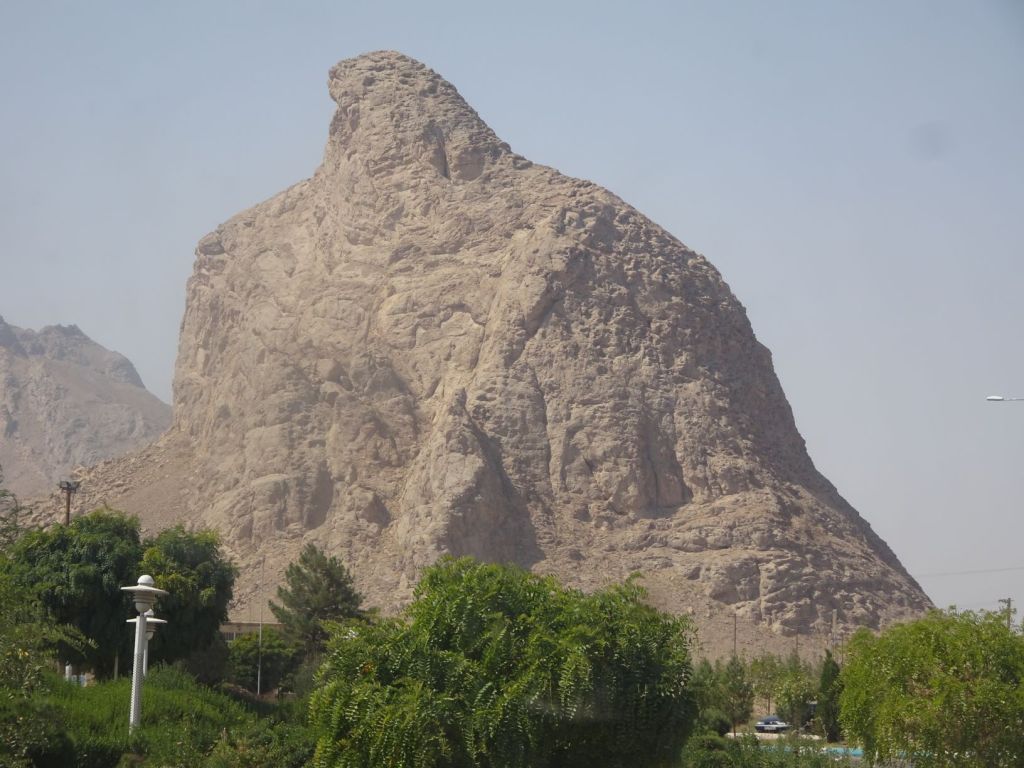
This whole mountain range is still going up and is known for its ‘folded mountains’.
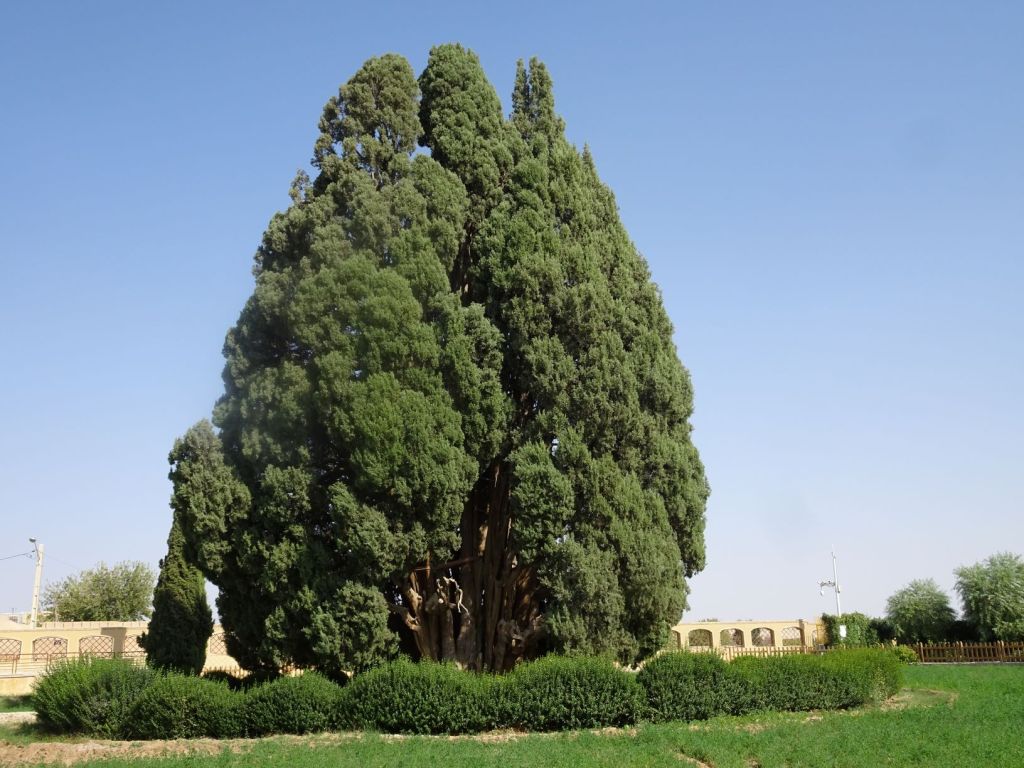
Our only stop today is to visit a 4500- year old Cypress tree that is in very good nick. Apart from its girth you would not know this is such an ancient living being. It must have been watered well or have its roots in an old qanat to have survived this long.
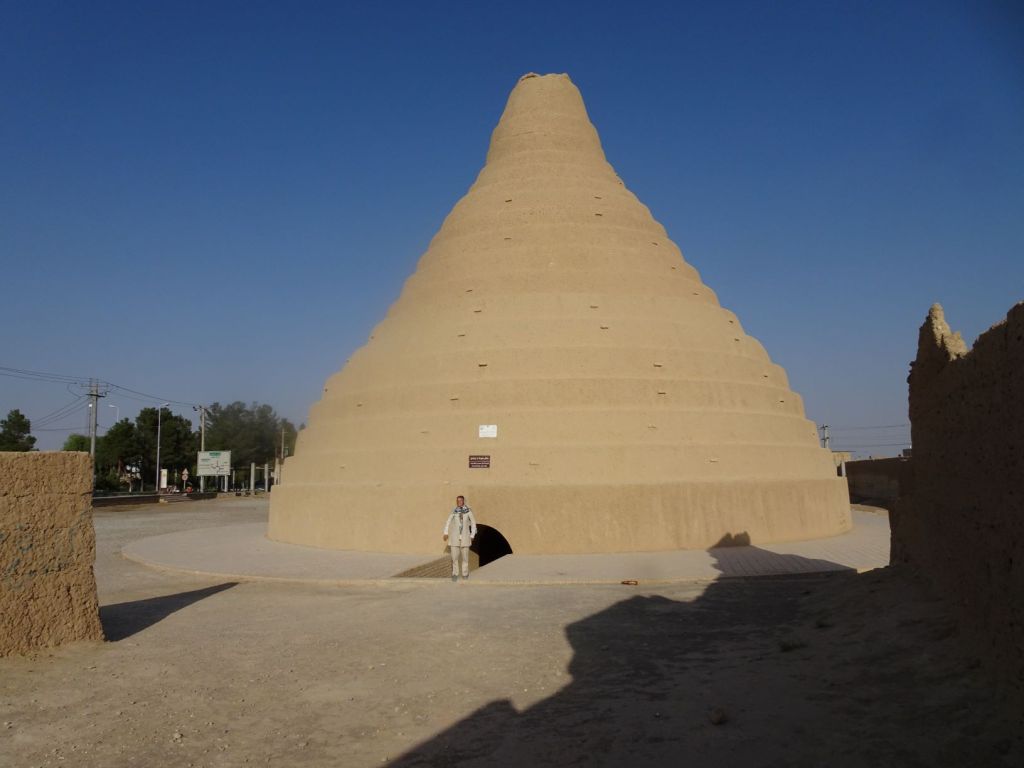
We also see an icehouse where people used to make ice in winter and then store it in summer. It has a beautifully shaped high roof that helped to keep the air cool inside. It is interesting how different these are from the icehouses we know in Scotland which were largely underground.
Then onwards to our camping place on a lake near a mosque. Will the car start in the morning? We better make sure we have some sloping road ahead in case we need to push it.
October 1
Today we drive to Persepolis with several stops along the way to see graves of kings.
Towards the end of the seventh century BC, the Medes emerged as a powerful nation, vanquished the Assyrians, and created a mighty kingdom in western Iran and northern Mesopotamia.
In 550 BC, they submitted to Cyrus the Great, who founded the Iranian Empire. He was the son of a Persian prince and a Median princess. Cyrus built a capital in his homeland and named it Pasargadae after the name of his royal clan.
Cyrus died fighting his nomadic cousins, the Scythian of Central Asia. His son Cambyses added Egypt, Libya, and part of Ethiopia to the Empire, which became the largest known in history at the time extending from the Mediterranean in the west to the Indus in the east.
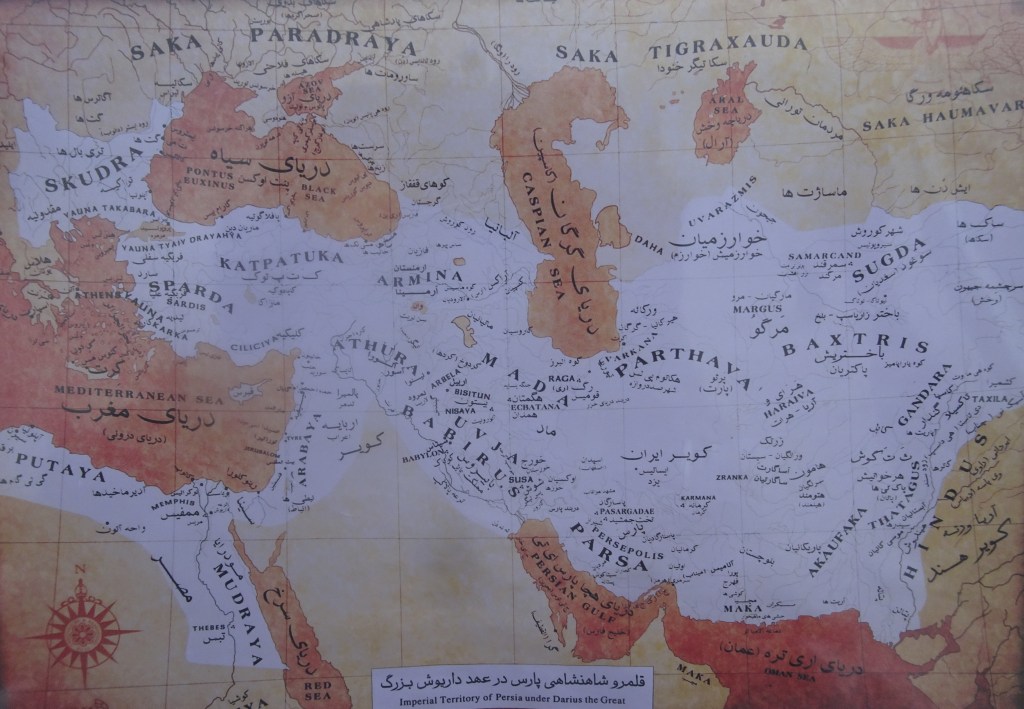
After a struggle after the death of Cambyses, his cousin Darius took the throne and reigned from 522 – 486 BC. Darius started building Persepolis a task that was finished by his son Xerxes. Persepolis was one of the two capitals of the Achaemenid Empire, the other one was Babylon. Pasargadae was also maintained as an important centre.
The function of Persepolis was mainly ceremonial; every year during Spring time, delegations from the various part of the kingdom came to Persepolis in honour of the ‘King of Kings’ and bring presents.
Within the Achaemenid Empire the nations lived prosperously under their satrap (governor) and were free to express their cultures and religious beliefs. Cyrus is mentioned in Jewish scriptures as the ‘Liberator King’ for that reason.
In 330 BC the Empire was destroyed by Alexander the Great.
First stop is at the grave of Cyrus at Pasargadae.
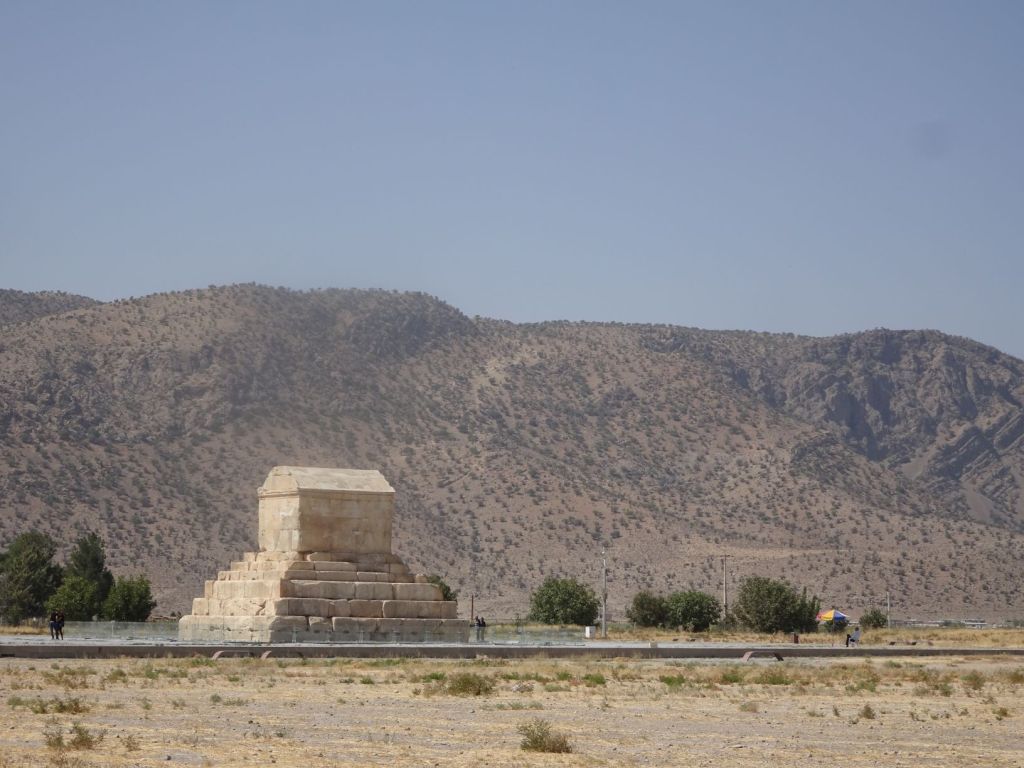
This was the capital city of his reign. Unfortunately there is little left of the ancient city, but what is left is the impressive tomb of Cyrus. This must have made some impression on those who would come to visit the Persian lands in the past, as it certainly impresses us now. The tomb stands in a vast flat area with nothing to distract from its presence.
Workmen are busy laying new paving and it is obvious that they are preparing this site for easy access and modern tourism. Unfortunately the many souvenir shops are not quite up with this: they all sell the same things, replicas of statues and a couple of tourist guides. But where can we find a small leaflet about the site in English? The descriptions of the tomb and the ruins on site are written on glass panels and are hard to read. This is a common issue we find: the explanations in museums and historical sites are poorly translated and difficult to read and the beautiful stories that could and should be told are not made clear enough to the (foreign) visitors. Perhaps it would be easier if we could read Farsi, but here also those signs are in poor condition. And while all these modern additions are failing, the tomb of Cyrus still stands, its huge stone blocks unmoved even without cement, all those 2500 years!
Then we go on to Nasqsh-Rustam to see more graves of kings. These are hewn into the rocks close to Persepolis. Each of the three graves has elaborate carvings depicting important victories in battles. The most important of these graves is the one of Darius.
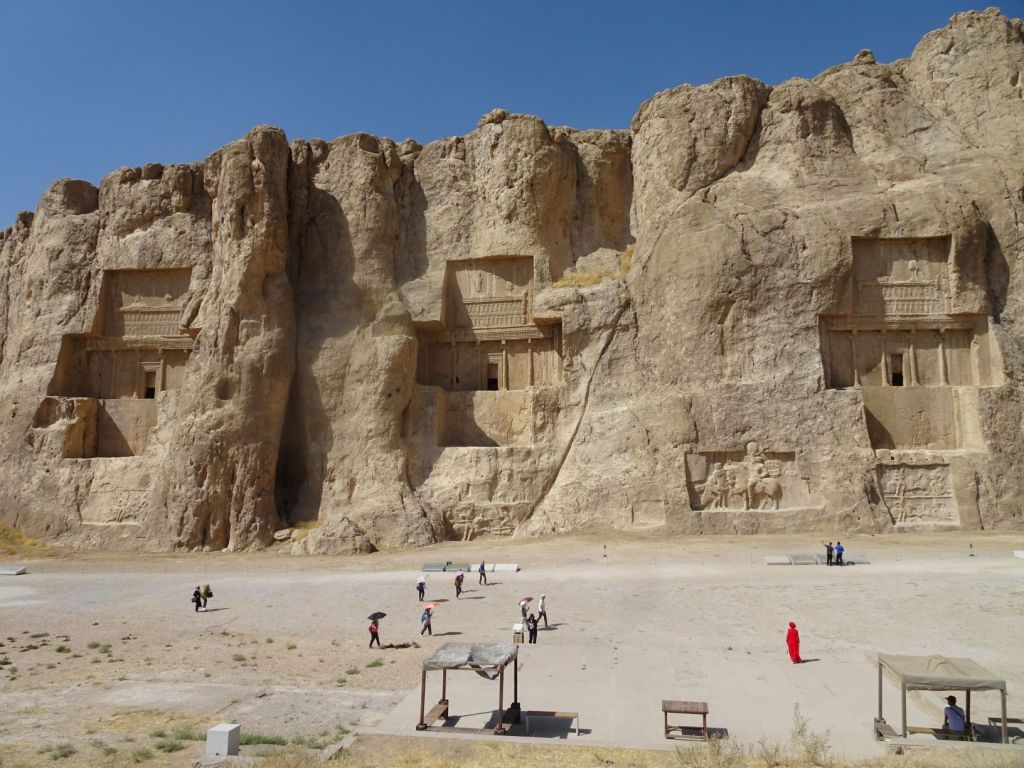
Apart from the Achaemenid tombs there are bas reliefs from Sassanian times, and even remnants of Elamite reliefs!.
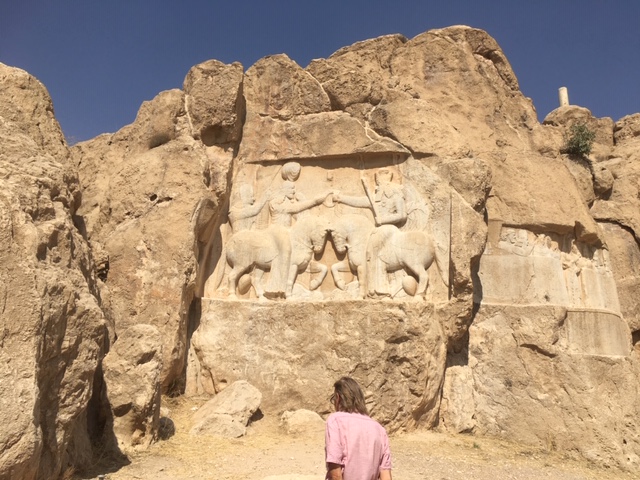
This site is truly impressive. The carvings are high up the rockface and we need the binoculars to get a good look. But then the detail becomes clear. They are remarkably well preserved and everything is right in proportion. How on earth did they do this? And how long must it have taken to make these reliefs? Each grave had tombs for several family members and there must have been a lot of jewellery and gold in them too. All this has long gone, but thankfully the carvings are still here for us to enjoy and marvel at. We practise the names of the Achaemenid kings: Cyrus, Cambyses, Darius I, Xerxes, Artaxerxes, Artaxerxes II, Darius II, and Darius III.
These are the kings that build and held court at the next city we visit: Persepolis.
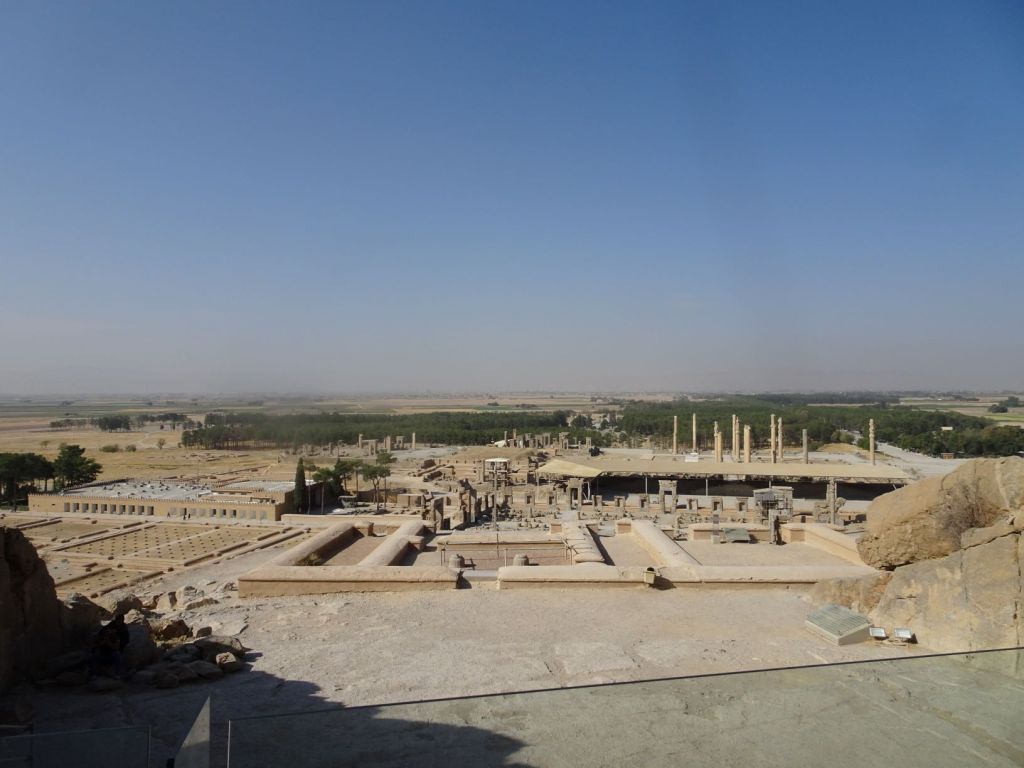
We arrive early pm as the planned guided tour starts at 3 pm. Our guide takes us up the steps to the platform where the entrance to the palaces used to be. The great arch has graffity on it, signatures of more recent visitors including some well-known ones such as Stanly before he went looking for Livingstone in Africa!
Most of Persepolis was destroyed by Alexander ‘The Great’ (how ‘great’ is it to kill and destroy??), but there is enough left to get a sense of its grandeur.
The most impressive are the stairs leading up to the great hall where the king would receive delegations from all the peoples of his empire.
Delegations from all across the Empire would travel to Persepolis to celebrate Nowruz, the Iranian New year, and present gifts to the king.
Nowruz is celebrated until this day by people in Iran. The going of winter with the arrival of spring is depicted on the staircase by the lion attacking the bull symbolising the defeat of Winter by Spring.
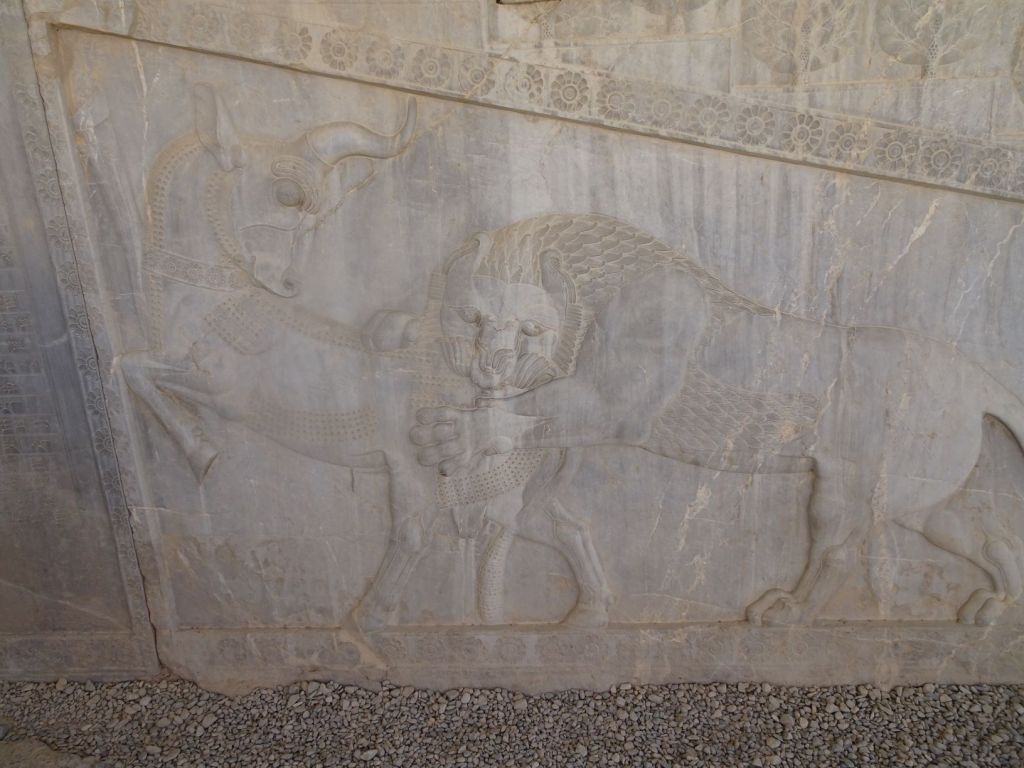
The façade of the southern wing of the staircase is ornamented with a frieze depicting twenty-three delegations bringing exotic gifts to Xerxes.
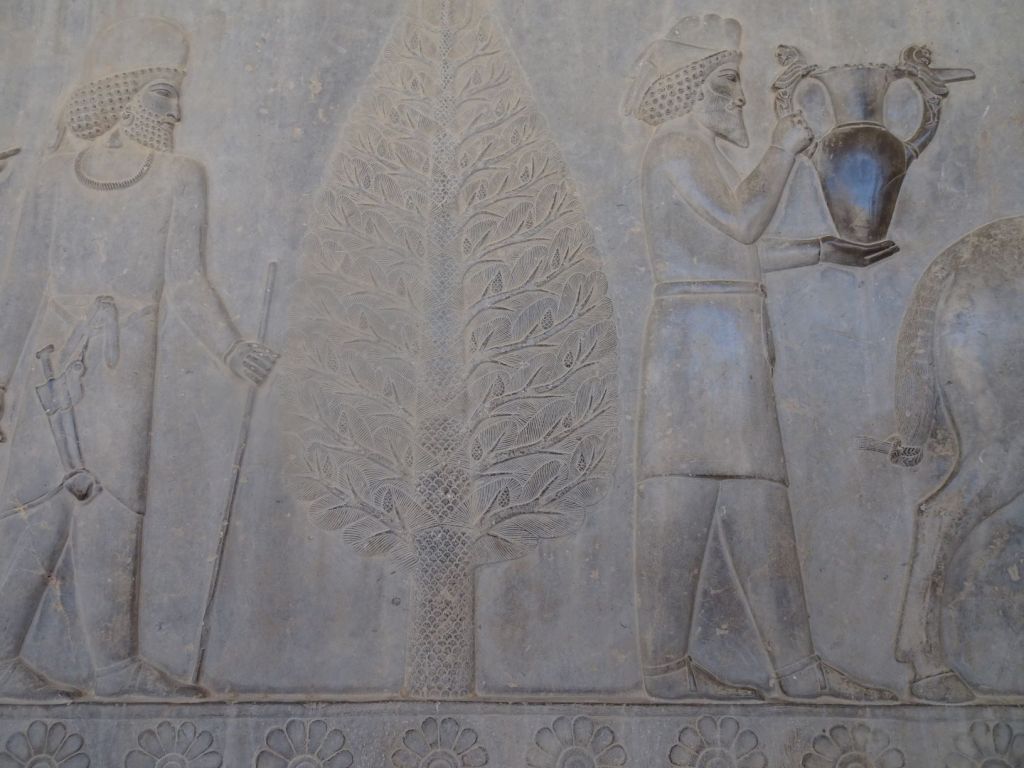
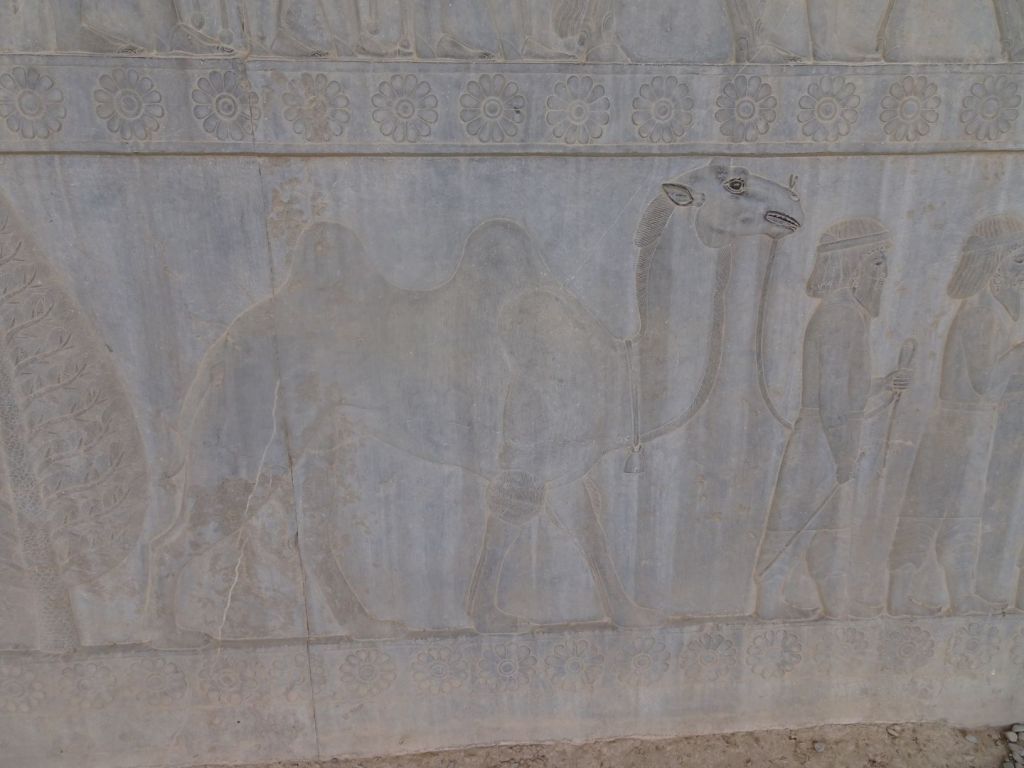
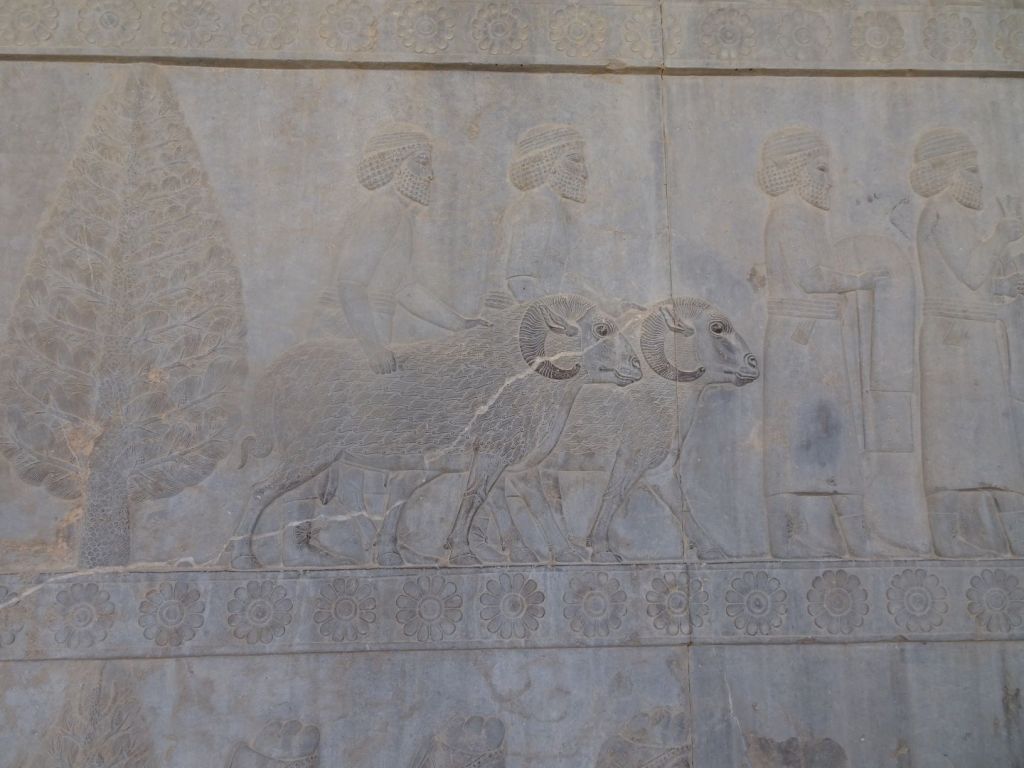
On the other side of the staircase we find the immortal guards; they are the personal army of the King consisting of 10.000 soldiers. Any number of casualties are replaced to make up the number of 10.000.
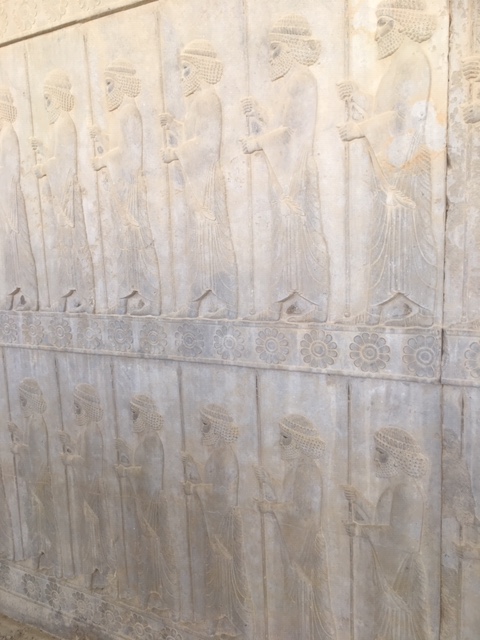
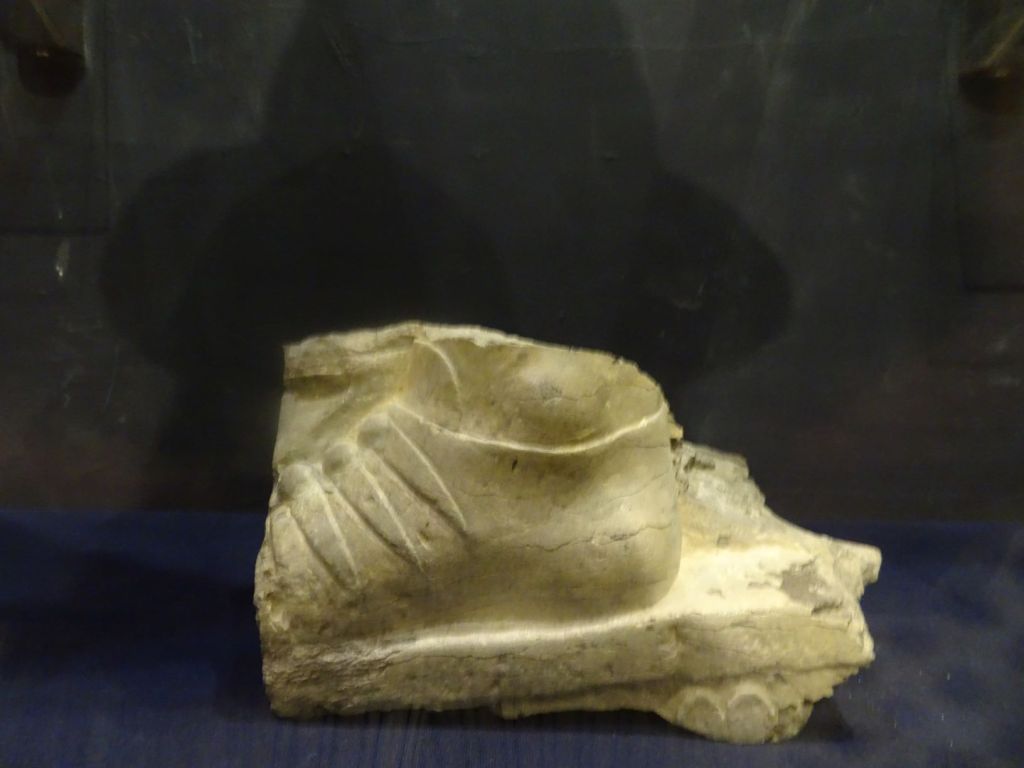
A striking feature of the soldiers are their shoes. Adidas has taken its brand logo from it!.
We finish the excursion at sion at 5 pm. On our way out the low sun shines on a relief that depicts Xerxes on a stroll, accompanied by his minders to keep him comfortable and out of the sunlight; what a picture this is!
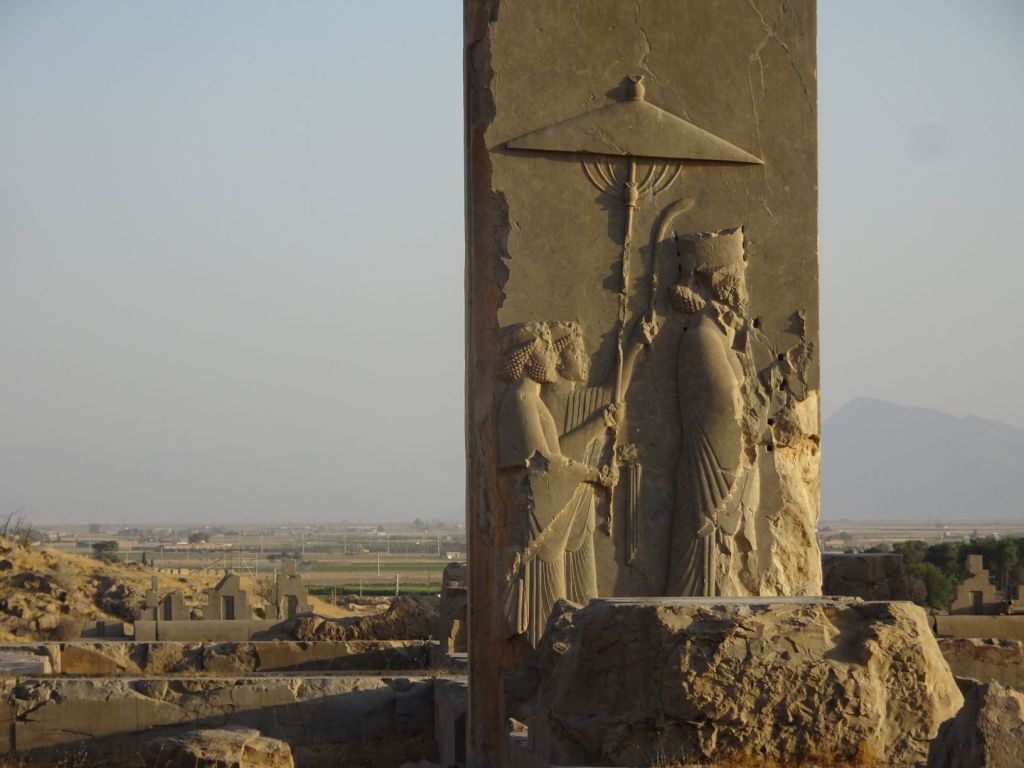
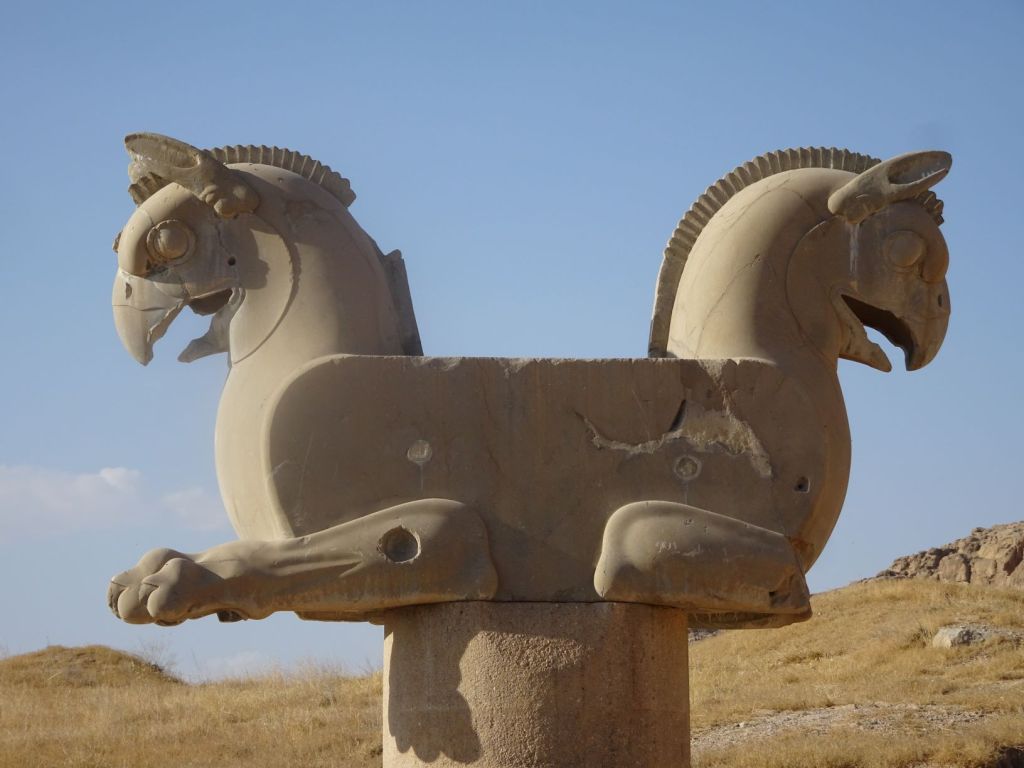
We go back to the Mog to eat. It stays busy all evening and we go out to explore why there are so many cars. We see groups of people everywhere along the 4 km straight road leading up to Persepolis. This appears to be the place where locals hang out and where young men drive their cars. BBQs with families everywhere and waterpipes galore. Party time at Persepolis. It is good to see how people enjoy this impressive site. We go back to see how it is lit at night, but that is a little disappointing, perhaps deliberately, but there is hardly any light at all. We are tired and sleep well despite the noisy outdoors.
October 2
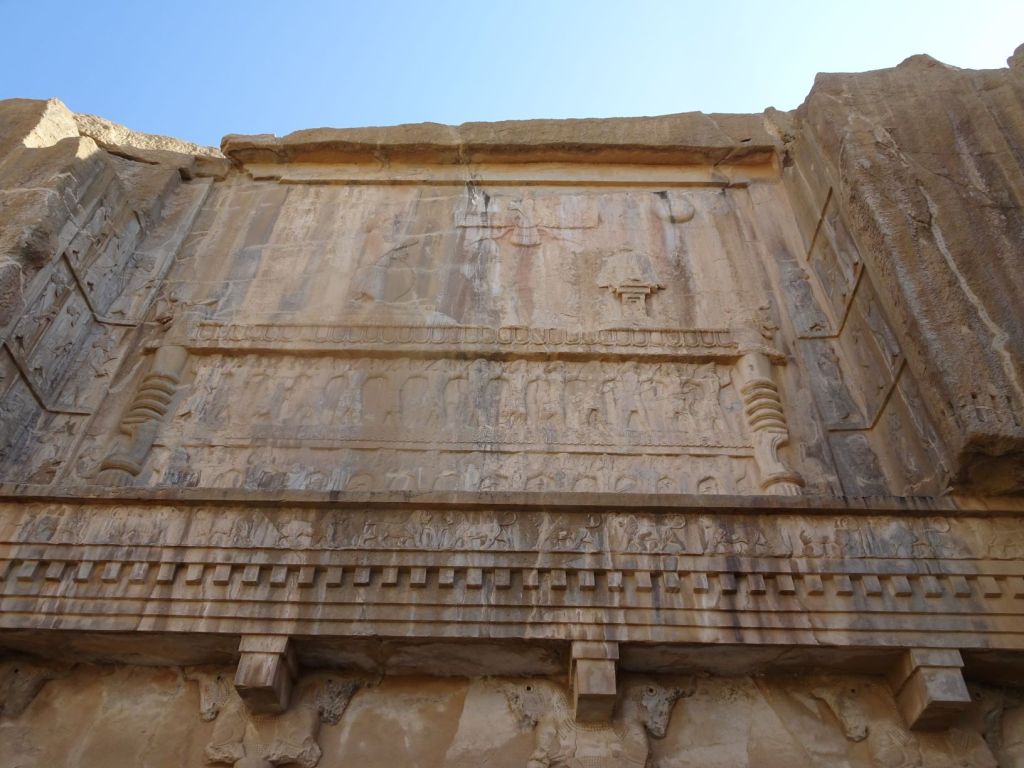
We go back to the site to have another look in the morning and climb up to one of the graves that tower above the site. It is already getting hot and it is only 8 am. The view from the tops is wonderful and the relief over the grave again illustrates the many peoples that the Achaemenids ruled over.
It is even more impressive to see a second timeround. This will stay with us forever.
Back at the car we see the first local visitors: guys with cars and waterpipes have arrived again. Two are right in front of the Mog. Both sides are curious but they do not speak english and we get nowhere. It can be a bit of a struggle to enter into conversation with strangers all the time. We are keen to get to know people and find out more about Iran, but we also need some privacy. And now Miep is in need of a pee…..
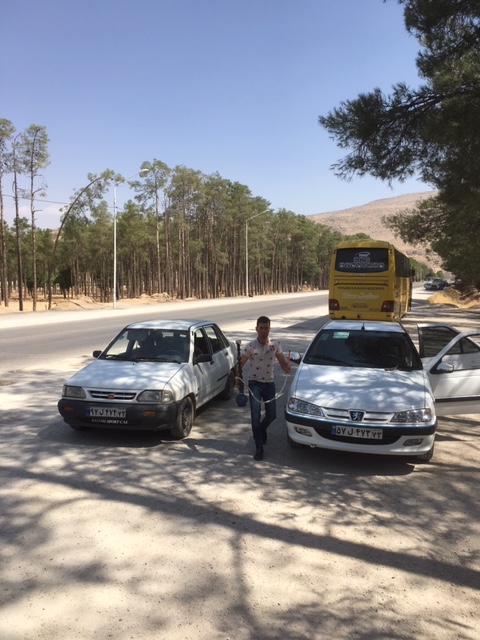
From Persepolis, we drive to Shiraz. The city has a population of 1.8 million people and is the capital of the Fars province.
It is one of the oldest cities of ancient Persia, first mentioned on Elamite clay tablets 2000 BC when it was referred to as ‘Tirazis’. Regular sound change over the years has produced the modern Persian name ‘Shiraz’.
The city grew prominent from the 10th century, and became a centre of the arts from the 13th century onwards. It was shortly the capital of Iran during the Zand Dynasty between 1750 and 1800.
Two famous poets originate from Shiraz; Hafez and Saadi. It is the city of poets, literature, wine and flowers. No wine today however…..
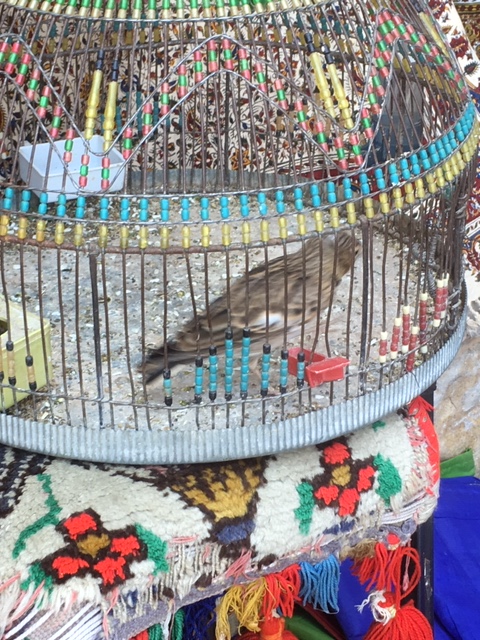
We arrive early pm. We really struggle with the heat over the past days and are in need of some shade. Driving into town we see signs for the Eram garden and we decide to stop there. Shiraz is also known for its gardens and this one has become the botanical garden for the local University. Finally we start to see some birds in Iran. And something else Shiraz is famed for are rozes and nightingales, you see then on tilework and it is the emblem of the city. So far during this journey we have not seen many birds. Here, at last, are trees and now we see birds, albeit not nightingales. We only see them later locked up in birdcages near the bazar!
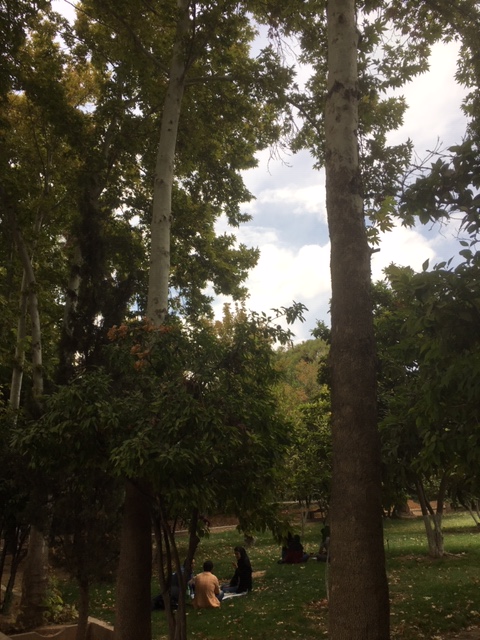
The garden is full of people sitting on the grass, reading, picnicking, or just walking. A good atmosphere. We take our time and have a detour walking through the local neighbourhood. There are parts of the university and many dead-end streets. Good to get lost in.
After a good outing we make for our camping spot at a hotel. It turns out to be a good location, walking distance from cafes and with a free car wash included!
We have a shower and go in search of somewhere to eat. A nice café is just round the corner. The waitress nearly embraces us: ’welcome, welcome’. Simple fare, but tasty and in a nice outdoor setting where we are the only tourists.
This is worrying: Shiraz should be busy this time of year when the temperatures begin to drop (still high thirties, but bearable), but the tourists are not here. The boycott and the threat of war have kept people away and many have cancelled. Very bad for the local economy. We still have access to our blog via the VPN Saeed installed and we work on this in the comfort of the hotel lobby. We manage to get our first post of Iran out.
October 3
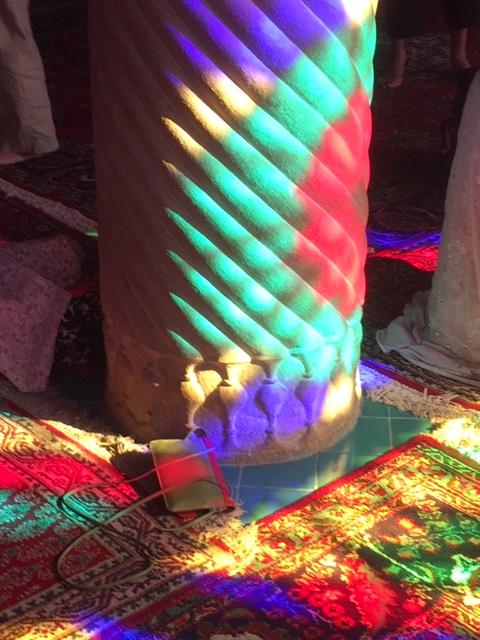
Today a tour of Shiraz. First stop is the ‘pink mosque’ where morning light hits the stained glass wndows throwing light on the floor as if broken through a prism.
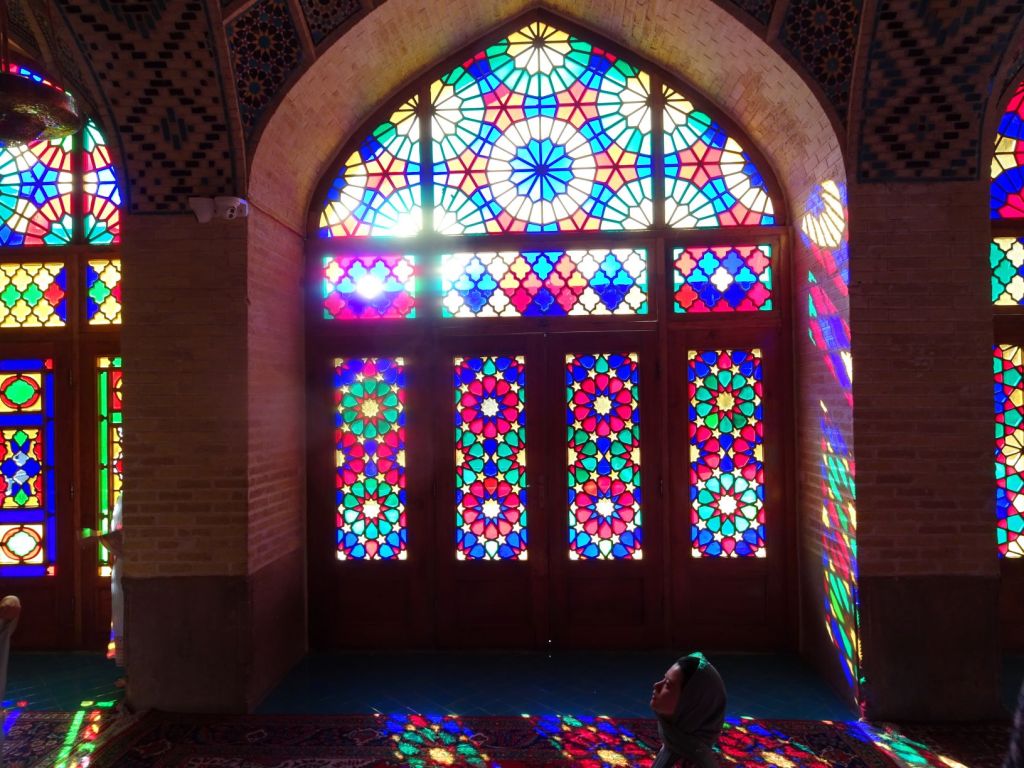
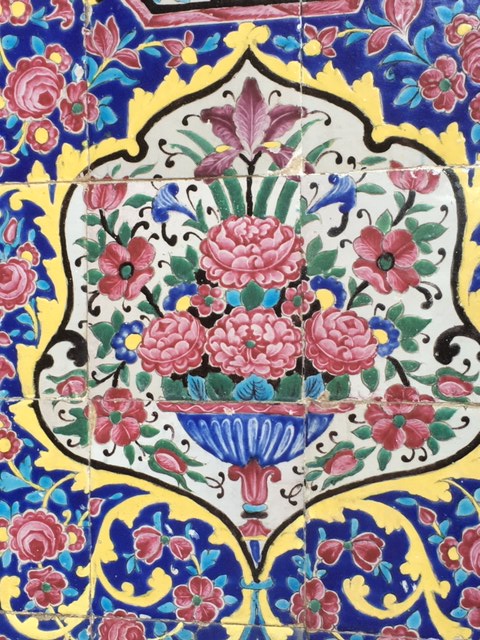
The outside tiles are beautiful. Different types of rozes and lilies all in pink, blue and yellow. It is an exercise in using colour that would not go amiss at the Shetland woolweek!
Then we visit a lovely garden with a pavilion.
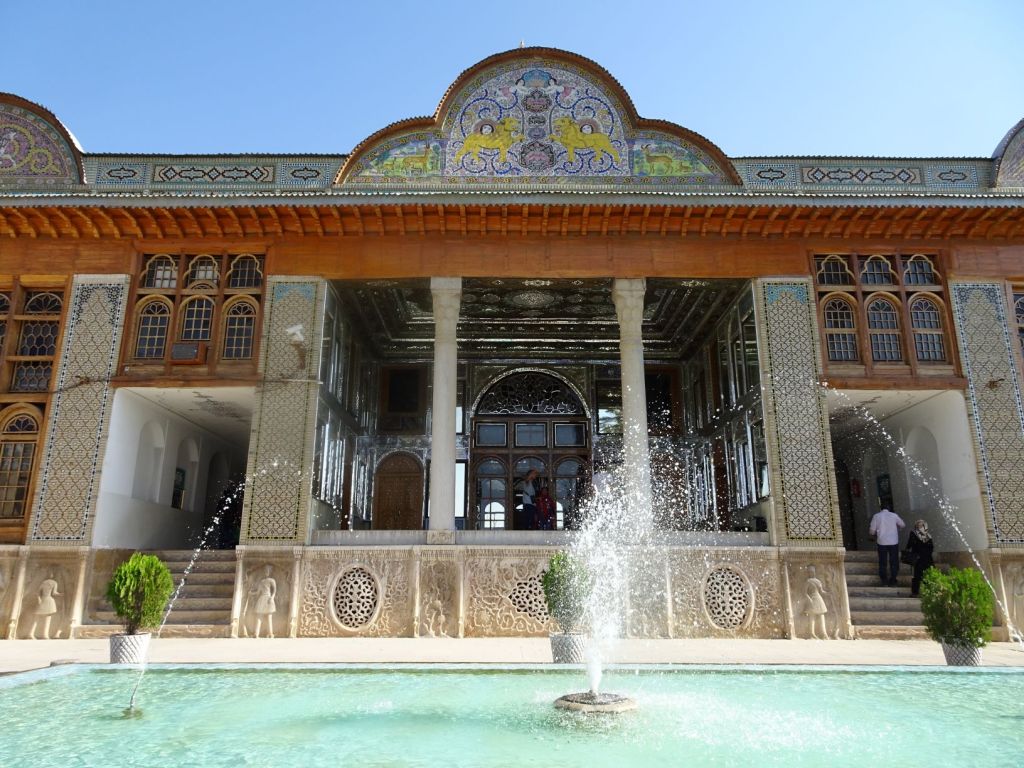
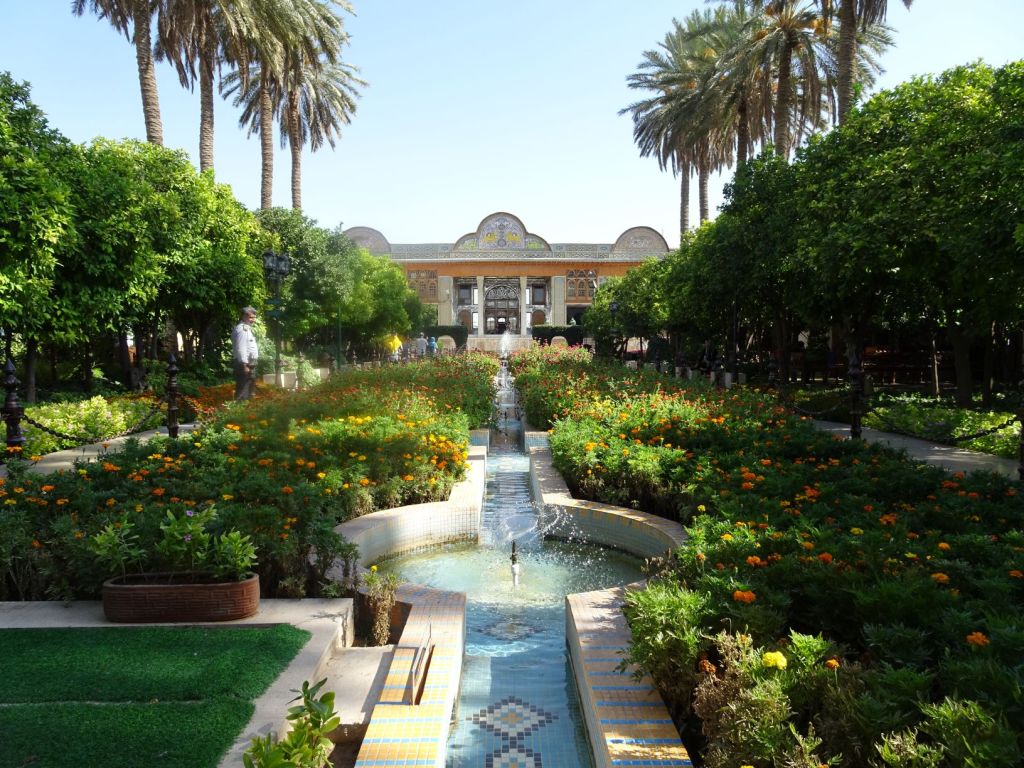
Commissioned by the Qajar Dynasty (again) it houses nice handicrafts in the cellars and also in several outbuildings. We see miniature paining (birds painted on small feathers), tile making and jewellery making and have a nice glass of fresh pomegranate juice before going on to the citadel.
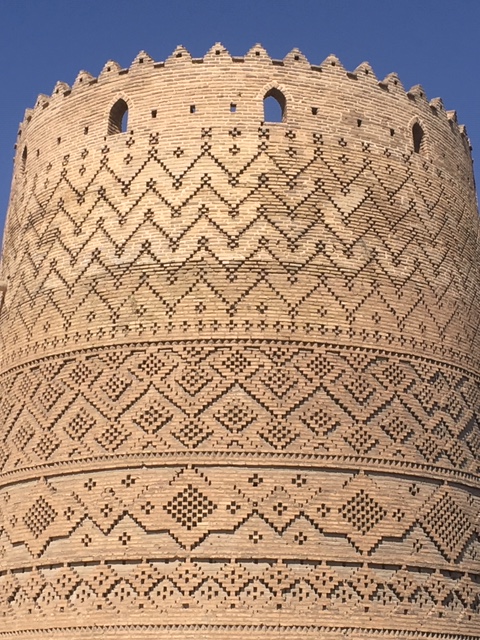
This former palace was a prison for political prisoners until 1979 and pretty much all the interior décor was destroyed by the prisoners before they were released. More handicraft in the rooms that remain. It is largely the making of boxes with inlaid wood. Our guide is losing us all the time and we miss a lot of explanations, but never mind, it is sometimes best to explore on your own.
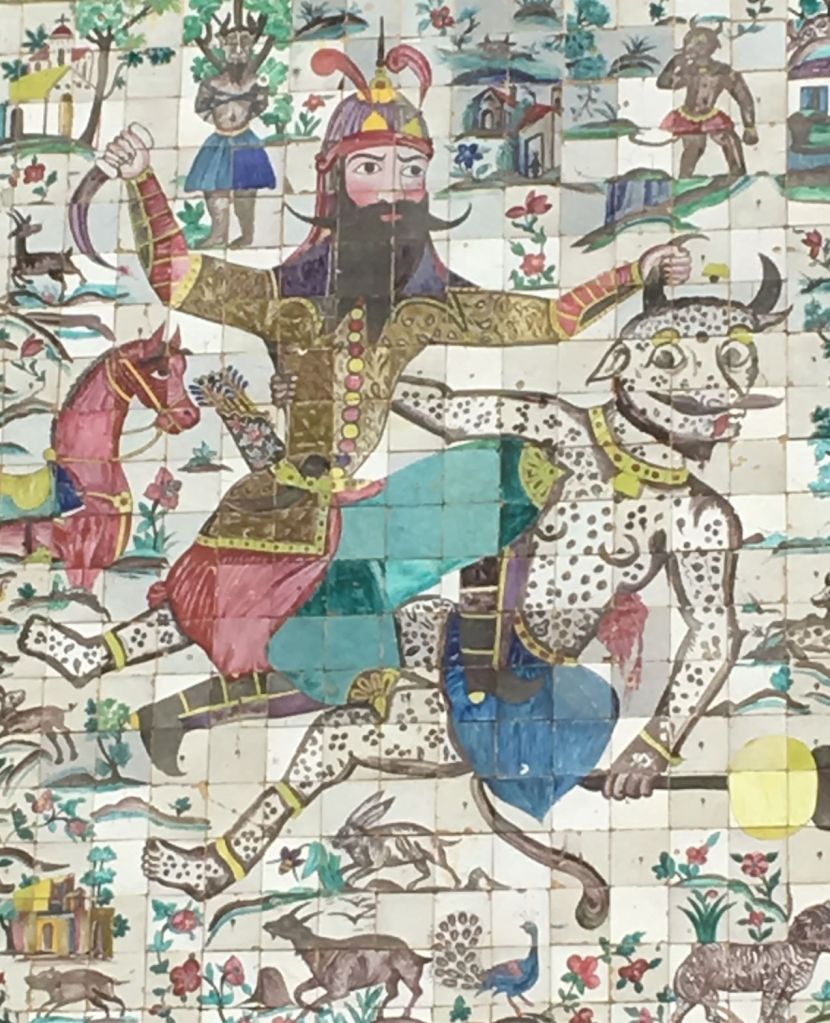
We move on to visit a bathhouse.
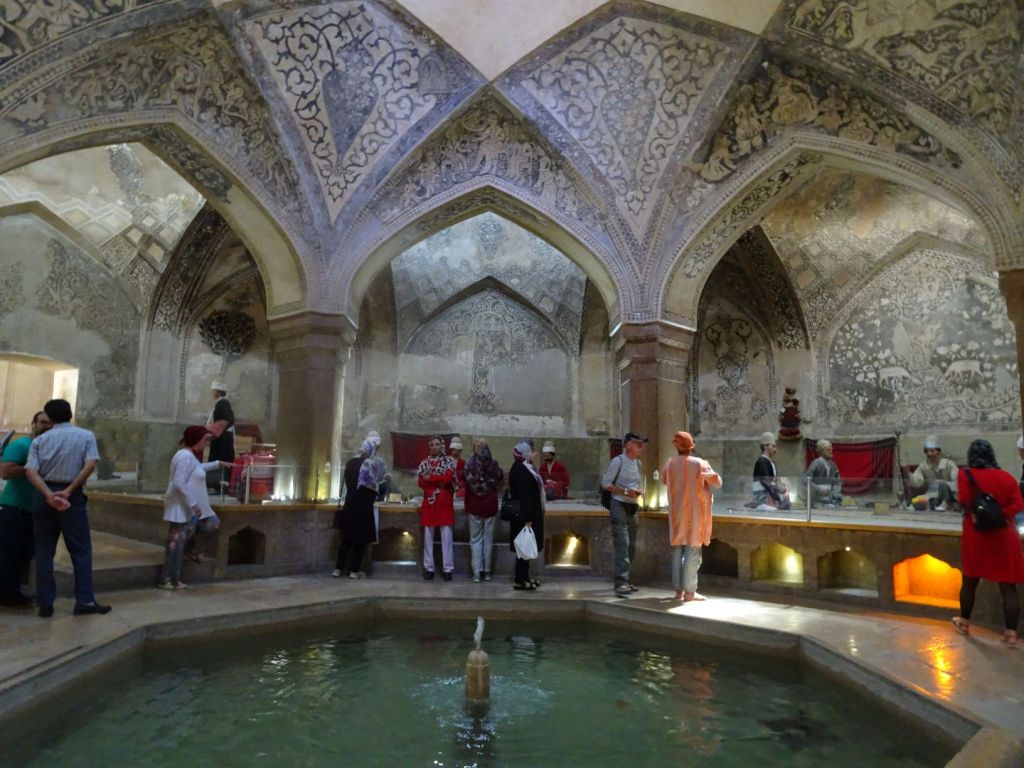
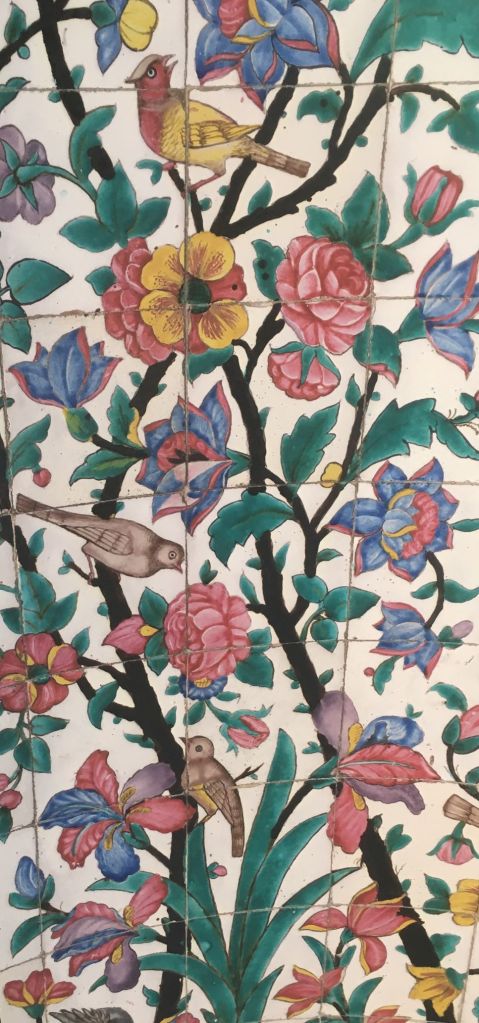
Then the bazar, which is nice and has fine architecture and nice internal courtyards, and finish with a garden that houses the tomb of the famous Iranian poet Saadi. This is another fine example of tilework, this time with many birds amongst the flowers.
We buy ice cream in a place recommended by our guide. Aparently people queue up right round the corner in summer. No wonder, it is difficult to purchase: first order at one counter, then pick up somewhere else. But we do not know what is for sale and we do not speak Farsi. Our ice cream is not what we thought we ordered, but they insist this is the saffron ice that is so famous. But it is white and gloopy and unbelievably sweet. We can barely finish it between the two of us.
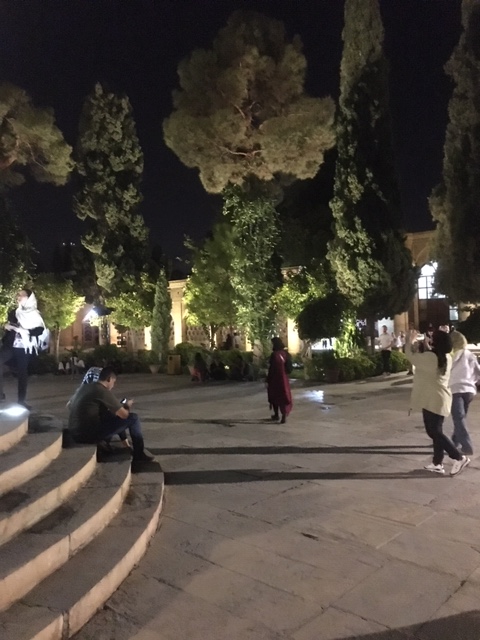
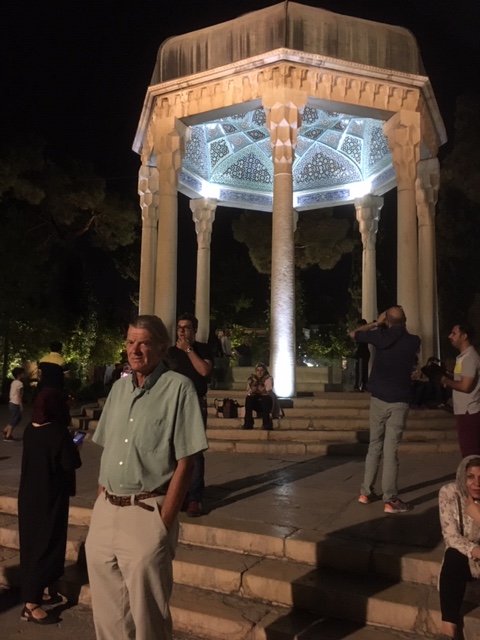
In the evening we walk from our camping spot to the tomb of another famous Iranian poet, Hafez. Wow, this is an atmospheric place. It is already past 9 pm, but it is full of people in the beautiful park around the tomb. People of all ages keep coming in, pay their respects at the tomb and then sit, talk, make music, have coffee. Children play on the smooth granite steps, babies are brought along, old people climb up with walking sticks and often visibly emotional. This is how much poetry lives in Iran and how much people respect and value their writers.
We have another melon milkshake at the roadside just next to our camping spot. What a day!
October 4
We drive north today, we are starting our route out of Iran. First we have another go at our blog and manage to finish the section to Teheran. We are well behind, but it feels good to get another post out and let people who are reading it know we are well and having a very good time here. No sign of any unrest despite the sabre rattling you read about in the papers, We drive out of the city along the highway, literally, this is mountain terrain, and we see, as so often before, the many building projects that have stalled amidst the economic malaise.
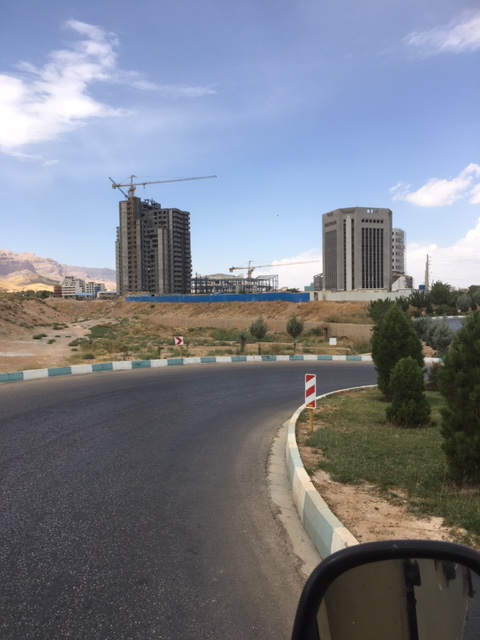
On and on the road goes and as we climb out of the city we keep seeing it down below. Finally we are out in the country and we see the vineyards Shiraz is famous for.
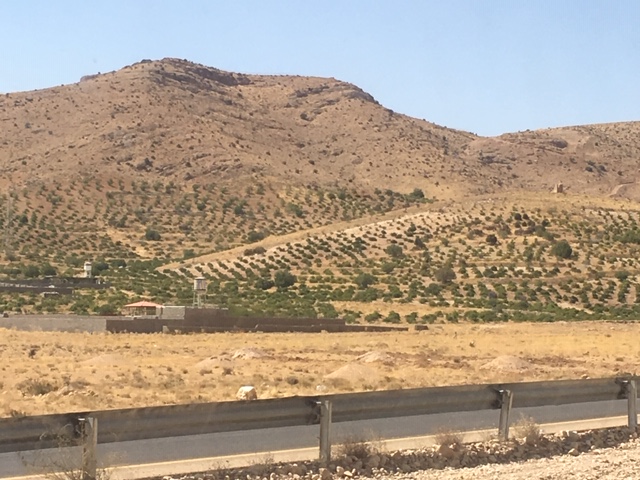
And then the road stalls with the grapes. We need to taste them and wow, they are so sweet. Nothing like the wine we know, just sweeter than sweet red grapes. We buy a large bag and the seller is adamant we get the very best ones! Sustenance en route.
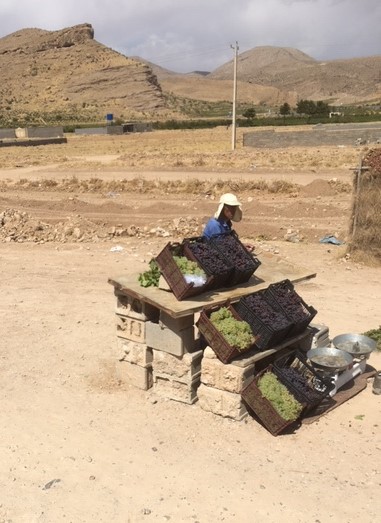
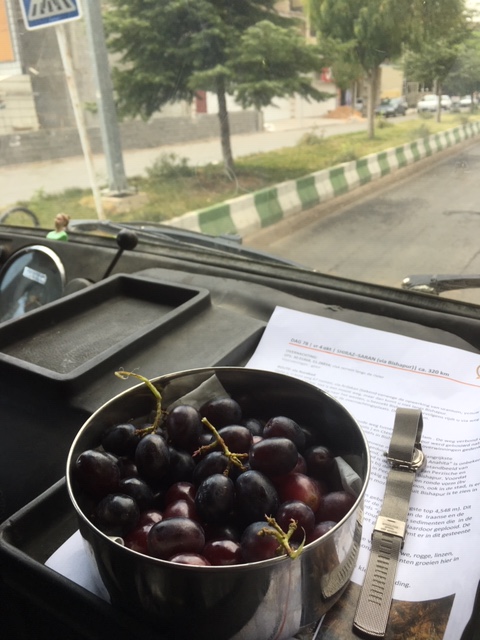
Our destination today is a small village high up in the mountains. We have left late and decide to just stop for lunch halfway, no visits, just the landscape to enjoy today. We stop along a river with the first green banks we have seen for some time. It is still bone dry everywhere around here. People are sitting all along the bank having picnics. But not as we know it, sitting in the grass. Here they sit on small raised concrete platforms, or simply on the dry ground, just beside their car and amidst the debris of those who were there before. It is messy and we do not understand why people would come all the way from Shiraz with its beautiful parks to sit here in the filth. But they do, it is a holiday spot we hear.
We have our lunch and want to move on but again the Mog will not start! Miep asks for some help pushing it and a whole busload of folk gets out and gets the car going again. No more stops now or at least keep the engine running!
The final stretch of the drive is going up a very steep road. We are now in an area of agriculture but also of nomads. The people here wear different clothes, more colourful. They are out in force to bring in the harvest, mainly rice. It is harvested manually, but then brought to the villages on pickups and with tractors. Whole families work in the fields.
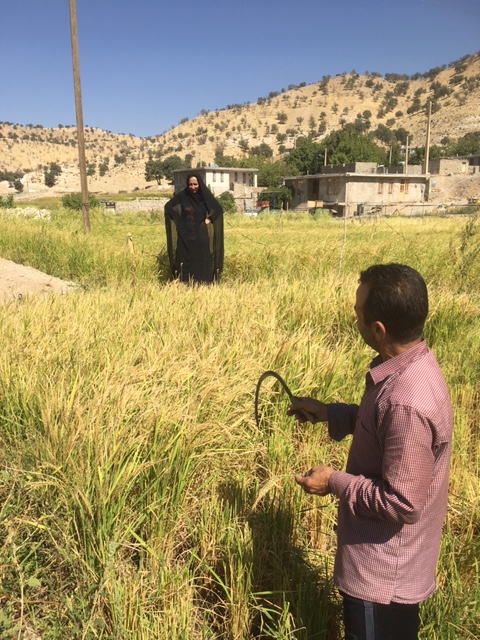
We plod on, it is slow going and the road is narrow and full of cars and agricultural machinery. Road stalls sell apples here. As the sun is setting we finally get to our camping spot on top of a small hill above a village called Saran. We do not even know its name and as always we are the last to arrive. It is relatively quiet and the view is great, but it is a sorry old park we are in. Rusty playground. No longer fit for use. We have driven all afternoon and let it all be. It is dark and we just have enough energy to eat and then sleep.
October 5
When we wake up, the sun is shining and the air is cool and crisp. A horse takes charge of its own water supply by ripping a tap of the sink on the campsite.
We drive further north west today, into the lands where the civilization has truly started. We are heading for Izeh today, ultimately on our way to Shush, the place where the Elamites had their capital, then named Susa. But more of that later.
Today it is Izeh. We drive right through the Zagros mountain range. The hill sides are covered in trees, all at equal distances from each other as if planted.
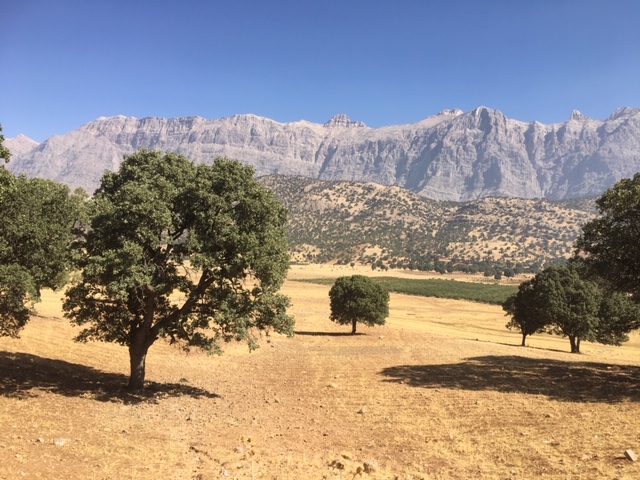
There is no undergrowth and no young trees. How will this forest survive? And what are these trees? There is a lot of discussion in the group and we settle on Persian oak.
The road descends steeply into a wide valley where the rice harvest is also in full swing. Cut by hand, but transported by combine harvester.
The road is good and we make progress towards the regional capital of Lordestan. When we enter the town we see large crowds of men and there is a lot of shouting when we turn into the road to take us to Izeh. Stones on the road and small fires. It takes us a little while before we realise we have driven right into a riot. People are warning us to turn back and we do. Then a car stops right in front and a guy gets out showing us a police badge. He is in plain clothes but clearly there to keep an eye on things. He drives in front guiding us to the police station where he tries to persuade them to let us into the compound. But to no avail. The armed uniformed police look very worried. This riot is getting out of hand and we need to leave.
We are told to head north rather than west. It is only after we set off that we realise there is no road back to our original destination Izeh if we indeed take the route north and we stop outside town to ask where a minor road that circumvents the town will be safe to travel. A coffee shop owner offers to drive us in the right direction. He does not speak English and is constantly asking his nephew via his mobile to translate for us. First we head back into town, but he soon sees this is not the way: fires are burning on the street and we need to stay away. Then we head for the minor road, but he is not sure this is right either. We simply do not know whether these demonstrations are just local or perhaps in the wider area and take his word for it. We are not keen to drive north if not essential; we have set out sights on Susa and to get there we must travel west.
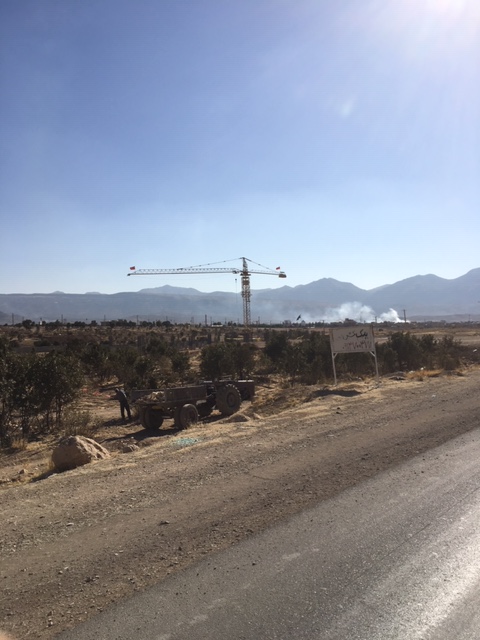
He offers to take us to his house to wait until things have died down, and we reluctantly agree. It is getting later and we rather get on our way. Then, after a very long drive through the outskirts over tens of road bumps, he manages instead to take us to the right road, past all the troubles. We are on the way to Izeh at last and it seems quiet. Then the messages start coming in on our group app. Many others got stuck and some have indeed headed north. Others managed to get through town before things got out of hand. The group is now split up.
We drive through beautiful mountain scenery, past many police checkpoints where armed police wave us through.
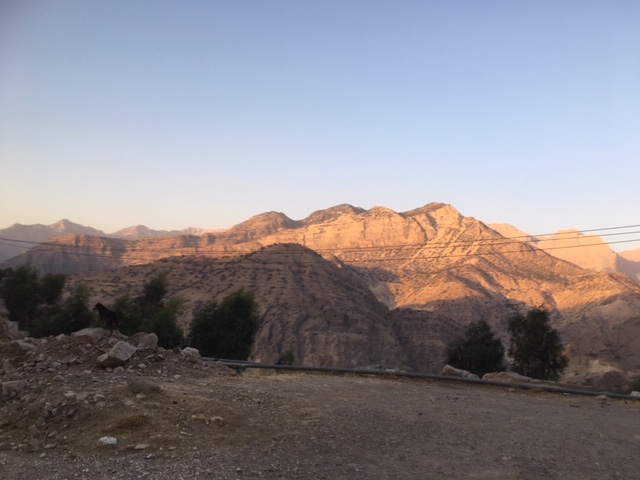
Now we know for sure there is no unrest further up the road. The area is poor, we see a huge contrast with the rich Shiraz of just a day or two ago. We get to Izeh just before dark and are pretty exhausted. Yet another day where we only just manage to get to our destination and hardly had time to stop or eat. But we are there and we are safe.
October 6
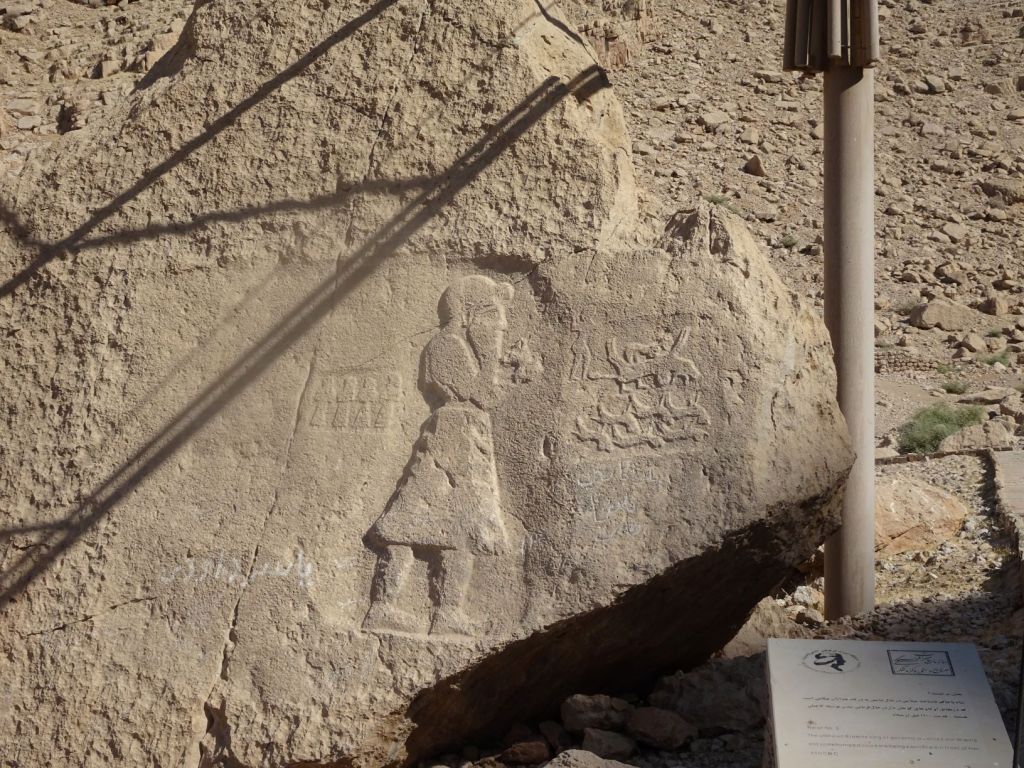
Dogs were barking all night, the echoes resonating all the way down the valley. Thankfully being tired helped to sleep through most of it. When we wake up we see the dogs, they were guarding several flocks of sheep and goats up the hills around us. We are camped in a great spot, just under the steep rockface on which several base reliefs from the Elamite era are carved, 1500 BC!!!
We go up to have a better look but then see that three of the campers that left early have come back. What is going on? It turns out they have been called back by our tour guides. They have received advice from the tour operator in Teheran that the area we are heading to is not safe! We are advised to head back in the direction the police sent us yesterday. But if we do that we will miss Sush and the area of the Elamites completely. And what is the reason? Was it just because of the local riot of yesterday? An impromptu meeting is called, but Miep is so annoyed about this development she cannot bring herself to go.
Roelf goes instead but finds out that the group is already resigned to take the advice from the tour operator in Teheran, without gathering further local information. We are a bit disappointed that the group, who set out to travel to Iran to see the cradle of civilisation is so quickly persuaded to skip this part of the trip. What has changed since we booked this trip? This area in the west has seen some unrest for ages. It is a poor area and people feel neglected by central government. Their problem is not with us, the tourists. On the contrary, one of their sources of income, especially in this time of the year, is tourism.
One of the campers has not returned and we decide to phone them to find out what the situation is further along the way. They say it is totally quiet and they heard from locals that the demonstrations yesterday were just in Lordestan. By now all the campers have gone and we are the last standing. We are sure: we want to go to Shush and we will join the other camper later tonight. We inform the tour guides and explain we have taken this decision for ourselves and take all responsibility.
Before we set off we finally get to see the bas reliefs that we came to Izeh for. They are impressive: scenes of kings making offerings, animals clearly visible. There must have been bones galore here at one time, but now it is just live sheep roaming amongst these carvings.
Some car repairs are essential before we can finally go. With all the road bumps we went over yesterday the radiator support has broken off. Visions of Iceland where it fell right into the fan and started to leak like crazy. Not so this time, but it requires ties to bind it and we hope there is no leak.
Then we can go at last. It takes some time to get clear of Izeh, endless road bumps again; we hope everything stays attached to the Mog. But then we are in the open. The road is great and the landscape spectacular.
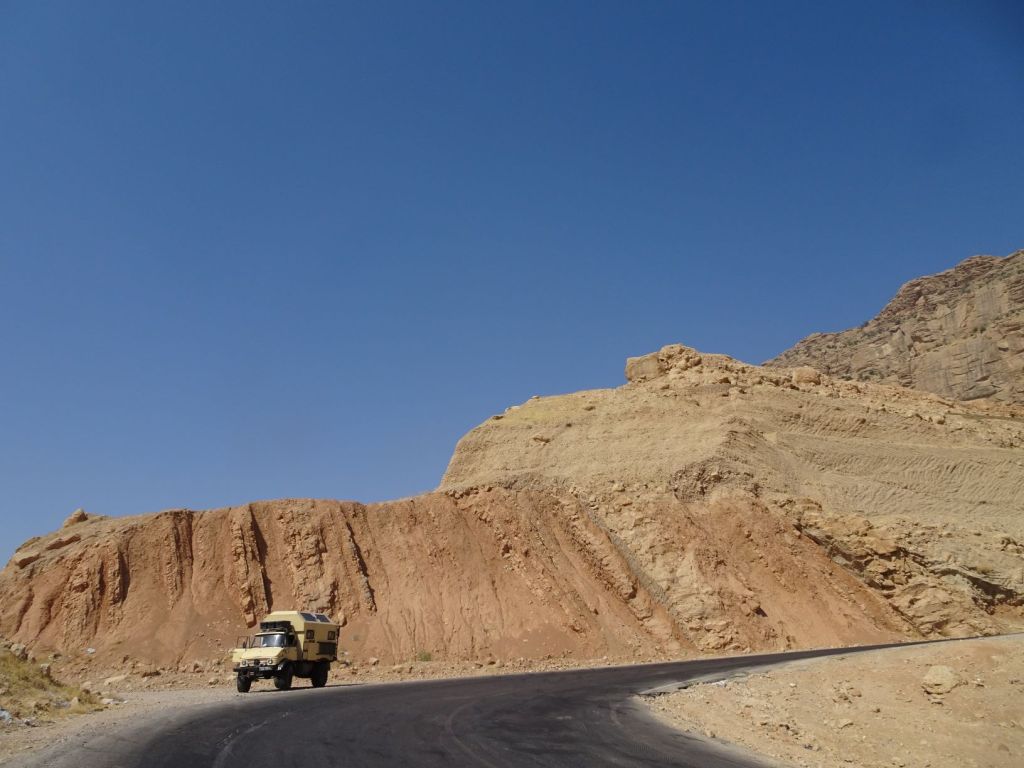
Not the very high mountains of yesterday, but beautifully coloured mountains, gradually declining in height, but still high enough for some serious hydroelectric dams.
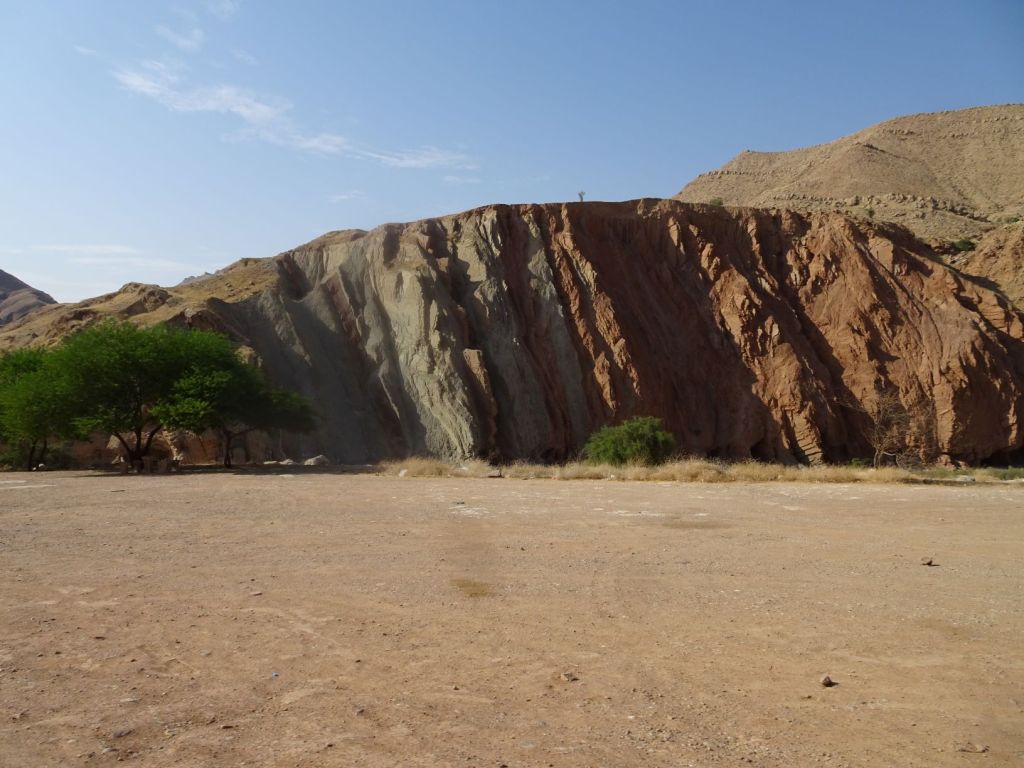
The villages we pass through don’t appear to see many tourists. They feel poor. We do not see much agriculture. We are unsure what people live of up here. But it is wonderful this landscape. We see nomads.
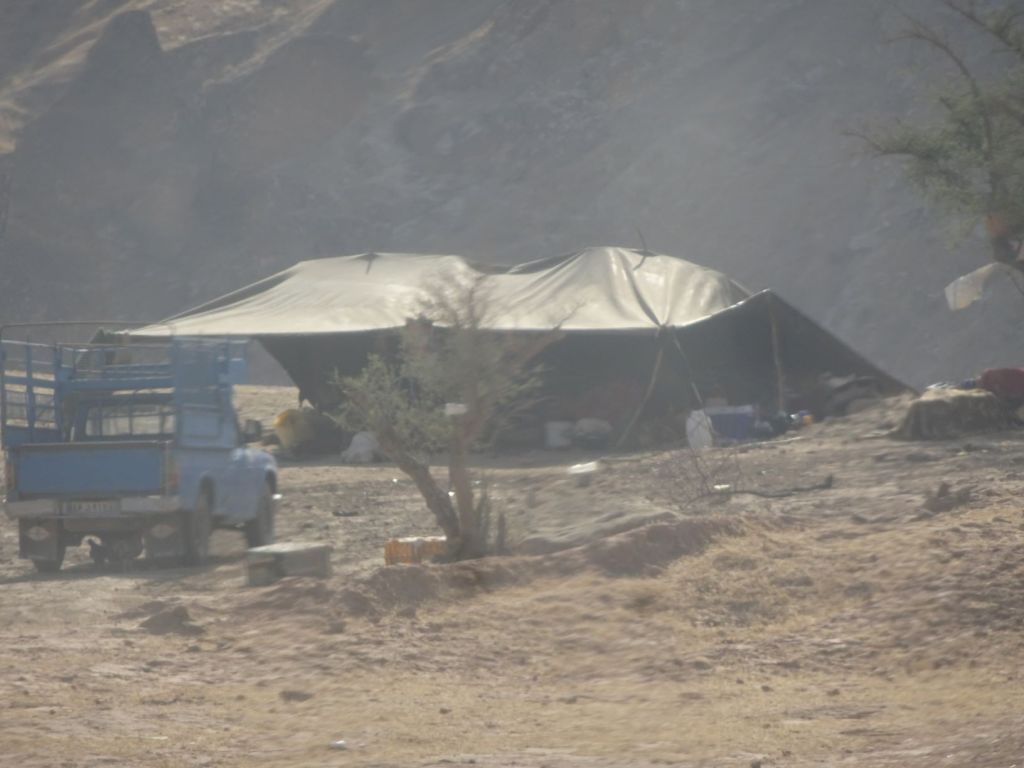
Here they build their homes just with sheets, rather than the yurts we saw in Kyrgyzstan. Everywhere we are greeted enthusiastically. There is no sign of disturbance anywhere and we feel totally safe.
First stop is Shustar, a town that is known for its ancient hydraulic systems, built during the Sassanid period around 350 AD. Wow, this is impressive.
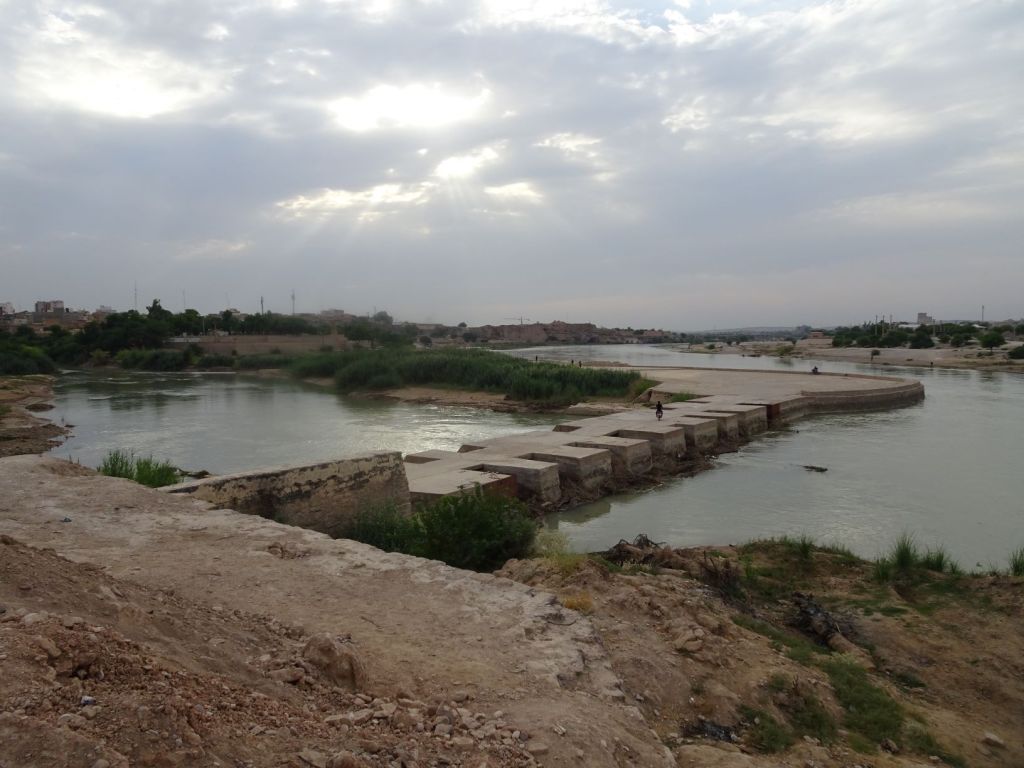
The river is diverted so that more than 20 watermills could operate and make the city prosperous. A wonderful piece of engineering almost two millennia ago.
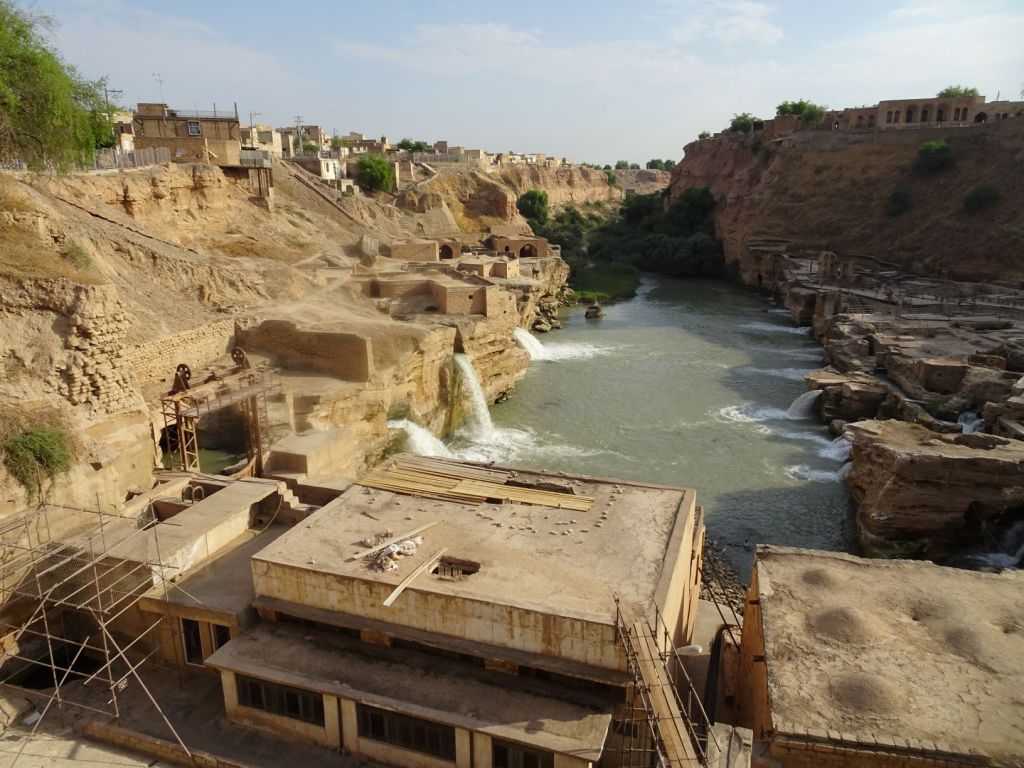
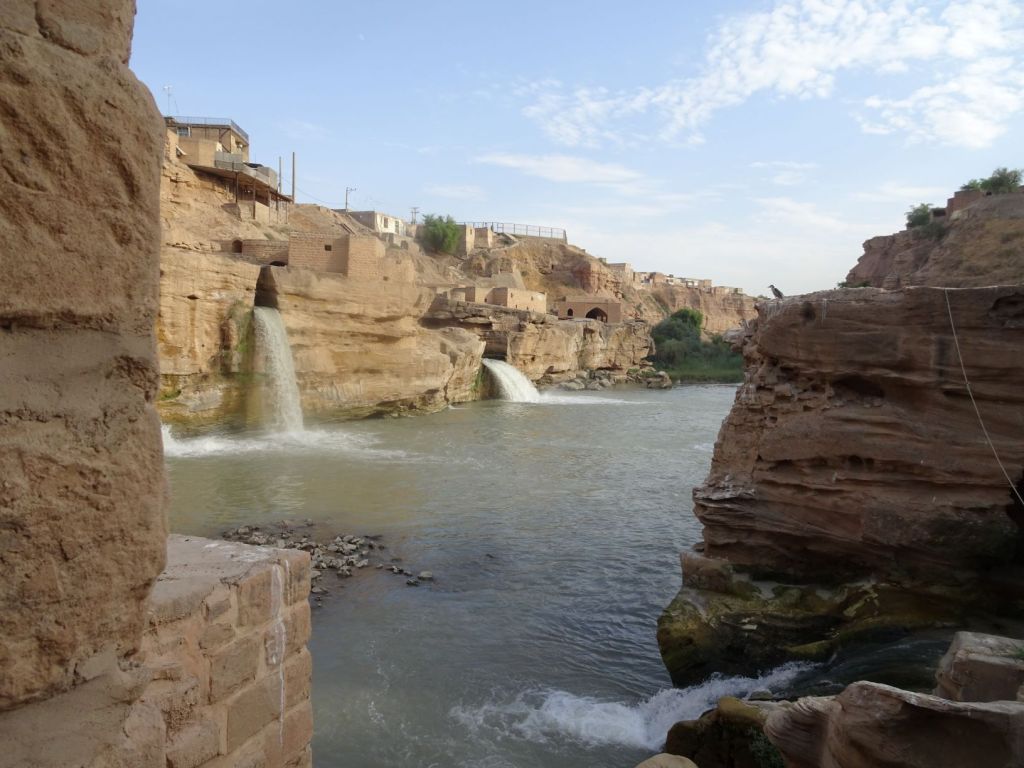
We can see some of the structures and the water is still channelled through the former mills, but the overall feeling of this place is one of serious decline. It is a world heritage site, but there clearly is no money to preserve and restore this. It could be so instructive to see how this used to work, but there is not even a description in English.
It is very hot today, forty degrees, and we would love a cold drink, but there is nowhere we can get one. There is only one bus with tourists, they look hot and tired. Nowhere to sit. We try to buy some food and chill out in a super airconditioned shop. Perhaps electricity is cheap here. The guy has a limited supply of things and when we try to pay he appears to have no change. We only have large notes and do not want to overpay grossly. What a strange situation. This place feels a bit like a ghost town. People sit around and have shops, but nobody is buying.
We drive to another part of the river where we can see some former fortifications. It must have been some sight in its hayday and we wonder what the Sassanids who built this hydraulic system and made Shustar rich would make of its sorry state now. The riverbank is littered with plastic bottles.
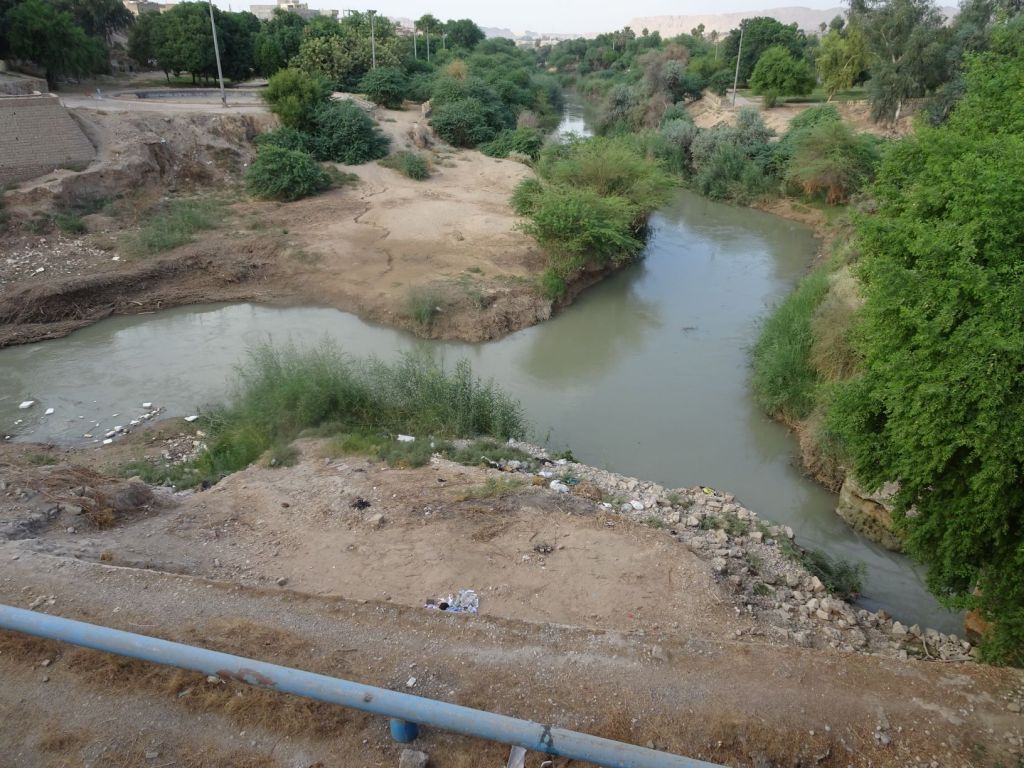
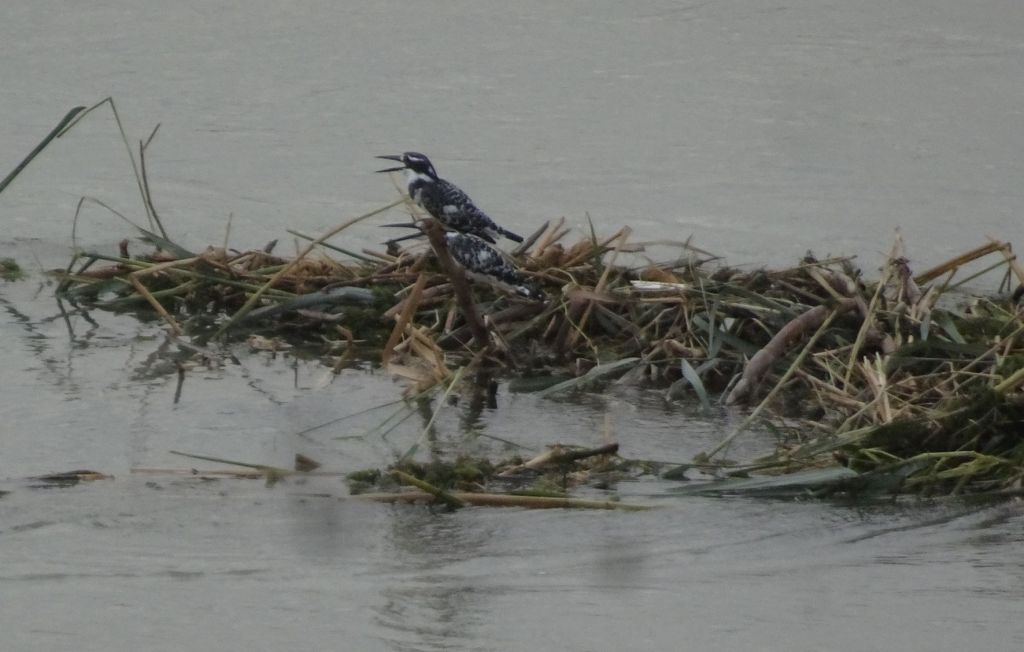
Then we see 5 guys swimming. They go at a tremendous speed with the current. Must be good fun although the water quality may be dodgy. Miep spots some water birds she does not know from back home. Finally some birdlife again here where there are more trees and where there is water in the rivers, it has been some time since we saw that.
We move on, not far now to the camping spot from our ‘routebook’. This is at the parking place of a beautiful ancient structure, the Ziggurat at Choghazanbil. A Ziggurat is a type of massive structure that was built in ancient Mesopotamia. It has the form of a terraced compound of successively receding levels. The Ziggurats were not places for worship or ceremonies; they were dwelling places for the gods.
This one was made during the Elamite period around 1500 BC.
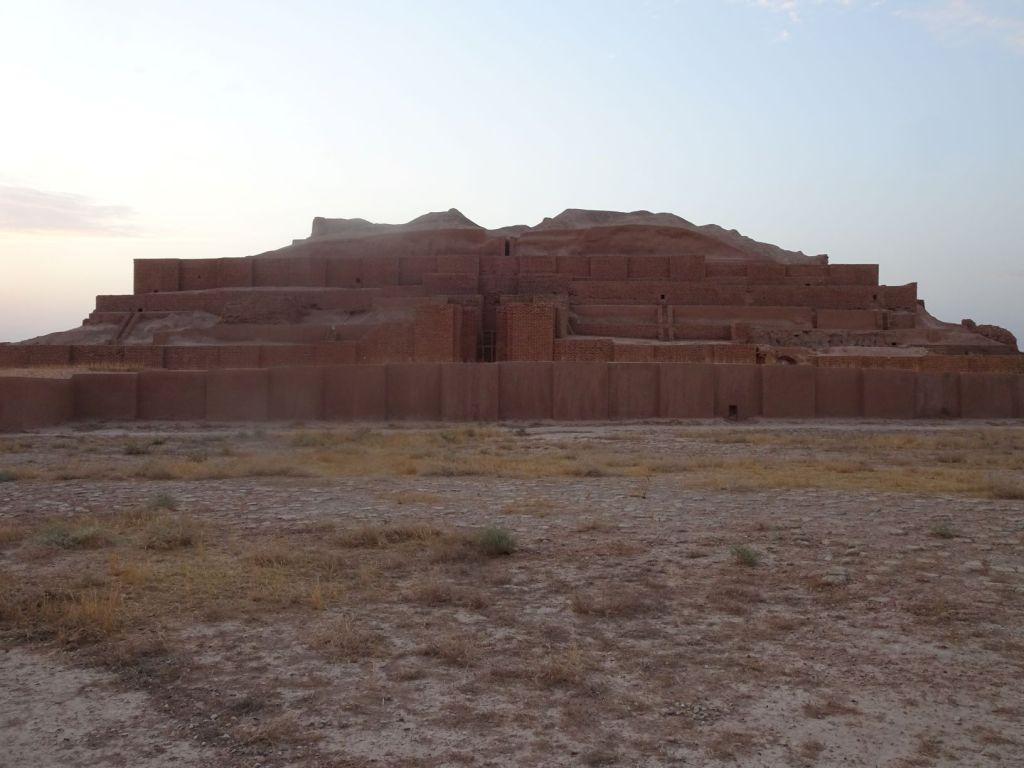
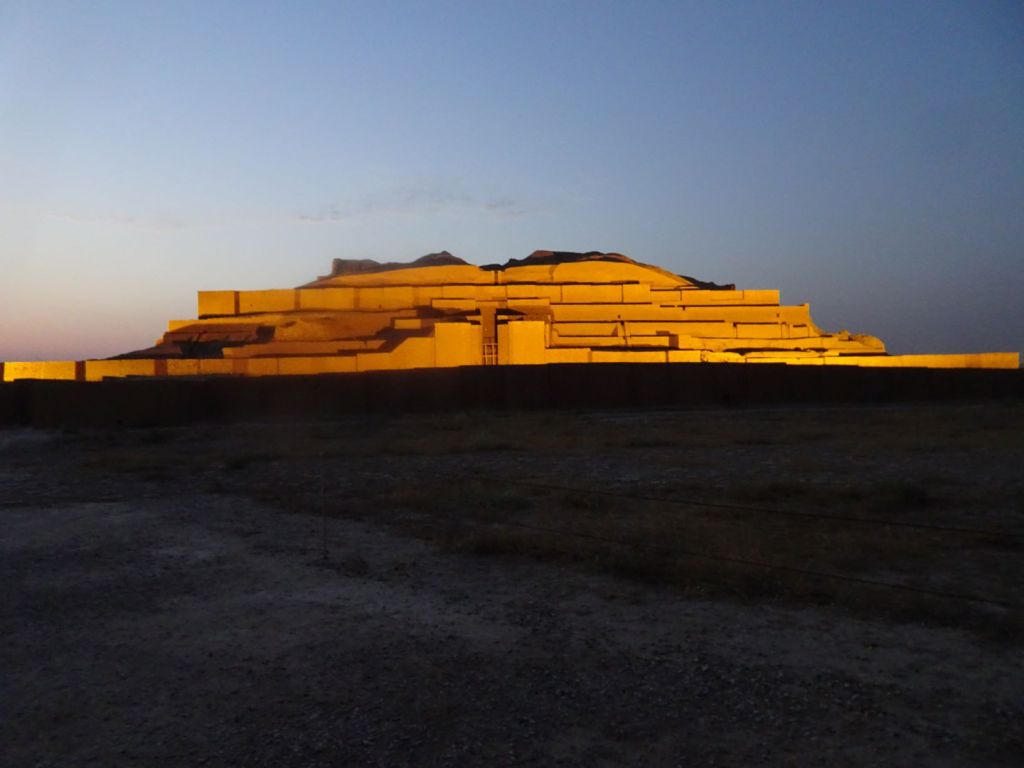
We have only a short time to visit this, but there have been few visitors all day so they are glad to let us in and we even get a local guide who shows us the key features. This building has 5 stories, all declining in size so it is like a giant cake. Completely built of mud bricks, many of which carry inscriptions.
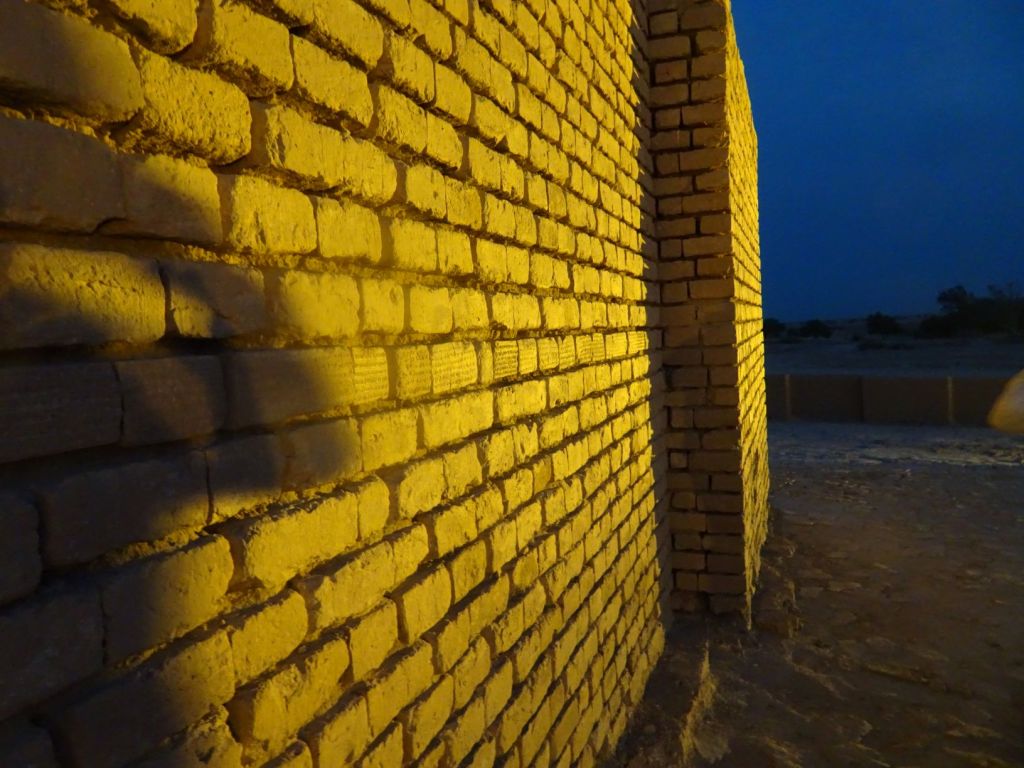
Every eleventh layer of bricks was one with inscriptions. The message (repeated over the length of the temple) is in cuneiform script and Elamite language warning any potential destroyer of the Ziggurrat that the gods will revenge if he does so.
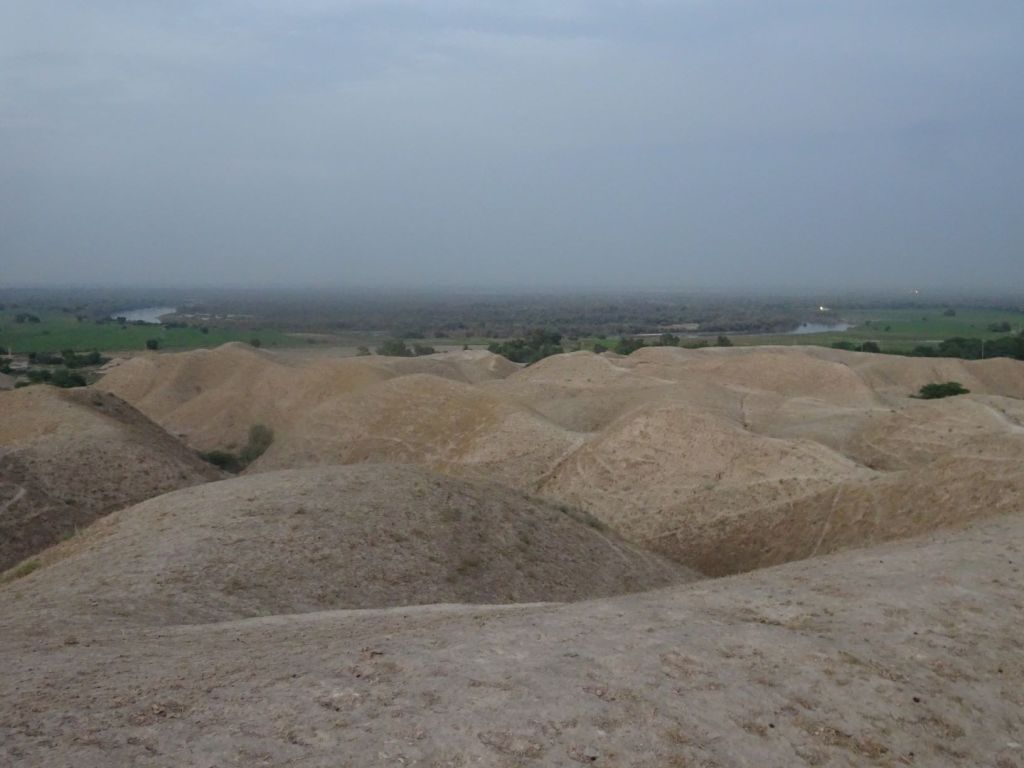
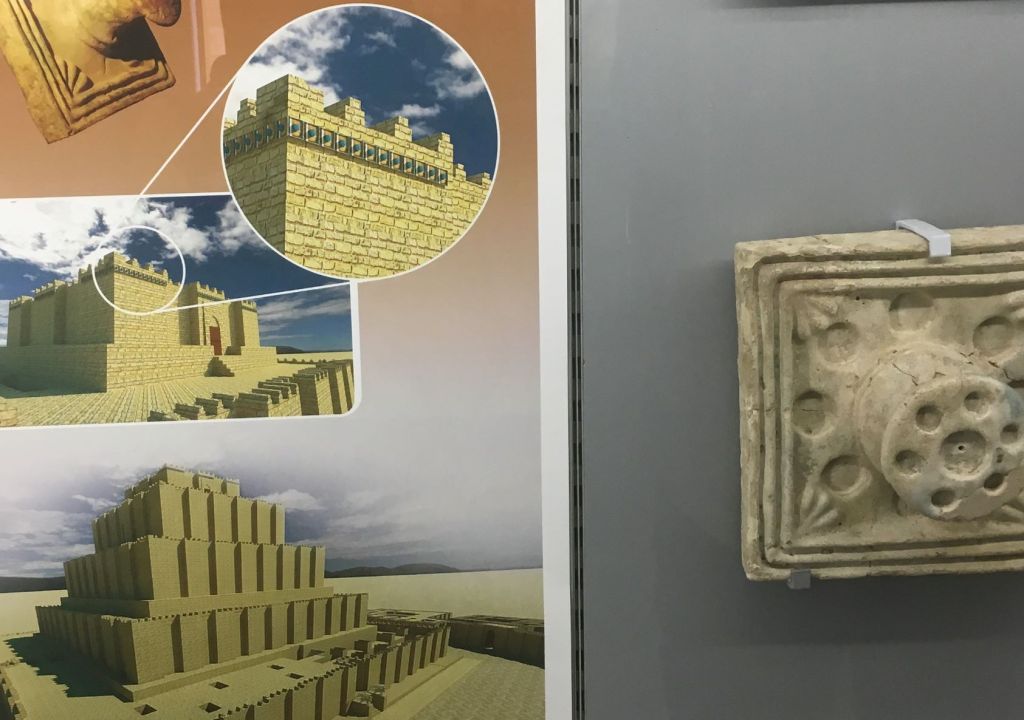
The top level would have been decorated with knobs, glazed so they would shine and be visible from afar. Inside there would have been giant doors held in place with hinges set in hollowed out stones. Around the temple would have been many buildings, and a giant water reservoir. What a sight. The light is fading quickly and our guide runs with us over the site so we get round before it is completely dark. He takes us up a small hill behind the temple where we can see how it is situated close to a river and in a fertile area. Even now this is where they grow sugarcane and many vegetables because the soil is good and there is plenty water.
Then we must leave, the guards are keen to get home. But now the lights are on and the whole Zigurrat is glowing in a reddish pink light. So beautiful, but nobody but us to see it.
It should have been full with tourists here too. They are not here, all afraid of the unrests, the threat of war and negative information about Iran. The people who work here and live here carry the brunt: they loose income. Our guide gets some money from us and the guy who sold us the entrance ticket gets some too: he supposedly sold us two tickets and took the money, but he never gave us the tickets. He must have put the money in his own pocket. We fully understand, we came late, almost closing time so nobody noticed and they must make some money one way or another.
We meet up with our fellow campers Kim and Paul and bed down for the night. It is still 36 degrees out side and 39 inside (!!) It does not seem to cool down until early morning. We struggle to sleep but not only because of the heat, also because of biting insects. What on earth are they: not mosquitoes, but something smaller, like midges. We borrow a mosquito net from Kim but this only works up to a point, the creatures manage to get under it and through it. The bites are so numerous Miep is covered all over. And the itching goes on for more than a week.
October 7
First stop Haft Tepe, another archaeological site, an ancient city. But before we get there we see an accident on the road. A car has overturned into a ditch. One women has climbed out. She does not ask for help but we stop.
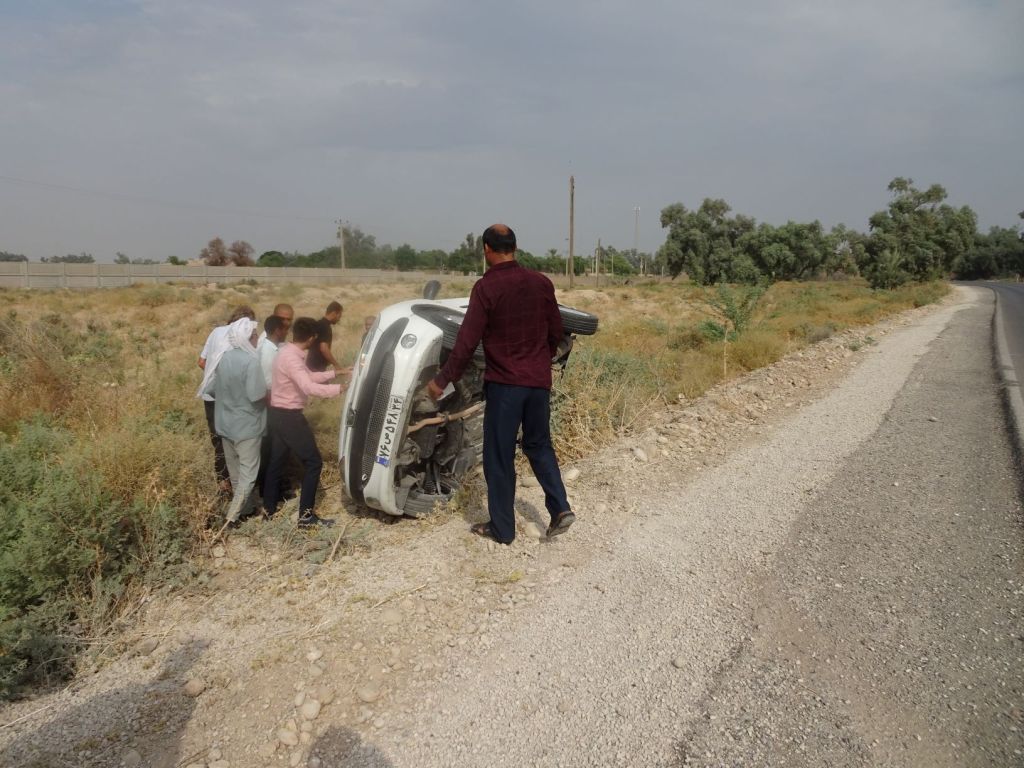
Then suddenly tens of men come out of the fields who must have heard the crash. Together with Roelf they push the car back over and we see there are two other women inside, frantically putting their head scarfs right. A guy tries to drive the car out of the ditch, but it is too steep and we end up pulling it out with the Unimog. We are getting quite a reputation!
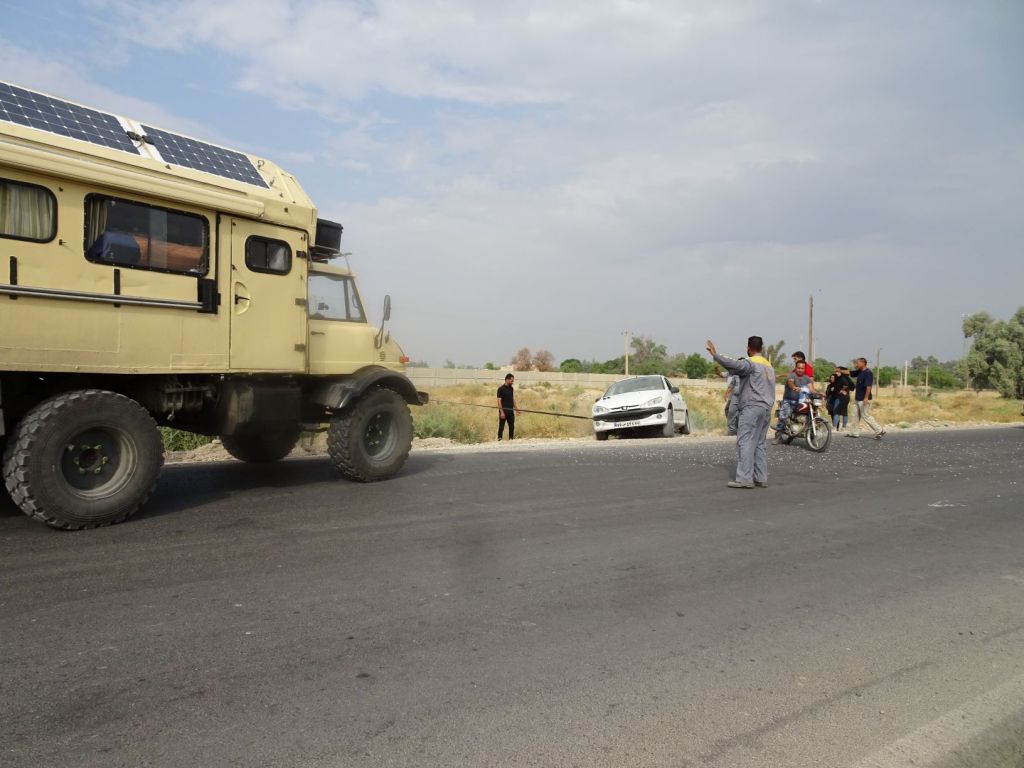
Amazingly, the women get back in the car having adjusted their attire and simply drive off!!
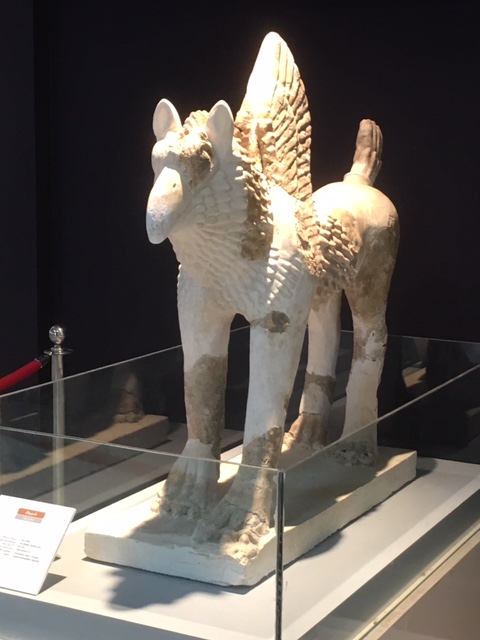
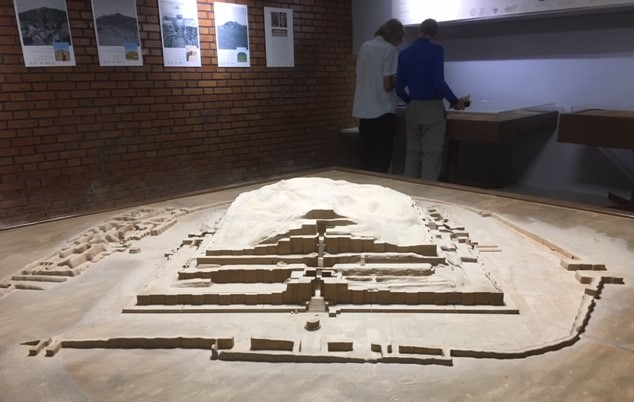
We have not come to see the excavations at Haft Tepe, but to see the small museum that shows models of how the Zigurrat must have looked and how it was decorated. They also have some statues and knobs to help us understand it all. There is a fabulous timeline of the various dynasties that ruled the area and the best exhibit of all is a sculpture of a griffin! Now we understand what we have seen the day before even better and we begin more and more to appreciate how old this site is and how accomplished the Elamites were.
Then we go on to Susa.
The
earliest settlements around the area of Susa were in the 7th millennium BC.
There is evidence of early art in the form of statuettes from around that time
and from the fifth millennium the region started to produce quite spectacular
pottery. These items are now displayed in museums in Teheran and the Louvre in
Paris.
The villages in the area coalesced around 4300 BC to create the city of Susa.
This city became one of the most important centres of the Elamite
civilisations. Their religion was polytheistic.
Elamite culture has an profound influence on the Medes, Parthians and the
Persians, Indo-European peoples, who arrived in the Iran from the 3rd
millennium BC onwards.
A series of kingdoms and dynasties evolved from the 4th millennium BC with the
Elamite Empire reaching the height of its powers between 2000 and 1000 BC. The
Empire was destroyed in the eight century BC by the Assyrians.
Along the flat road we see more and more workers. This is harvest time and here it is sugar cane, maize and a variety of vegetables. Women are covered in black scarfs and some even in chadors. How they can work like that in this heat! We see 8 of then crammed together sitting on the back of a pickup truck. They wave to us.
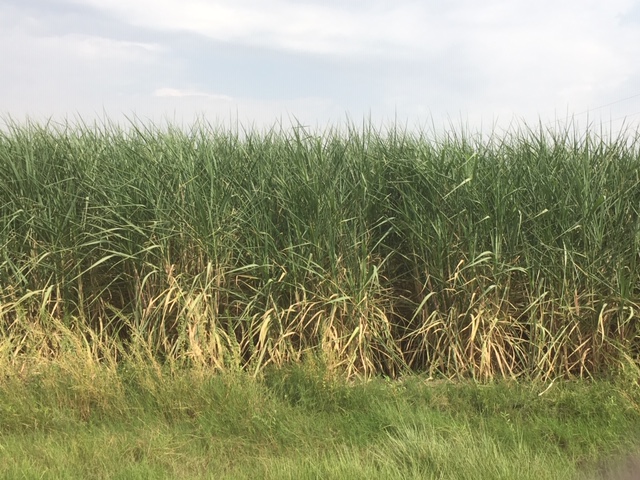
We do not see much of Susa proper. When we enter the city we immediately spot a castle on the left and this is where the museum we have come to visit is. It is also the place where the ruins of the old city are, but there really is not much to see. There are however remains of the winter palace of the Achaemenid kings. Another palace built by Darius. There is not as much left as in Persepolis, but because we have seen that we get a good impression of the size the Susa site must have been. The pillars here were decorated with bulls and there are many ornaments depicting lotus flowers. Different numbers of flowers according to the various calendars that the peoples used. 10 petals for the Elamites who had only 10 months. 12 for Achaemenids and another number for the Greek.
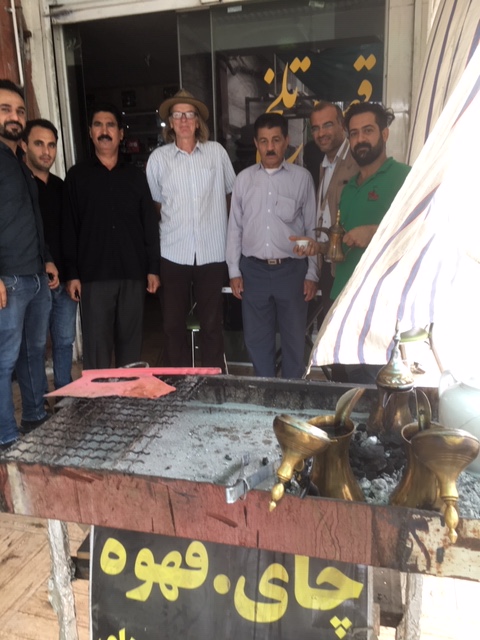
We are taken round the site by a guide who we met when buying tickets. He is very knowledgeable and desperate to get some business. As yesterday, this site is almost empty of tourists. One group of French tourists arrive just when we are about to leave. This is catastrophic for the locals who so depend on tourism. Our guide has taken us to a nearby coffee shop before we start the tour, clearly a friend of his. They sell traditional Iranian coffee. It is served in very small cups and it is almost undrinkably strong. Brewn in copper pots over a charcoal fire. Miep cannot finish hers and we both have a cup of sweet tea to wash away the bitterness. But they are so happy we are there and it is photos all round as usual.
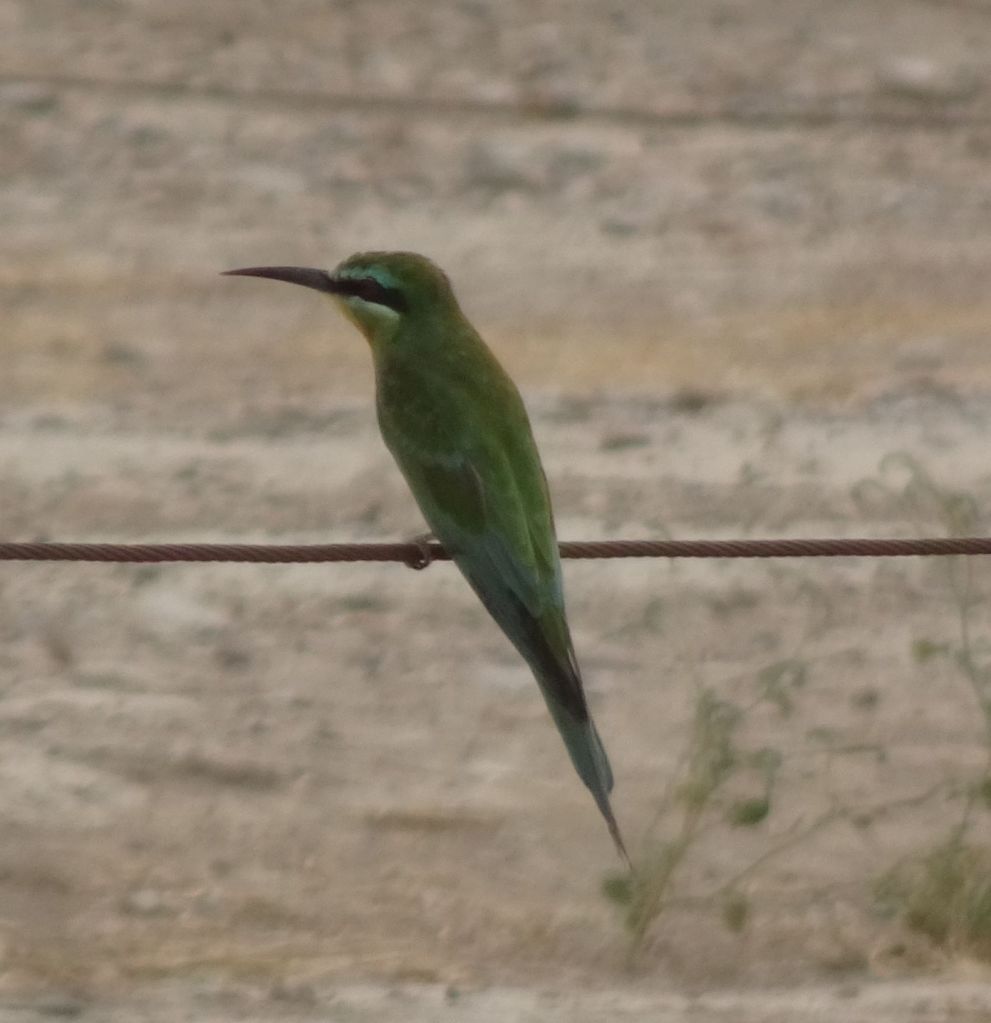
Then onwards to the site of the former winter palace. There is not all that much to see in situ, but there are wonderful birds flying around. The guides calls them ‘local birds’ and we have to still look up what they are: green on the outside with a blue body!. They fit wonderfuly well with the colours of the tiles! When they fly they spread their wings dead straight, just like the god of the Zoroastrians. This is all very much as it should be!
The museum in Susa is wonderful. Small but with some nice exhibits. Perhaps not as good as what we saw in Teheran, but it complements it all very well. We see more shoes of the Immortal Army with the trademark 3 Adidas stripes. There are death masks, decorations and friezes that once graced the walls of the palaces (even through most are replicas with the originals in the Louvre). We also see some pottery although the best pieces clearly are on display in Teheran where we got the Susa bug.
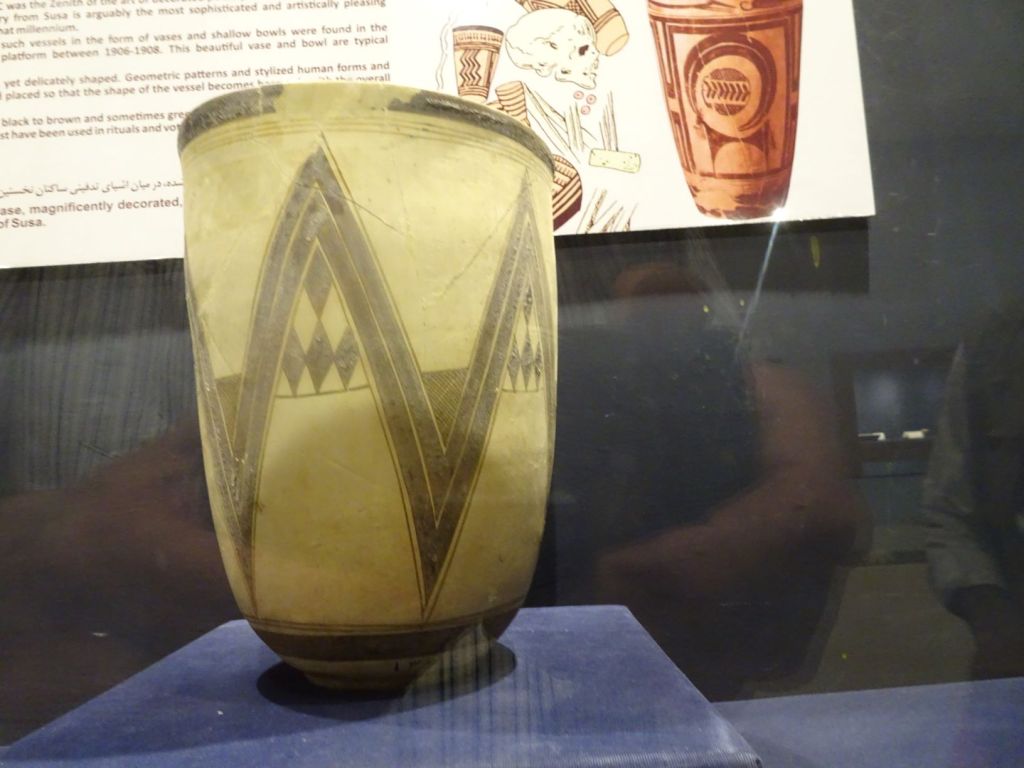
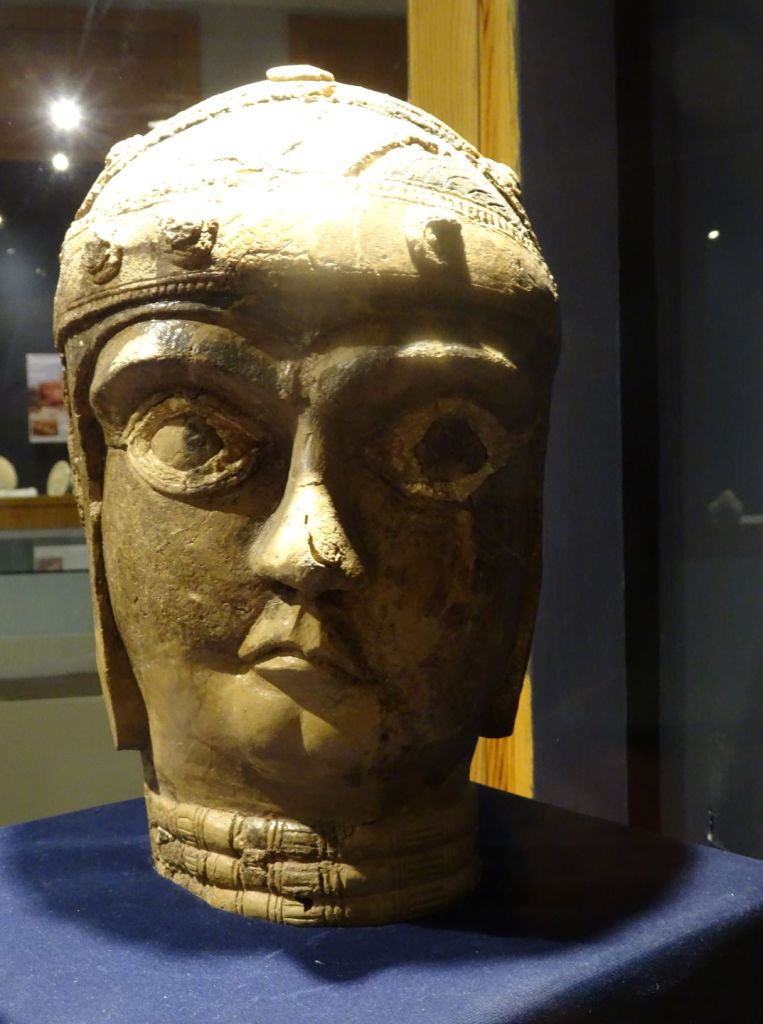
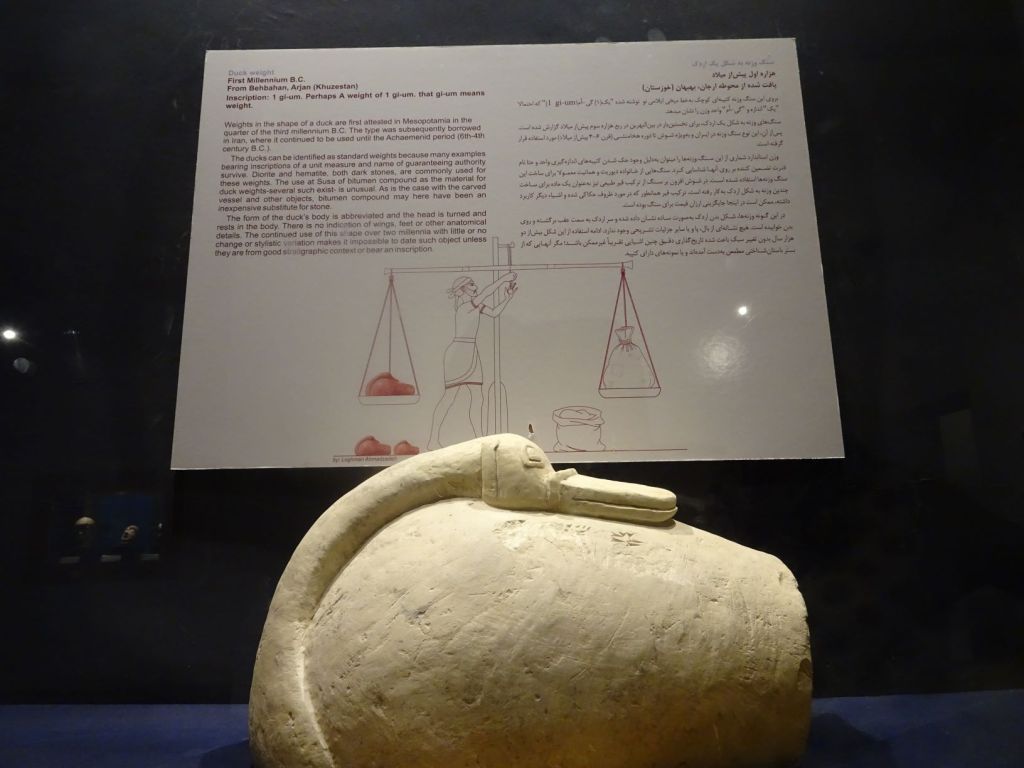
We finish with a stop at the souvenir shop where we buy some of the pots, now remade, with those wonderful antilope or goat antlers. This will be our souvenir of a mind blowing experience in the heartlands of Persia.
 Central Asia Roadtrip