Sept 12th
Stern Turkmen border guards, but more friendly Iranian border police. We must give our beautifully written car documents back to the Turkmen guards and get our Iranian papers and ‘carnet de passage’ duly stamped. The police who come to inspect the car want Roelf to put on his long trousers first though. Dress code must be observed! The inspection is surprisingly superficial, but they would have found nothing untoward anyway. We cleared all alcohol and carry no forbidden goods. It must be that we are the final car and time is pressing, they want to close up the border. Finally, after more than 2 months on the road we enter the country we wanted to see most on this trip. ‘Welcome to Iran’ says the border guard with a friendly smile as we clear his booth. We and the Mog feel very welcome indeed!
Iran is a proud nation with ancient cities that have played a major role in history, not just in relation to Central and Western Asia but to the whole Eurasian Continent. It is home to one of the world’s oldest civilisations.
With 82 million people, Iran is the 18th most populous country in the world and its surface area makes it the 17th largest country.
Iran’s central location gives it much Geo strategic importance which has been at times a blessing as well as a curse over its long history.
The political system of the Islamic Republic is a unique mix of an Islamic theocracy and (vetted) elected institutions.
The Supreme Leader and the Assembly of Experts (Islamic leaders) are not democratically elected but appointed by the religious community. Formally, the Assembly of Experts is there to advise and supervise the Supreme Leader but in reality the latter has almost absolute power over the most important political institutions such as the treasury, foreign affairs, and the army. The Assembly of Experts performs a merely ceremonial function.
The democratic elements of government are the President and the Parliament (Majlis). Both the President and Parliament members are elected by the people of Iran for a term of four years. However, before they can run for office, presidential and parliamentary candidates have to be approved by the so called Guardian Council, whose twelve members are directly appointed by the Supreme Leader. This is to ensure their allegiance to him and to the Islamic Republic as a whole.
The above renders the political system undemocratic, and the restrictive interpretation of Islamic law by the people in power has severe implications for freedom of expression, women’s and children’s rights, and freedom of sexual orientation.
Sept 13
Three of our group have not managed to get through the border yesterday and we therefore camp up just past the final gate in the first village. It is a lovely quiet place and we welcome the time we have in the morning, while we wait for them, to do some car repairs (the kitchen block is about to fall through its feet, the bonnet needs straightening and the car needs a bit of a clean). Also, the roof hatch needs straightening and refitting since it fell out near Samarkand. We have been driving with an open hatch ever since!!!
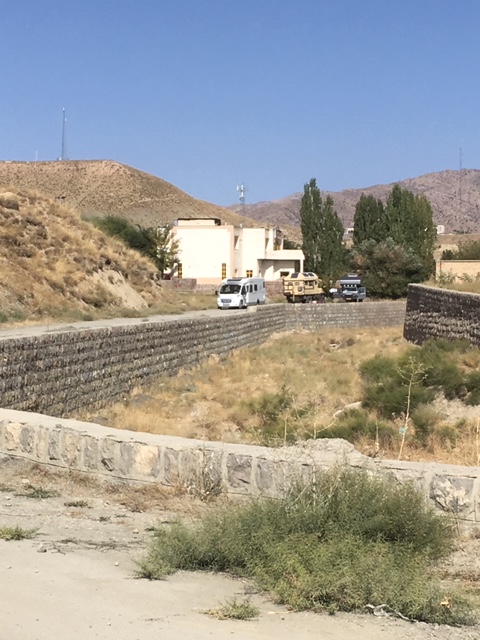
All the women now wear the Iranian attire. Covered arms and legs and a headscarf. We have to do a double take but get used to it quickly. We get sim cards, but unfortunately did not get car insurance yesterday as the border was about to close. Roelf has to go back there again, ‘No sir, leave your car here’ and he gets a lift back to the nearby border. Then finally we are on our way.
The road to Mashhad is wonderful. First mountains with small streams. At every point there are families enjoying the Friday day off. They bath in the rivers, women with all their clothes on, and they explore the mountains.
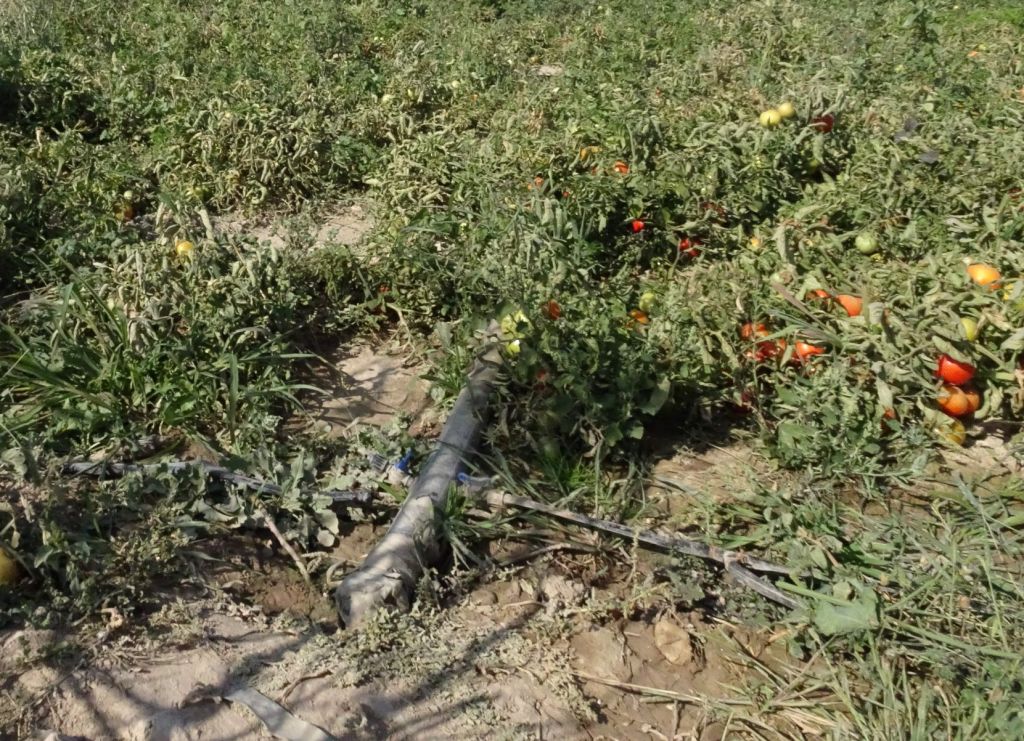
Then we are in the valley between two mountain ranges travelling south east. The road first goes through fertile agricultural land. All this land is controlled by the clergy in Mashhad. People are harvesting tomatoes everywhere and sell them on the roadside. The plants are low and lie on the dry soil without any support. Quite different from how we grown them in greenhouses. They could not grow without irrigation and we see the pipes and water towers everywhere. Not sure yet where this water comes from as we see no major rivers. There are mountains, but they also look totally barren at this time of year. Perhaps it is all pumped up from the ground. We read in a guide that indeed the groundwater level has dropped by 20 metres here because of extensive (and illegal) water use.
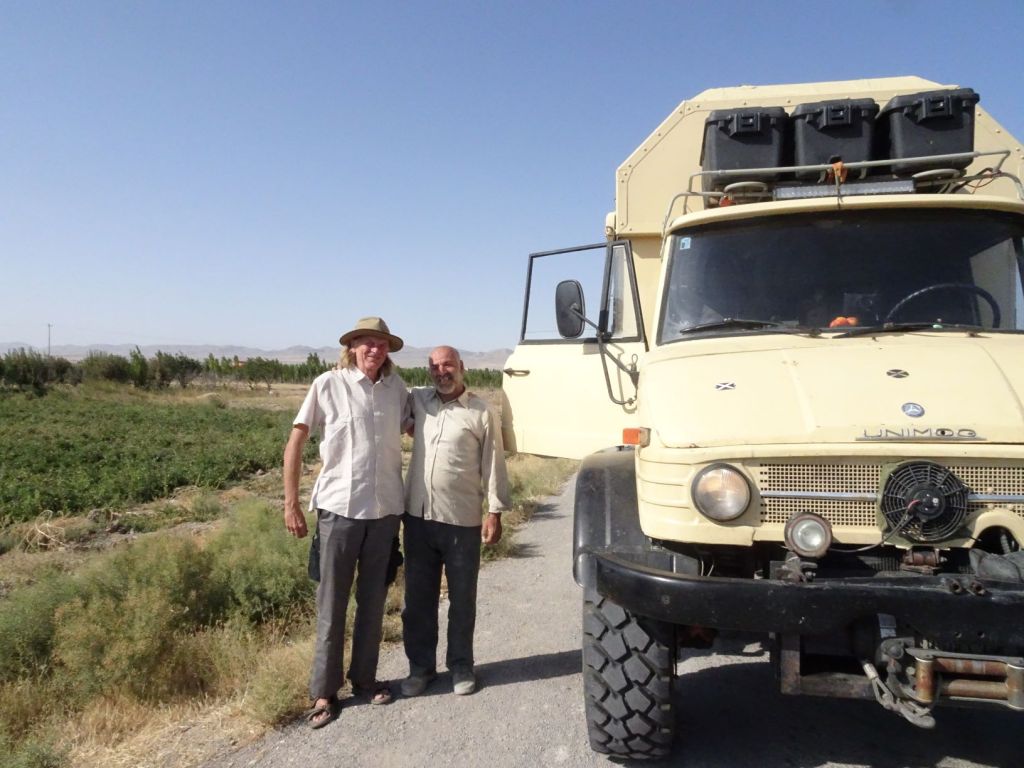
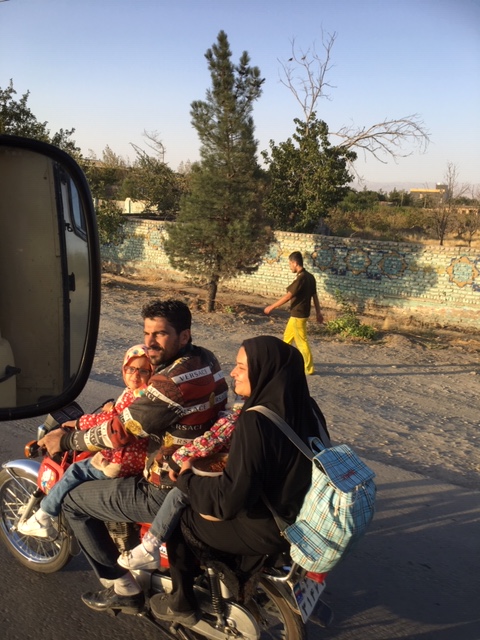
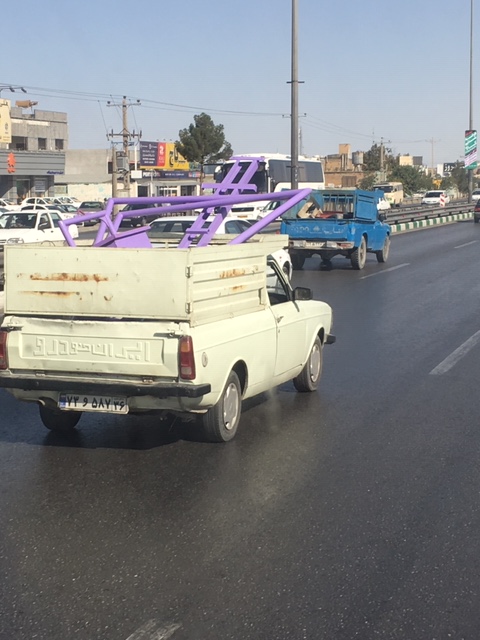
The road is full of interesting cars, old Mercedes lorries, a modern type of small pickup with special sides to allow big loads or animals to be carried, and lots of mopeds. Nobody wears a helmet and the ride on the major roads. Often there are 3 people to one moped and then we see a whole family, father, mother and 2 children all on one. When someone comes past wearing a helmet we realise this is a policeman. Only they seem to wear them.
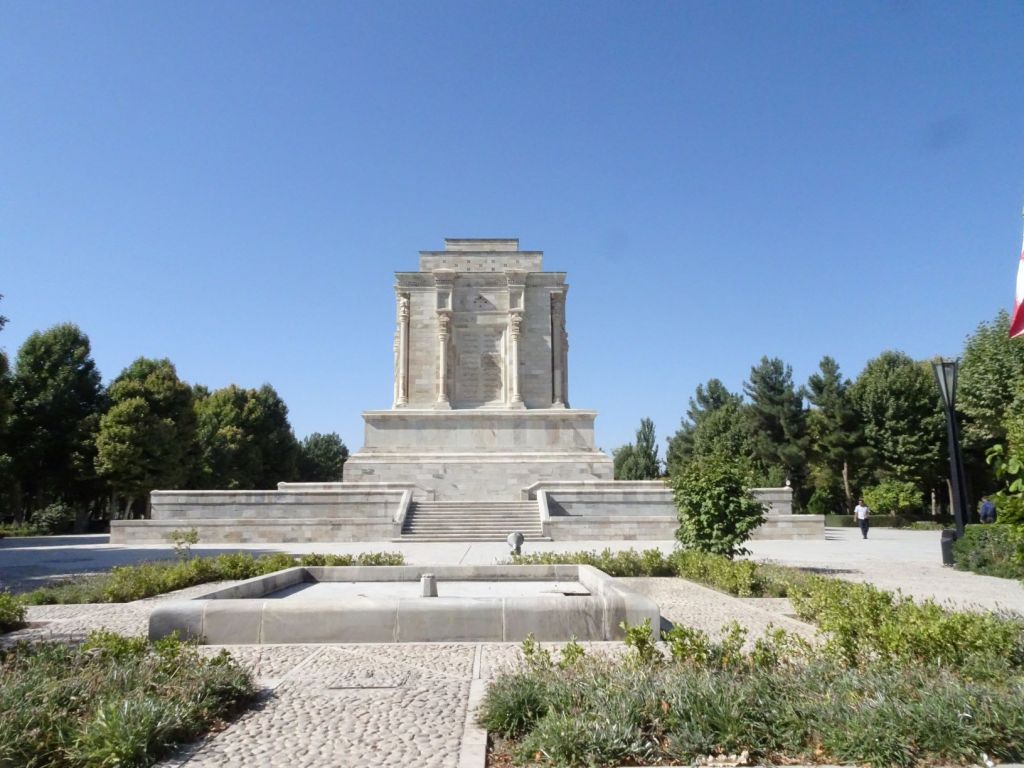
We park on a carpark in Tuss, the place where the shrine of Iran’s famous poet Ferdowsi is located. We have a quick visit to the museum and tomb and know we will have to return the next day. There is so much to appreciate here, but we get stopped all the time as people want to take photographs of us and with us. Also loads of people come to see our campers and we even get an impromptu concert by 3 guys who play beautifully haunting music on a drum, a string instrument and a flute. Quite some arrival. ‘You like Iran?’ Absolutely!!
Sept. 14
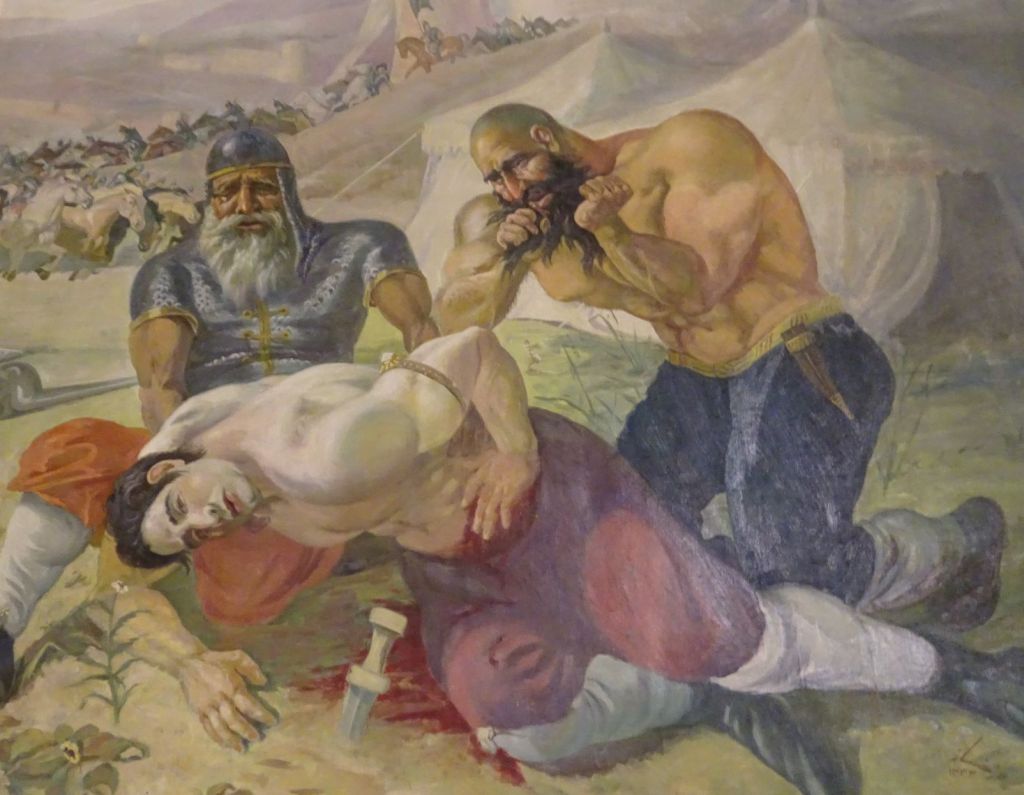
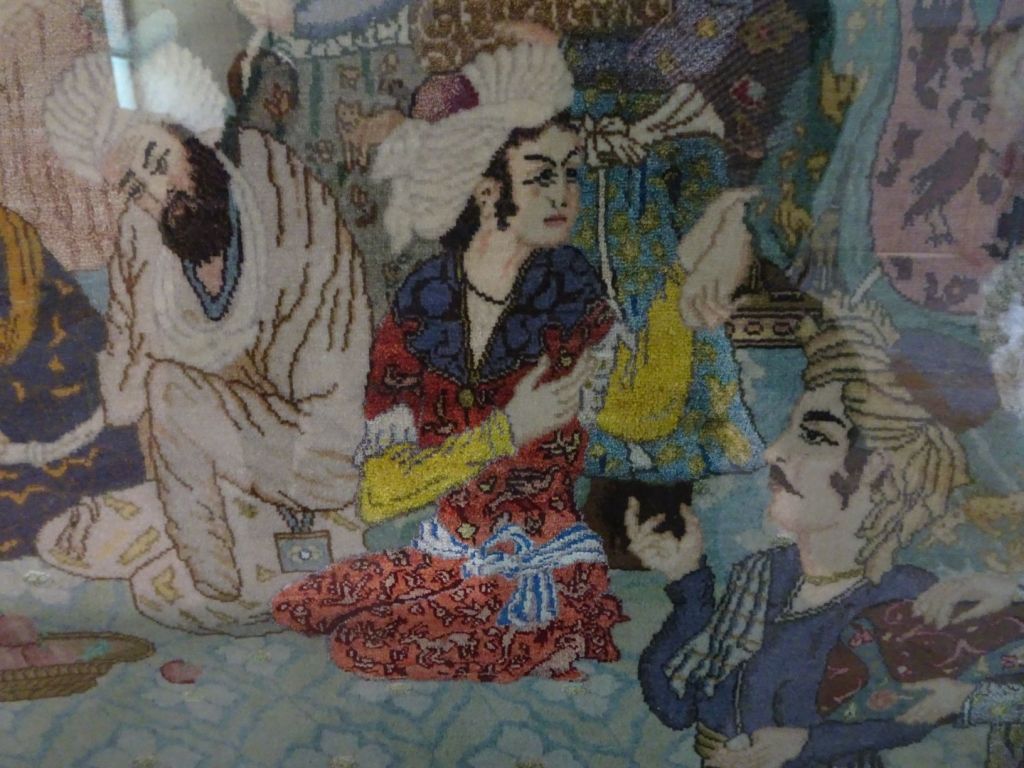
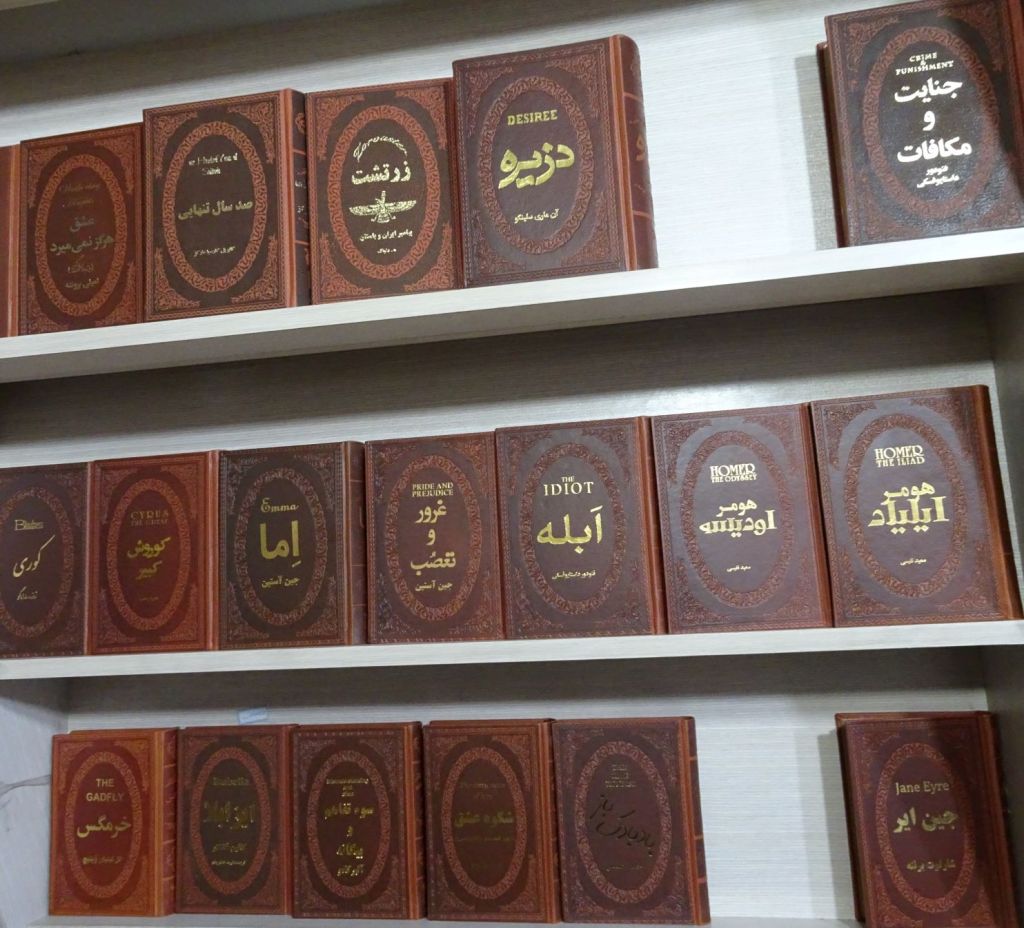
After a very good night’s sleep even in this noisy camping spot we go back to Ferdowsi’s tomb and museum where a young girl has agreed to tell us more about his famous poem Shanameh, the epic of the kings. She tells us this poem was instrumental in preserving the Farsi language during the time when the Mongols and later the Arabs came to these lands and imposed their language. People revere the poet and children are read the Shanameh as bedtime stories and later are taught it at school. The paintings and sculptures we see make more sense as she explains some of the stories they depict. We buy the English version of this epic poem and Roelf is determined to read all its many lines.
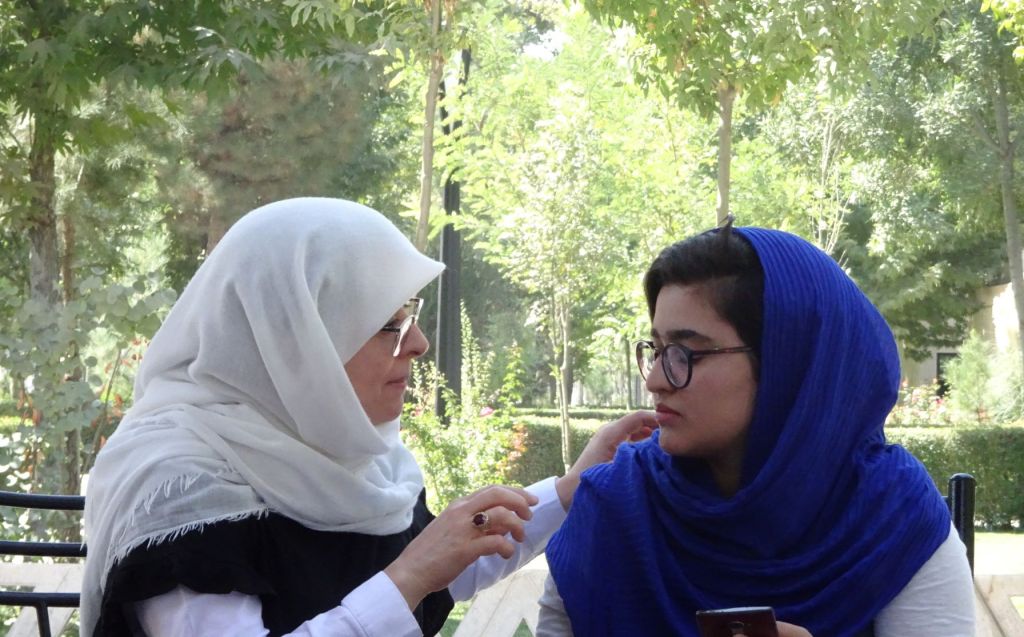
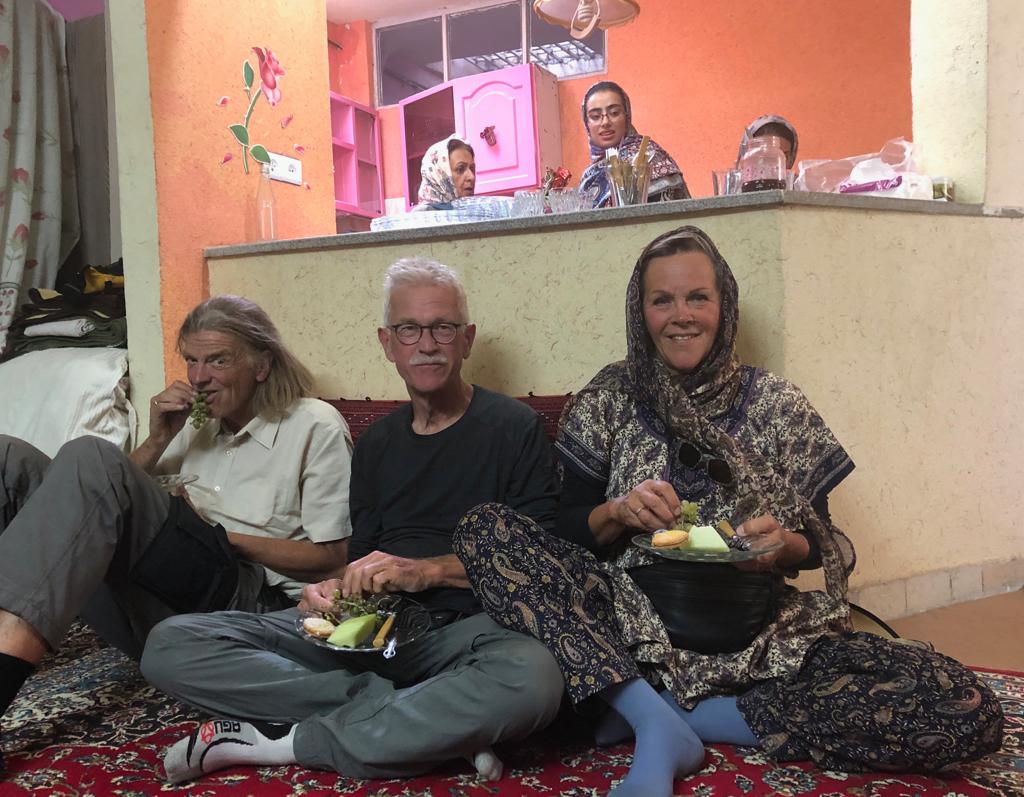
Then it is time for lunch at the holiday house of a family that invited us yesterday. This is quite amazing. 12 of us came to lunch eating sweet fruits from their own garden, pasta and salad. Then coffee. Such a warm welcome. We all sit on the floor and the food is laid out in front of us. The family exists of mum dad, 5 girls and 2 boys. Three of the girls are present. As well as some younger nieces and one nephew. They all help to serve. We are not entirely sure how the house is used but get the impression it is a meeting place for the family away from busy Mashhad where they can all meet up on Thursday night and Fridays, their ‘weekend’.
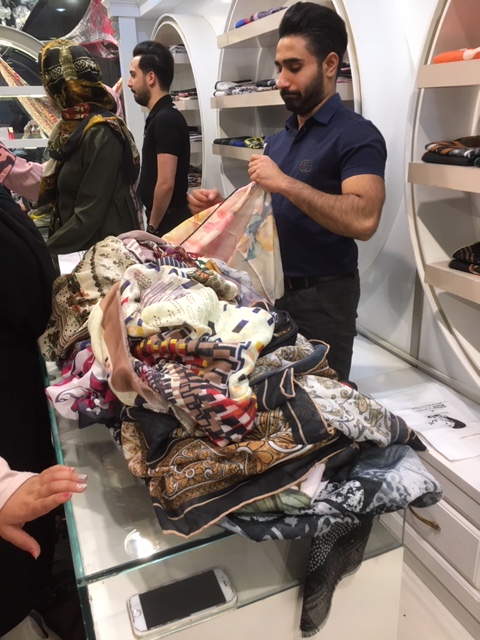
One of them invites us (the women amongst our group) to go out in the evening to buy head scarfs. We all brought some from home, but the ones they use here are much larger, stay on better and cover shoulders as well. We go by taxi when it is already dark. It is a long way. This is such a huge city and there is so much traffic. It seems that people go out later in the evening to shop, socialise and walk the city centre. There are masses of people, especially women, everywhere. Our ‘guides’ are quick to show us a shop where the sell the larger head scarfs. Cotton and of course silk scarfs. What a feast. Two men are serving. The scarfs are all neatly arranged on shelves behind the counter. One by one they spread them out and we try them on. We don’t realise how to do this until more women, Iranian women, enter the shop. They are very good at putting on a scarf on top of another and then taking the first one out. At no point is their head uncovered! We continue doing this the wrong way, which is of course wrong in front of the male shopkeepers, but nobody seems to care. We are not muslim and it shows. After quite some time and trying on tens of scarfs we all buy one or two or even more. The prices are very acceptable and we pay in dollars. Our ‘guides’ pay by card and take the dollars, the shopkeeper gets a good sale and things are easy for us. Everyone happy.
Then we walk on and watch people and shops. Everything is for sale here. Expensive jewellery, shining ornaments for your house, mirrors, clothes, shoes, bags. There is no immediately obvious influence of the sanctions. We sit down for tea and milkshakes with our hosts and then hear how the inflation is making it more and more difficult for people to buy everyday goods. No wonder things seem so cheap for us. Then it is back to the campsite.
Miep finds Roelf who has spent a couple of hours with a 14-year old boy, Mahid, from Shiraz, on holiday here in Mashhad with his parents. They have left him in the care of Roelf while they went to town. Before long Mahid becomes the translator for those that have stayed behind on the campsite. His English is perfect. He introduces us to the Iranian custom of ‘Tarof’. This is when you say ‘no’ out of respect of the other person. Miep had offered him some tomato soup but he had declined saying he did not like tomatoes. However, when Roelf later has some soup he does take some too. We learn that it is the local custom, that you may have to request three times to pay before a price is quoted, or that you should decline the first time something is offered to you and perhaps a second time too. Some of us have already misinterpreted this custom and not paid for things they should have. Do not accept the first thing that is offered and do not accept an apparent gift, but insist on payment. Our second full day in Iran has been memorable and we have met only friendly people. ‘Welcome to Iran’ rings in our ears.
 Central Asia Roadtrip