Some 800 years ago Turkmenistan was at the epicentre of the Silk Road trade. The ancient city of Merv was founded by the Achaemenids in the 6th century BC and build upon by subsequent rulers until it reached a population 200.000 in the 12th century AD. In the 8th century AD Turkic-speaking Oghuz tribes moved from Mongolia into Central Asia. The name ‘Turkmen’ was used for the first time in the 10th century to describe Oghuz groups who had converted to Islam. The two main cities Merv and Konye-Urgench were destroyed by the Mongol invasions. They were never rebuilt and today their ruins stick out of the desert sands. The invasions scattered the Turkmen south and westwards contributing to the formation of new tribal groups. Later on, the nomadic Turkmen came under the nominal control of the Uzbek Khanates Khiva and Bukhara, but they remained fiercely independent and inspired fear in their neighbours. They were heavily involved in the Central Asian slave trade. This included Russian slaves and Russian troops began occupying Turkmen territory in the second half of the nineteenth century and formally annexed the country in 1881. After the Russian revolution the Turkmen Soviet Socialist Republic was formed. Agricultural reorganisation destroyed what remained of the nomadic lifestyle.
The country obtained independence from the Soviet Union 1991 but the population will not have noticed because the chairman of the Turkmen Soviet Socialist Republic moved seamlessly to become the President of Turkmenistan.
Today Turkmenistan is the most isolated of Central Asia’s five republics. Ashgabat is the capital and the largest city. The total population is 5.6 million; the country is very sparsely populated as most of the country is covered by the Karakum (Black Sand) desert.
Turkmenistan has the world’s sixth largest reserves of natural gas resources. From 1993 to 2017, citizens received government-provided electricity, water and natural gas free of charge.
However, according to Human Rights Watch, Turkmenistan remains one of the world’s most repressive countries. Media and religious freedom are severely restricted. The country is closed to independent scrutiny and anyone travelling there will have to be accompanied by a ‘guide’.
September 9
We drive from Khiva to the border with Turkmenistan. Not too far to go and the Mog gets there at the agreed time. Another 6 hour border crossing. We are bewildered by the paperwork and the charges at the border. We don’t really understand what we have to pay for. Visas, car tax, beautifully handwritten documents; altogether almost 300 US dollars.
Changing money is an experience as well, the official exchange rate is 3.5 Manat for 1 dollar, but some of us get up to 10 Manat. Later we hear the unofficial exchange rate is 15 Manat to one US dollar !!). Of course it is illegal to change money that way, but clearly that is what you have to do if you want to buy anything at all. We get 5 Manat and we find grocery shopping very expensive at that rate.
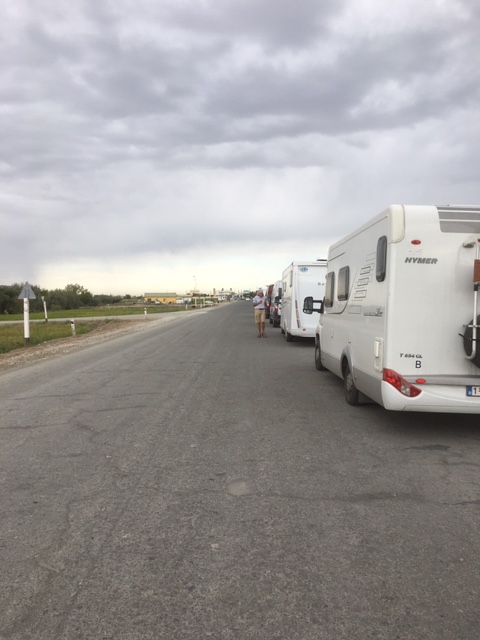
At the border we meet our ‘guide’, better said our ‘minder’. He takes us to the place where we will camp for the night on a noisy empty car park behind a massive empty hotel. First though we have an evening excursion to Konye-Urgench, the former capital of this region, now in ruins after a visit by the Mongols. It is a 2-hour drive (both ways), but we go.
The setting sun in the desert makes it worth the effort. The ruins that remain are of a centre of education, library, university and of Mausolea. One is of a more recent time was built for one of the wives of Timur. It has some intricate tilework on the dome, but we cannot see it properly in the darkness. Being unrestored, it has great atmosphere. Our minder is trying to translate what the proud guide to this place tells us, but it is clear his English is not up to it. We only get glimpses of what the official guide tells us.
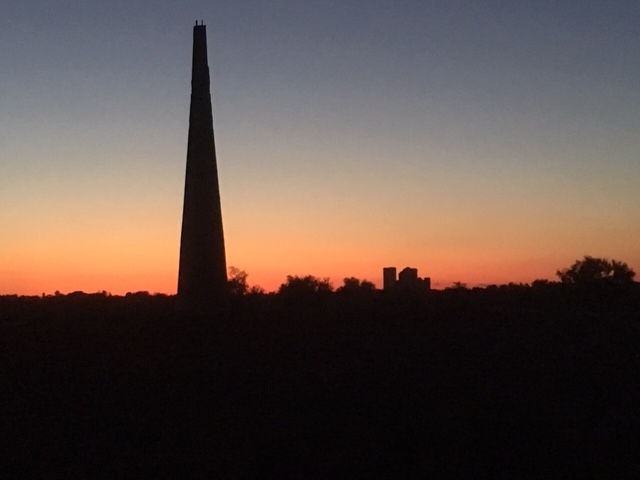
Driving back, we finally see some life in the places we come through. On the way there we were struck by the emptiness of the land. Just fields with cotton, or immersed fields waiting to be replanted.
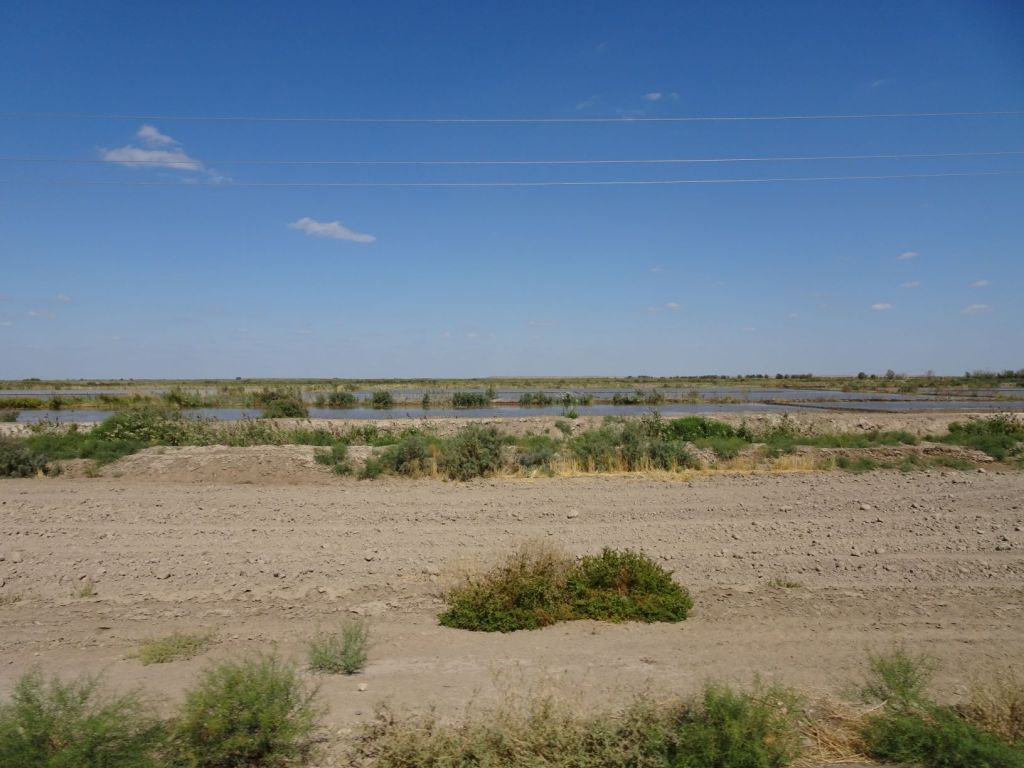
Villages had no shops we could see, none of the advertisements stuck on the outside walls as we had seen in the other Stans. And where are the people? But now we see some lit shops and some people walking the streets. But boy, it is empty.
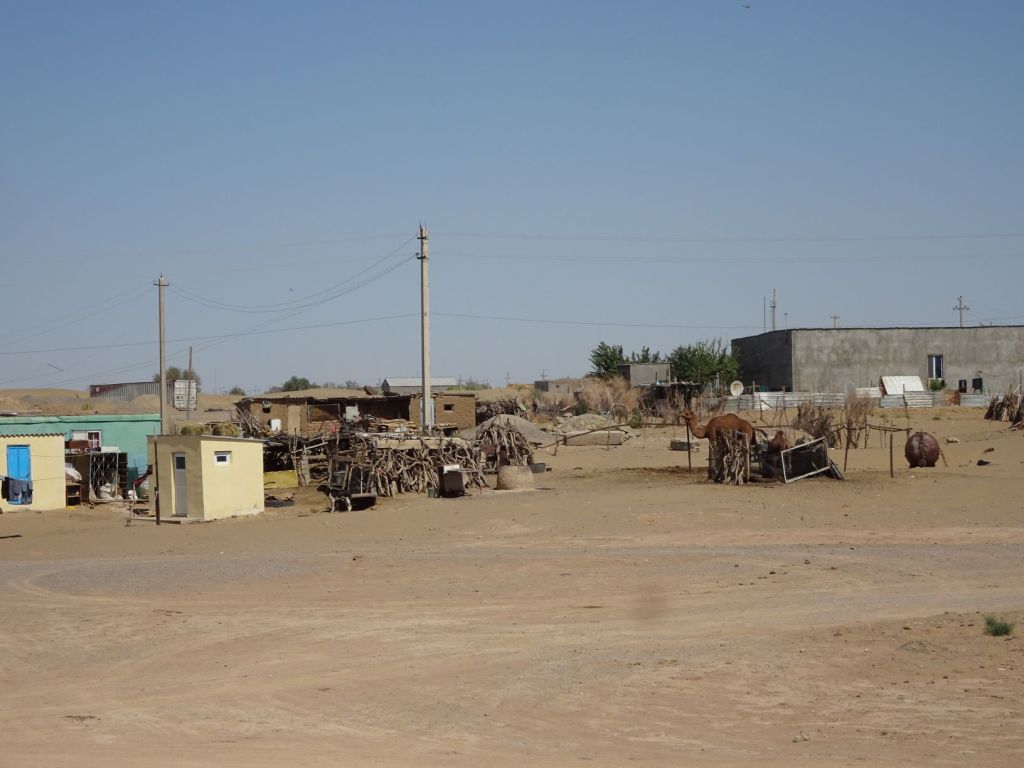
We are stopped by police at the numerous checkpoints but can carry on. The driver has a document that probably says he is on official duty. Unfortunately, he speaks only Russian and we cannot communicate. We return to the carpark having been attacked by hungry mosquitoes during the visit and now find our car is full of them as well. Where do they come from? We are parked on a barren carpark with no water in sight. Perhaps from the fields further away where the cotton is grown?
In these first couple of hours here have already been confronted with some of the weirdness of this country.
September 10
Day 2 in Turkmenistan. Our minder comes to guide us towards the bazar where we should be able to buy supplies and sim cards for our phones. It turns out to be a car bazar with limited groceries for sale. The sim cards take some time to be processed and do not function immediately. Don’t worry says the minder they will all the activated once we all have our cards. It turns out to be a waste of time and money. The cards only allow email access, most of our other accounts are blocked. No wordpress blog, no whatsapp, no polarsteps. When we try to use the phone it does not work either and our phone does not receive messages sent to the group. But never mind. We are in the desert today and there is no reception anyway.
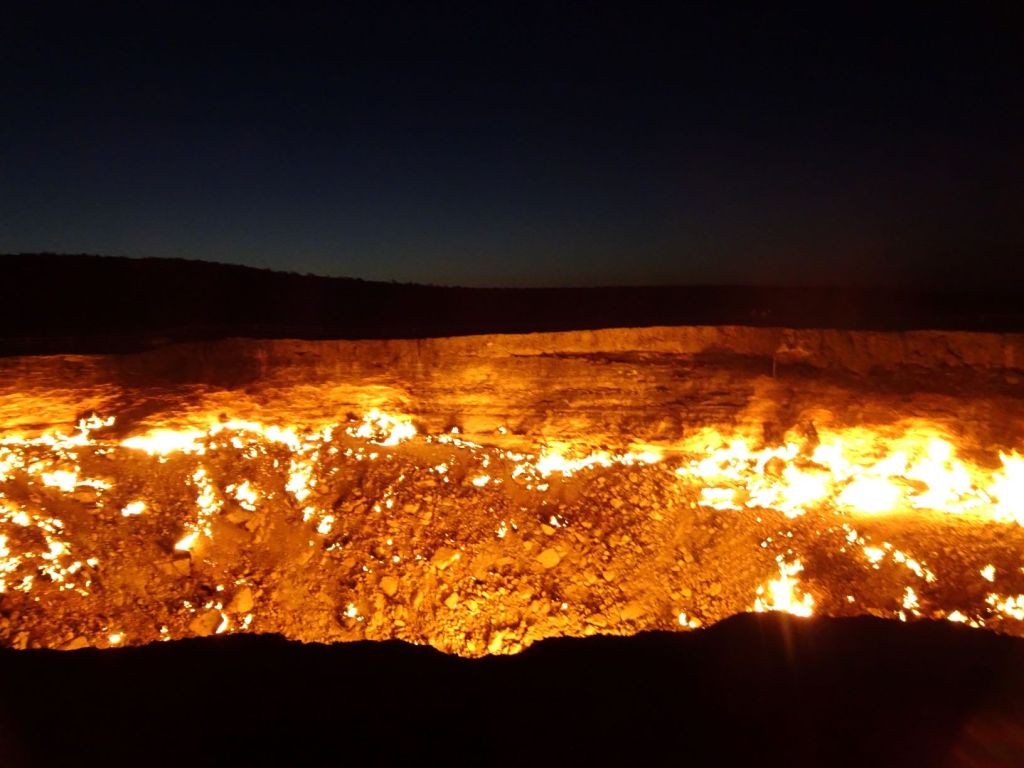
Our destination is the Darwaza crater. The crater came about in 1971 when a drilling set up collapsed into a large well of gas. A lot of gas started to come out and in order to limit the spread of toxic gas it was set on fire. The idea was that the source would burn out, but it is going still, 48 years later, and has become a tourist attraction,
We drive through irrigated cotton fields for the first 100 km. That poor river Amu Darya, it is diverted all the time. We do not think the South Aral Sea will ever recover and we worry about the water in this part of the world in general. It is bone dry unless the fields are irrigated and although this has been part and parcel of land use here since man inhabited these parts of the world. The open irrigation channels, the flooded fields and the water use in general for ornamental reasons (parks, flowerbeds, car wash!!) seems very wasteful.
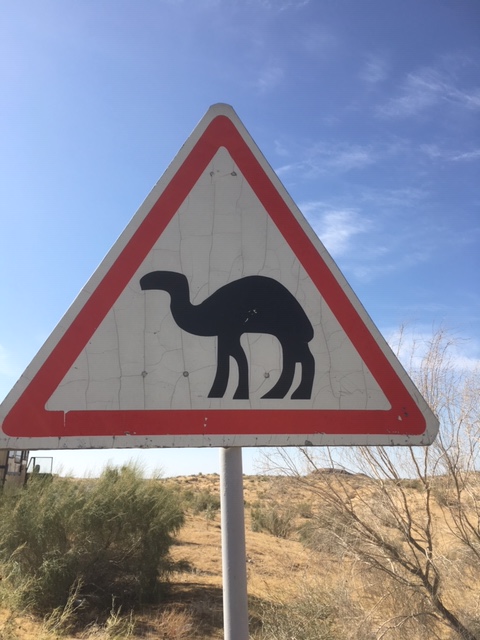
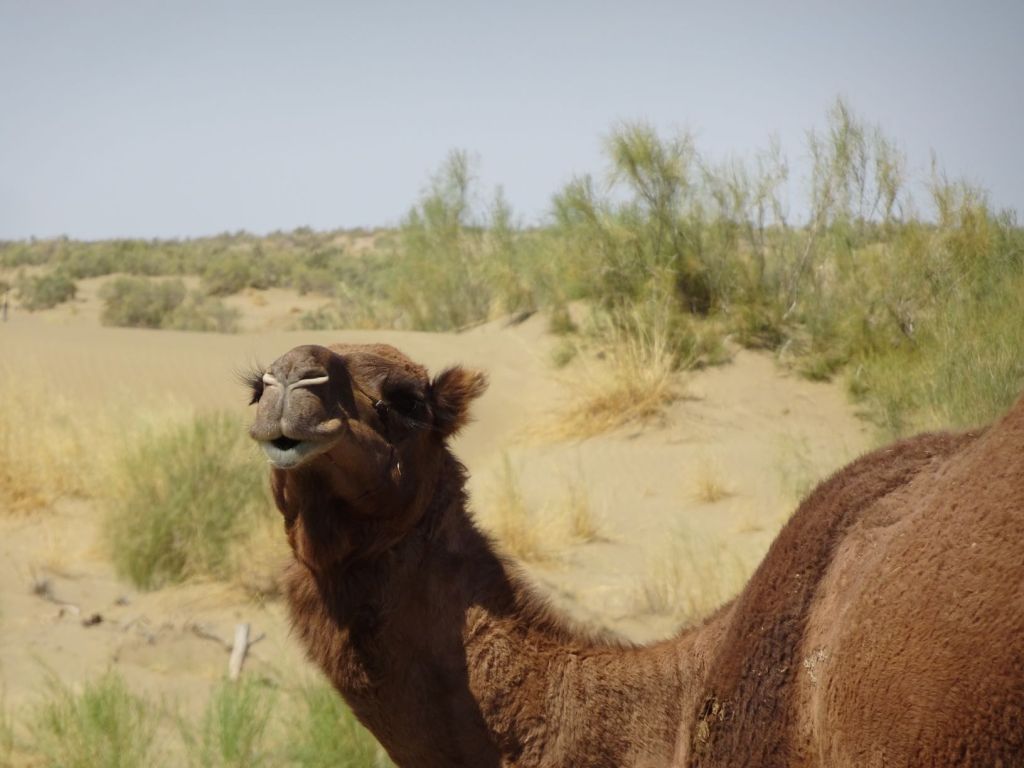
We see few people, a couple of carts and women picking cotton. Then the road turns south, and we are in the desert. Sand with only the occasional bush. Camels cross the road.
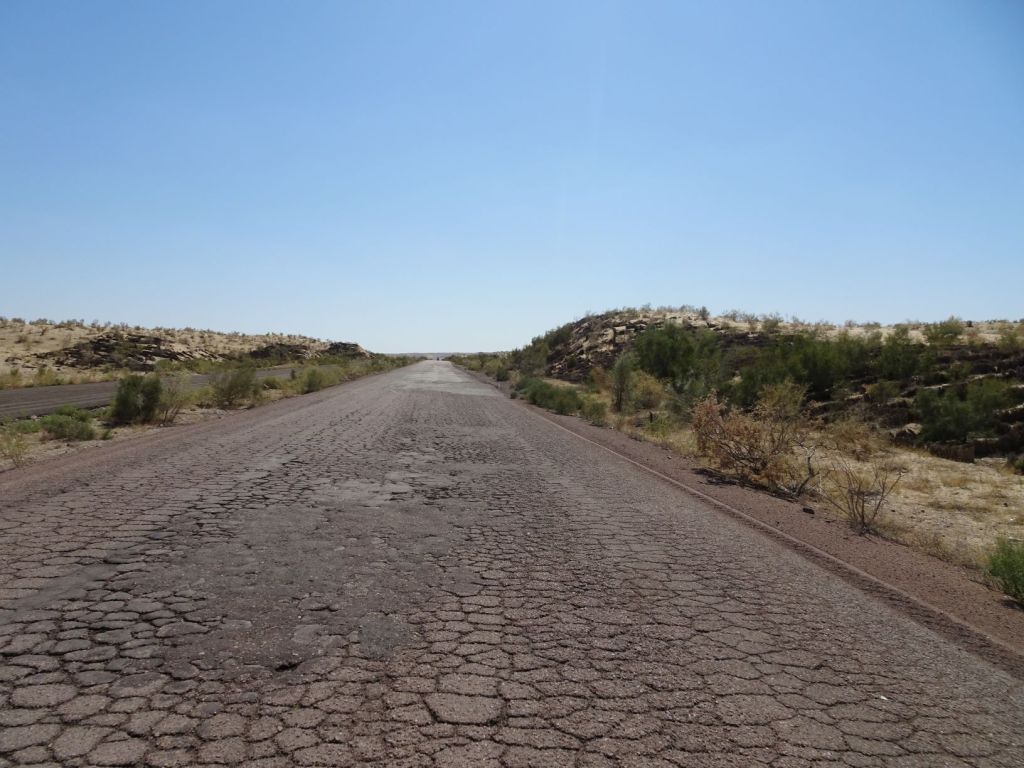
There are a few cars but those that are there drive at lightning speed to fly over the many potholes and broken asphalt.
The Mog makes it to our meeting point near the crater. We decide to risk the drive there and turn into the dust road that leads us there. We camp some 50 metres away and as the sun sets and the moon rises, the red glow of the crater starts to appear. It is quite magical to hear it and see it. It also warms us as the evening turns cold!.
We have a bbq with all the people from the group, most camp on the road side and are taken by 4 wheel drive to the crater, but 5 campers stay near the crater overnight.
September 11
We wake up to nice fresh cold air and camels roaming round the campsite. We had a very good night’s sleep; it was dead quiet. Then we drive to Ashgabat, the capital. The road is suddenly good. We are never stopped by the police, but most local cars are. The police check posts clearly have been informed who we are and where we are going to.
We arrive in Ashgabat early enough to do an oil change. Roelf tried himself but could not undo the bolt to let the oil out. The guy doing the job needs bigger and bigger tools but eventually manages to loosen the bolt at the bottom of the engine. At last we can use the oil we bought in Bukhara! There is no suitable oil filter and the garage is not keen to take out the old one and clean it. It will have to do for now. It costs only 10 Manat, 2 dollars in our exchange rate.
We camp at a hotel and we are allowed to sleep in the rooms overnight which we do.
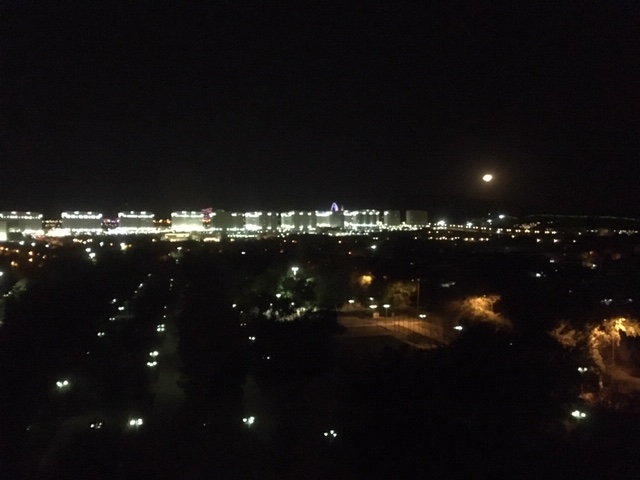
We wash our clothes and need a very long line to hang all of it. It has been a while we had time and the space to do this. Miep even manages to iron a couple of crumpled clothes that we will need in Iran.
September 12
Today we have an excursion with our minder. He tells us very little but occasionally points out what a building is for as we drive through the empty highways that make up the streets of this crazy city. All the buildings we see are new and clad in white marble that comes from Italy. The sports stadium has a huge horse head over it, quite beautiful and the airport is built as a large bird.
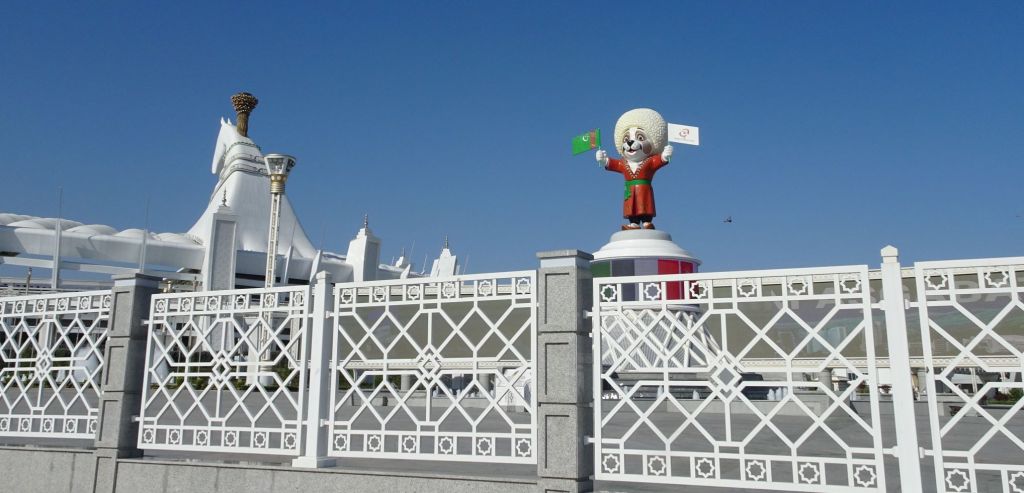
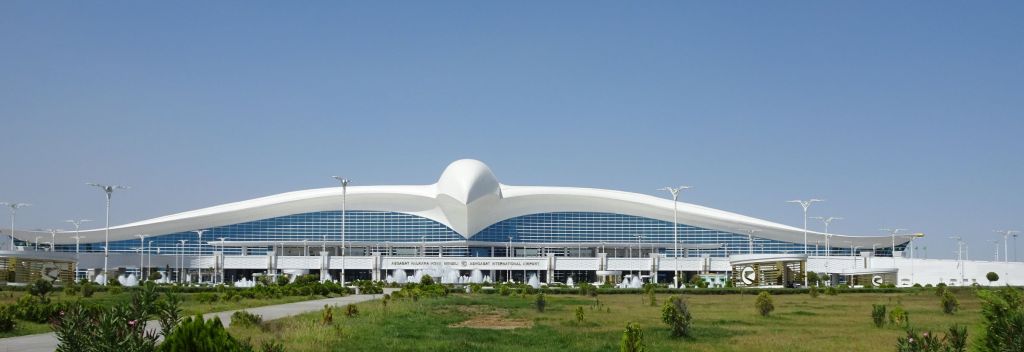
There are numerous monuments and statues, newly planted parks and fountains galore. It is all a big show of Turkmenistan’s prowess.
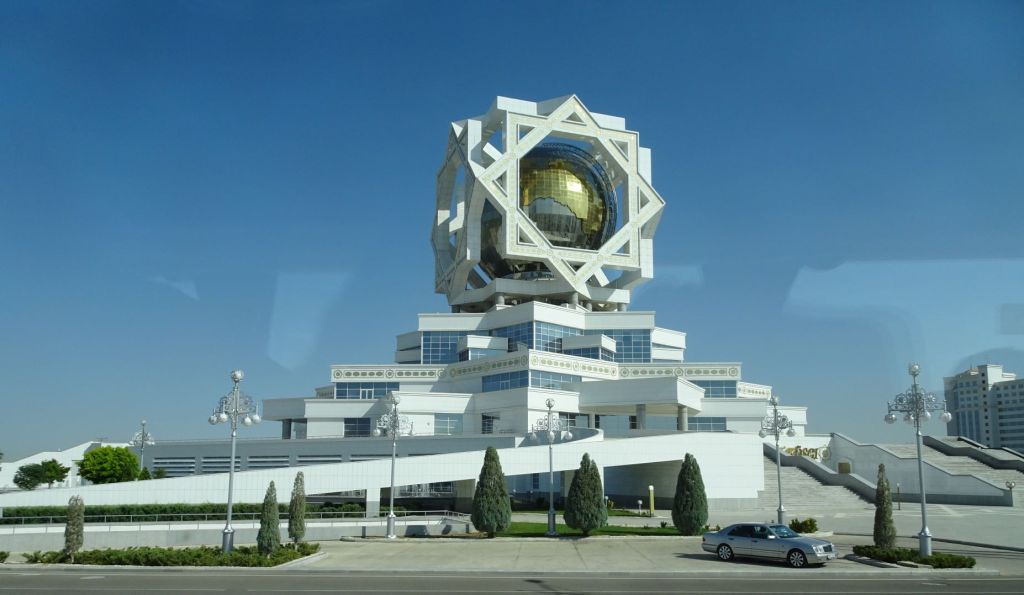
But there are very few people on the streets and even fewer cars. This is all created in honour of the first president of the country. The city is in the Guiness book of records for the largest number of marble buildings and for having the tallest flagpole.
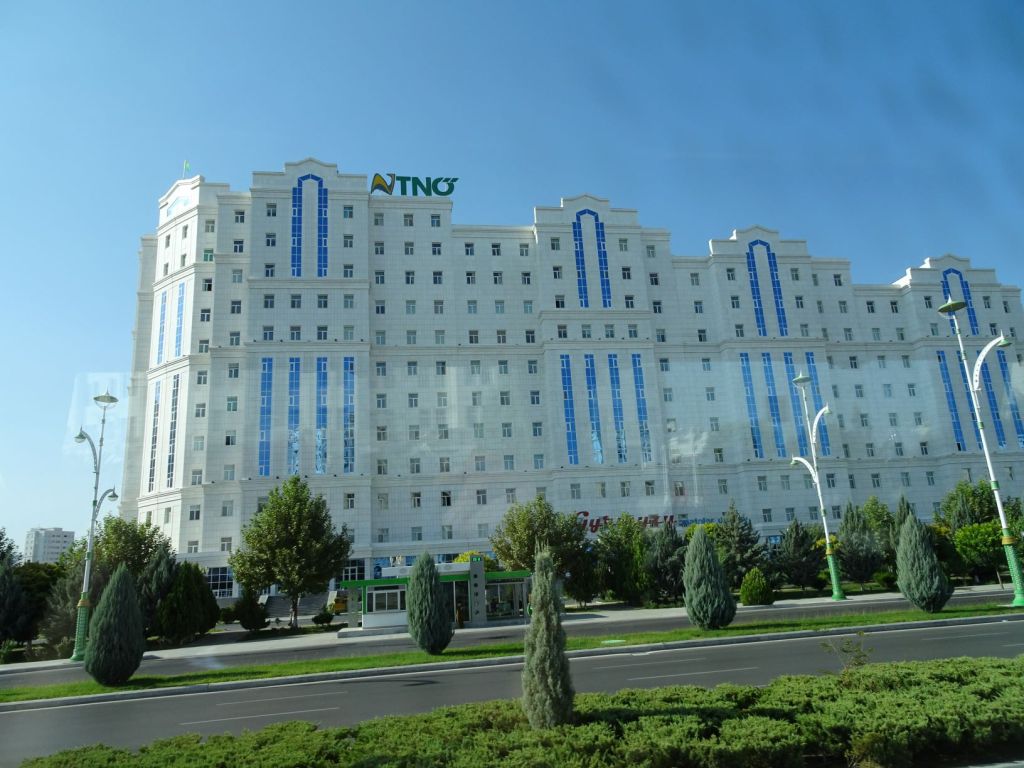
It hosted the Central Asian Olympics some years ago, but now we see nobody using the facilities. The only people we see are the women that sweep the streets, weed the parks and clean the fountains and the men that paint the lampposts with gold paint, work in the parks, and are patrolling in front of the government buildings. No pictures!! Many times we stop but are not allowed to leave the bus. When we are the minder is clearly nervous as we walk in different directions and he is loosing control. One of us even tries to enter a building and is taking pictures of a government building. Total panic. We have to get back inside the bus.
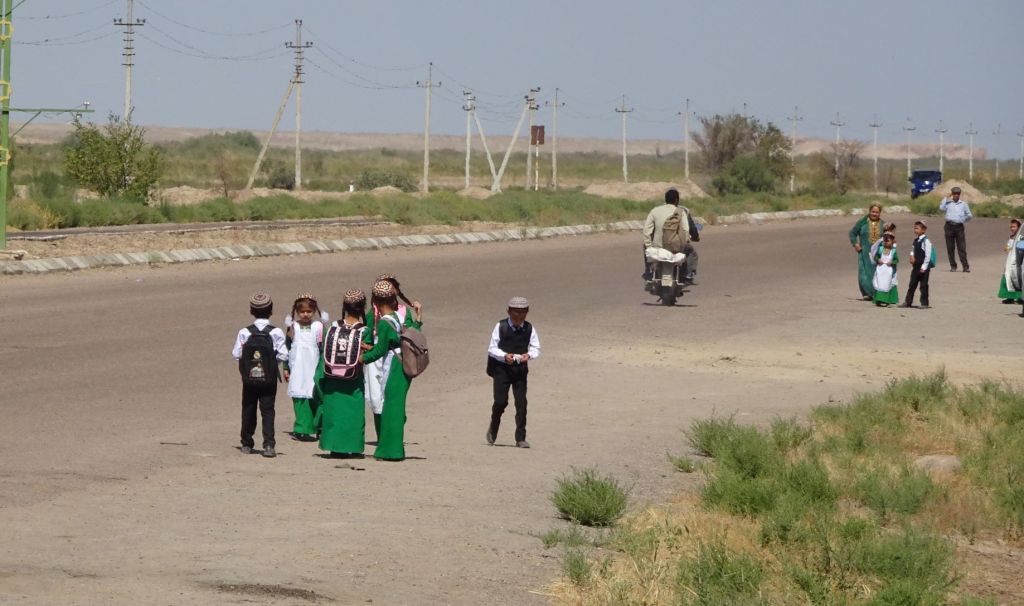
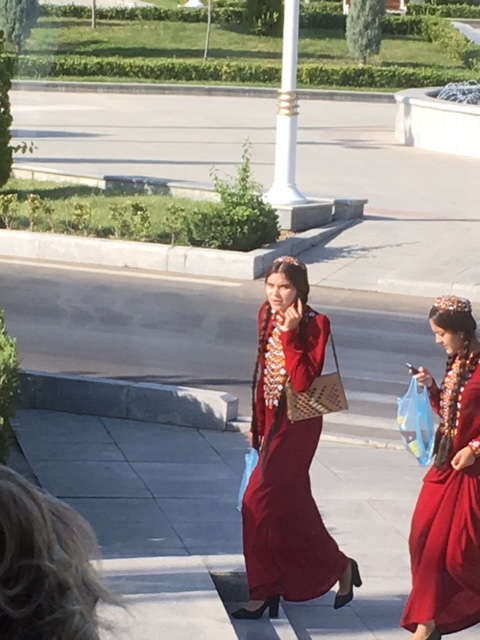
And then there are police cars everywhere. It is clear to us that the bus is under constant surveillance. The guide leaves the bus on occasions. ‘I wanted to buy water, but there was none’ he tells us on his return as he clearly had to report to a parked police car. We cannot enter any museum. Around the airport, in the more populated part of the city we see school children in beautiful school uniforms (green for schoolgirls, red for university students) and women wearing long embroidered velvet dresses and immaculate head scarfs, but that is the only thing related to normal live we see all day. We are brought back to the hotel.
September 13
The minder (guide, or guard?) comes with us to the border. We drive into the mountains that form the natural border with Iran and go past the first border post. Then some 20 km through the mountains in an interim zone before we get to the border with Iran proper. ‘Hurry up’ they say, ‘we close at 4 pm’. We just about get through. It has been a very short visit to this weirder than weird country, but we are all glad to leave. We did not really get to see the place.
 Central Asia Roadtrip