The history of Russia starts with the establishment of the Kievan Rus’ State by the Viking in 862. They united the northern and southern lands of the original people, the Eastern Slavs with the conquest of Kiev. The name Rus comes from ‘red’ after the predominant colour of the Vikings’ hair. The Vikings traded along the big rivers running south to the Black and Caspian seas and imprisoned many Slavs to be traded with the Persian and Byzantine Empires; hence the origin of the word ‘slave’.
The state adopted Christianity from the Byzantine Empire in 988, beginning the Orthodox Slavic culture for the next millennium. Kievan Rus’ disintegrated as a state due to Mongol invasions in 1237-1240. Under the Mongol overlordship, Moscow became a cultural centre, and was ruled locally as the Grand Duchy of Moscow from 1283.
Fragmentation of the Mongol Empire and the rise of wealth and power of the Muscovites allowed Ivan III to refuse paying tributes to the Golden Horde of the Mongols in 1476, thereby freeing Russia as an independent state. He is the first prince to use the title of Tsar (derived from the Latin word Caesar, and used previously by Bulgarian monarchs), although the title was not formally adopted until the rule of Ivan IV (Ivan the terrible), who greatly extends the Empire in to Asia.
A period of political unrest, enhanced by crop failures, follows the death of Ivan IV in 1584, which is settled with the coronation of Mikhail Romanov as tsar at the age of 16. The Romanovs continue to be in power until the Russian revolution in 1917.
Saturday July 20st
It takes us 6.5 hours to cross the Latvian/Russian border. We wish we could have taken photos as the sight of the two Russian Officers descending the steps of the Mog was priceless! They simply could not understand why people rich enough to travel so far would wish to do so in such an old vehicle.
The drive after the border was through endless forest with no house to be seen. The road was of good quality asphalt but if you turned in to a side road, the asphalt stopped after some 20 metres. The rare villages we saw from the roadside consisted largely of simple wooden houses.
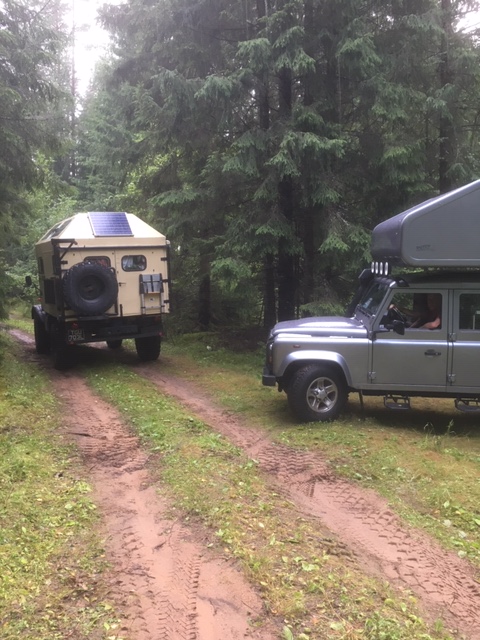
We missed the turn off to the campsite and ended up doing some serious off-roading! What you cannot see here are the deep muddy puddles we waded through. Mog and Landie came through with flying colours. Dirty cars, but no damage (apart from a small part of the roofrack that came off) unlike one of our travel companions whose back bumper had to be bolted on again. Good job we collectively have so many tools and kit.
Sunday July 21st
On our way to Moscow.
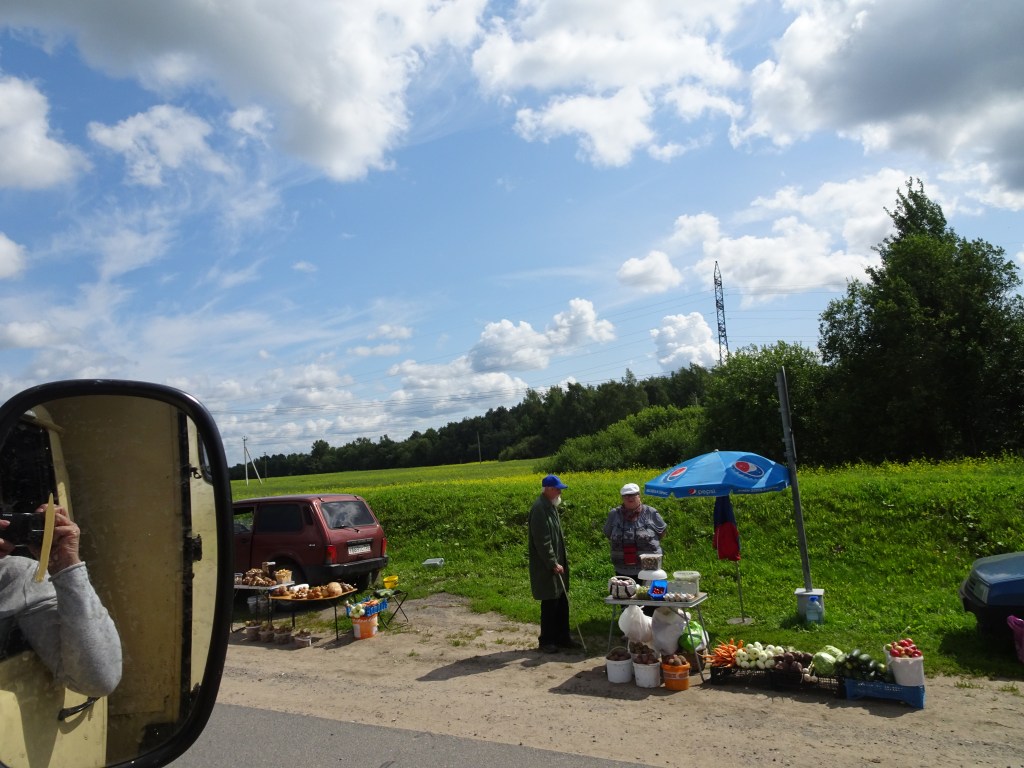
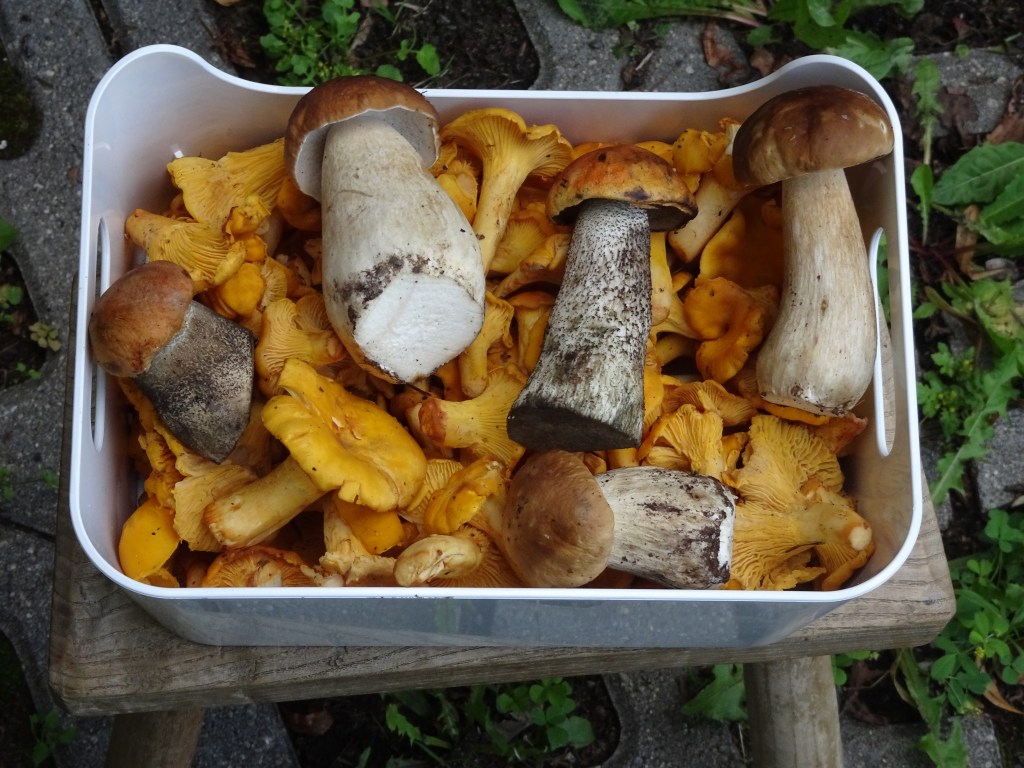
People offer the fruits of the forest on the road side. They make for a wonderful mushroom sauce which we have for dinner. Chanterelle, birch boletus and ceps, just like at home but so very much more abundant here. Also interesting to see how they specifically pick the very young mushrooms here. Not the large ones, but only those the flies have not got to yet.
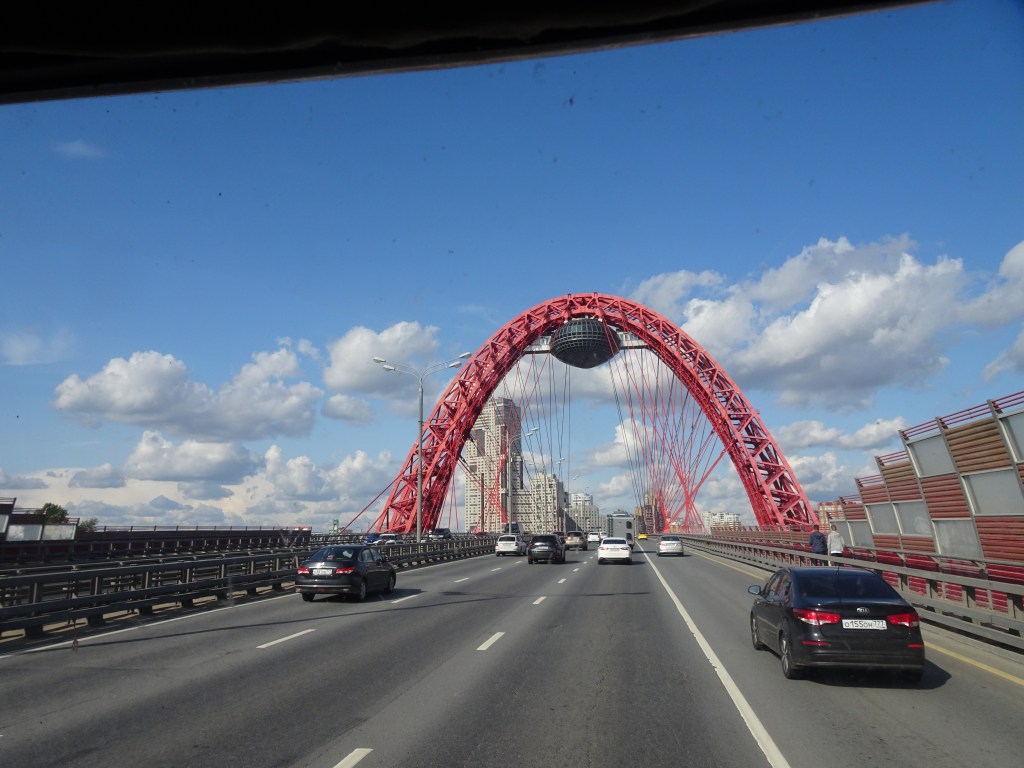
The entry to the city of Moscow is magnificent
Monday July 22nd
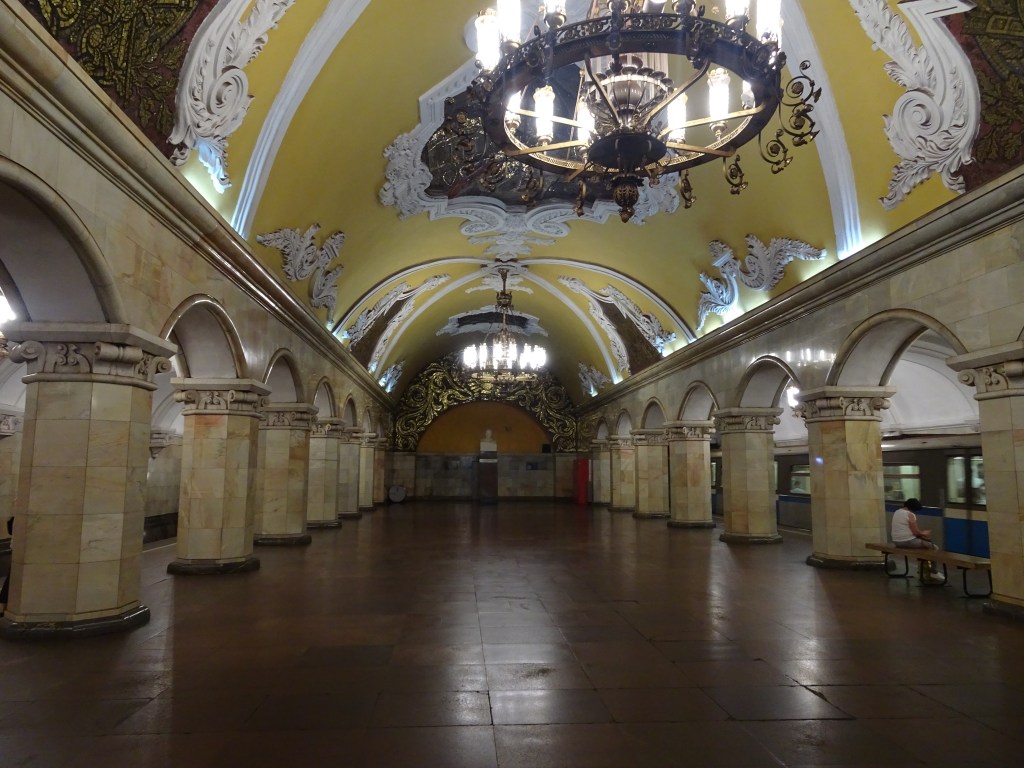
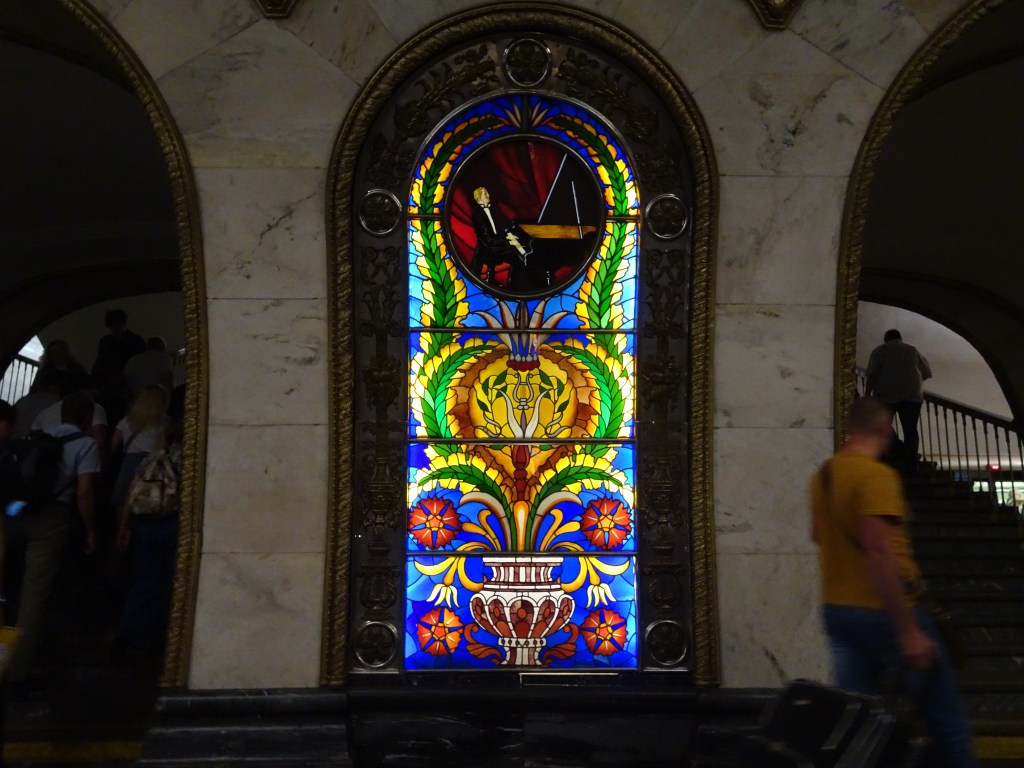
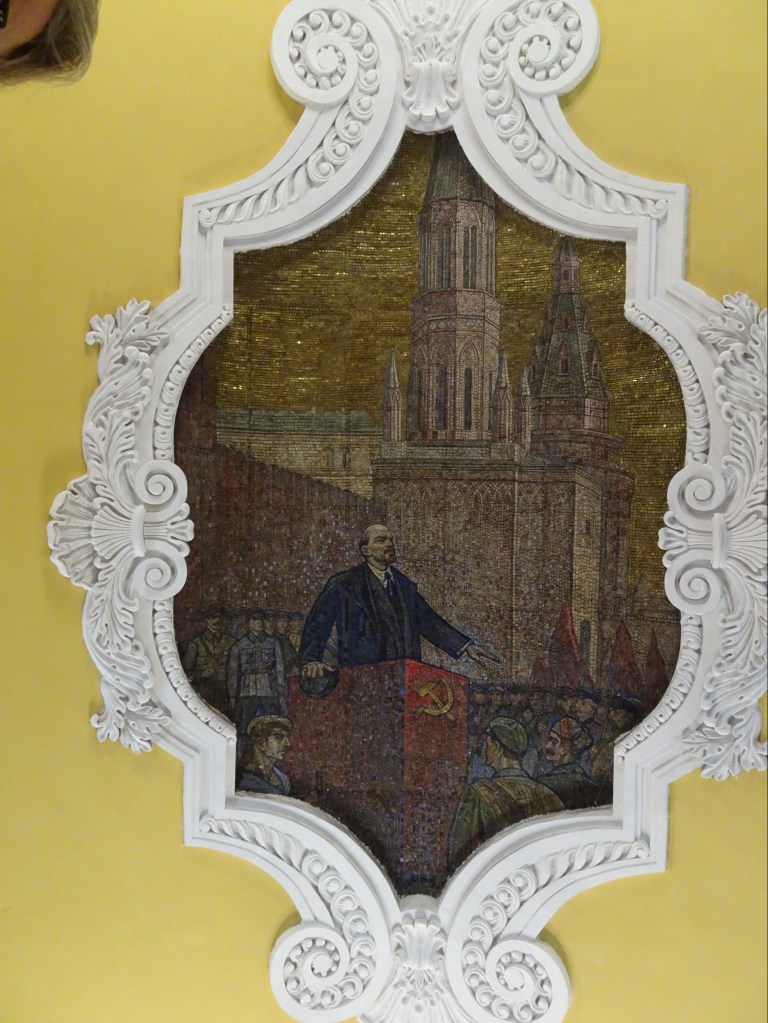
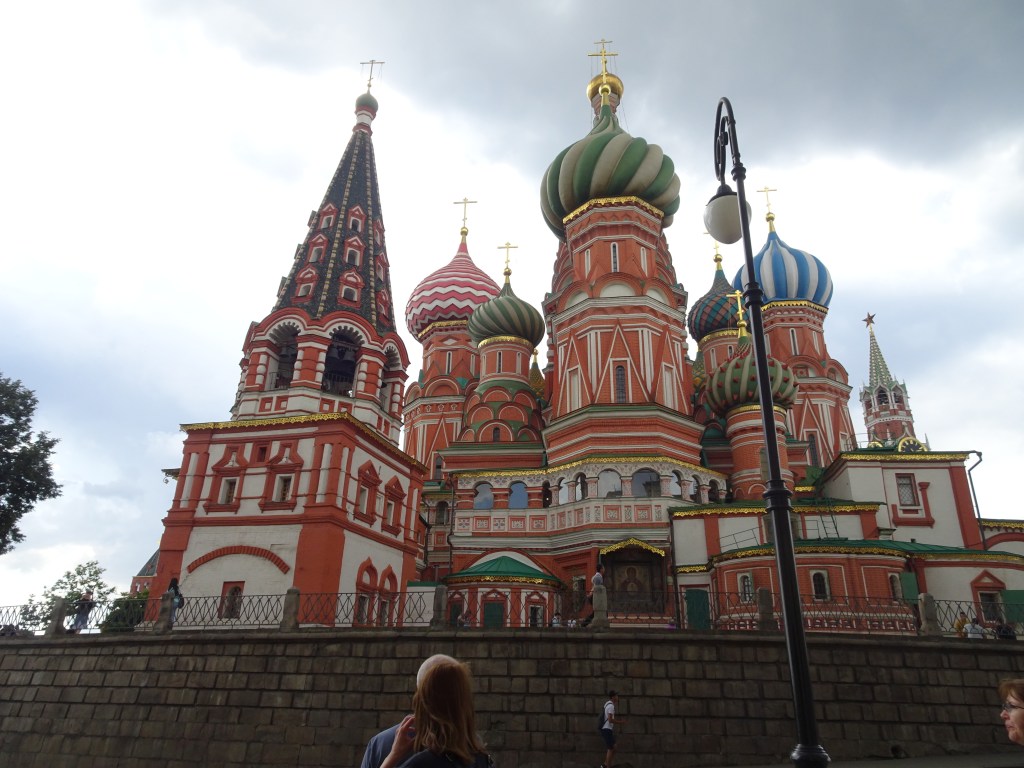
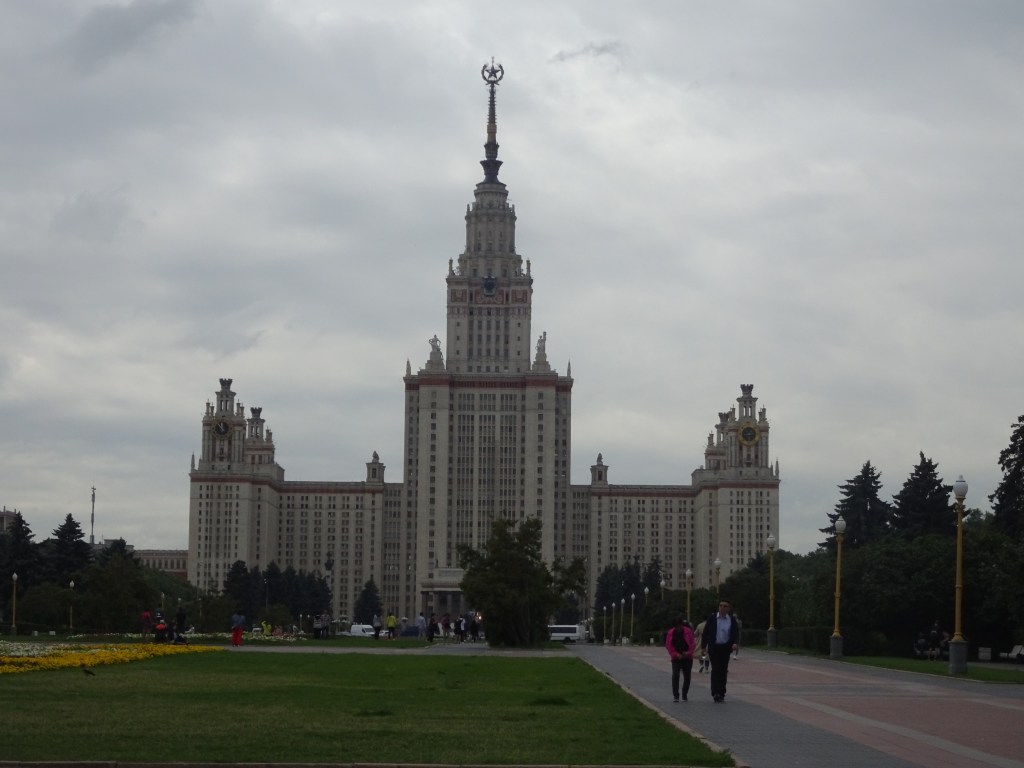
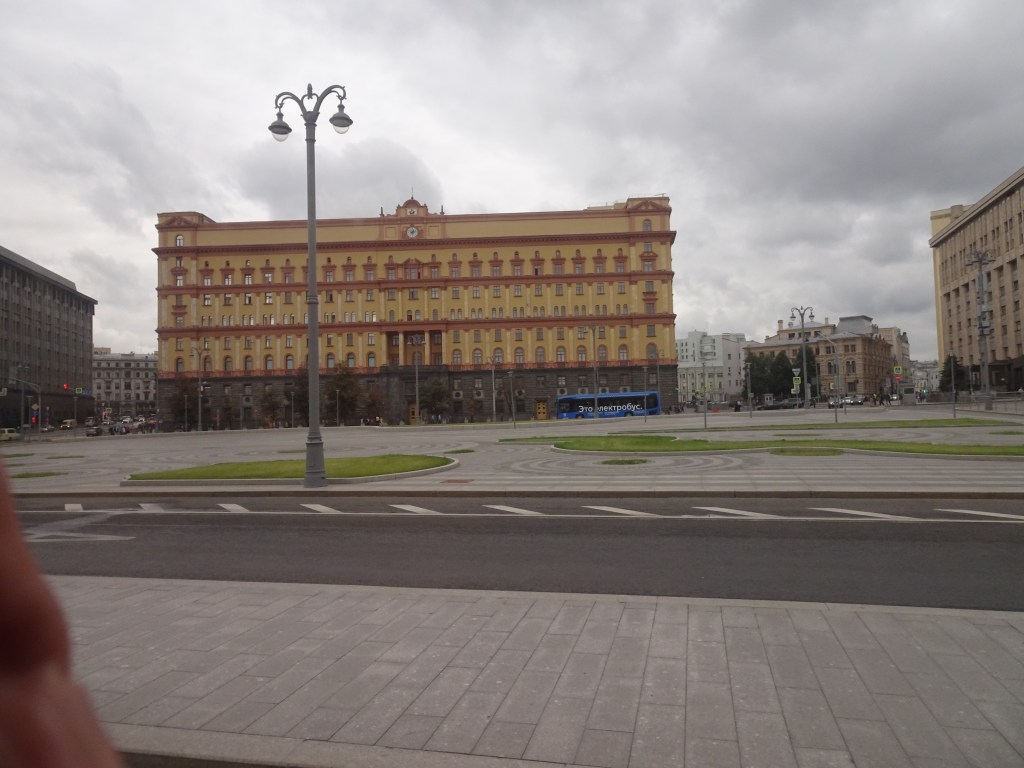
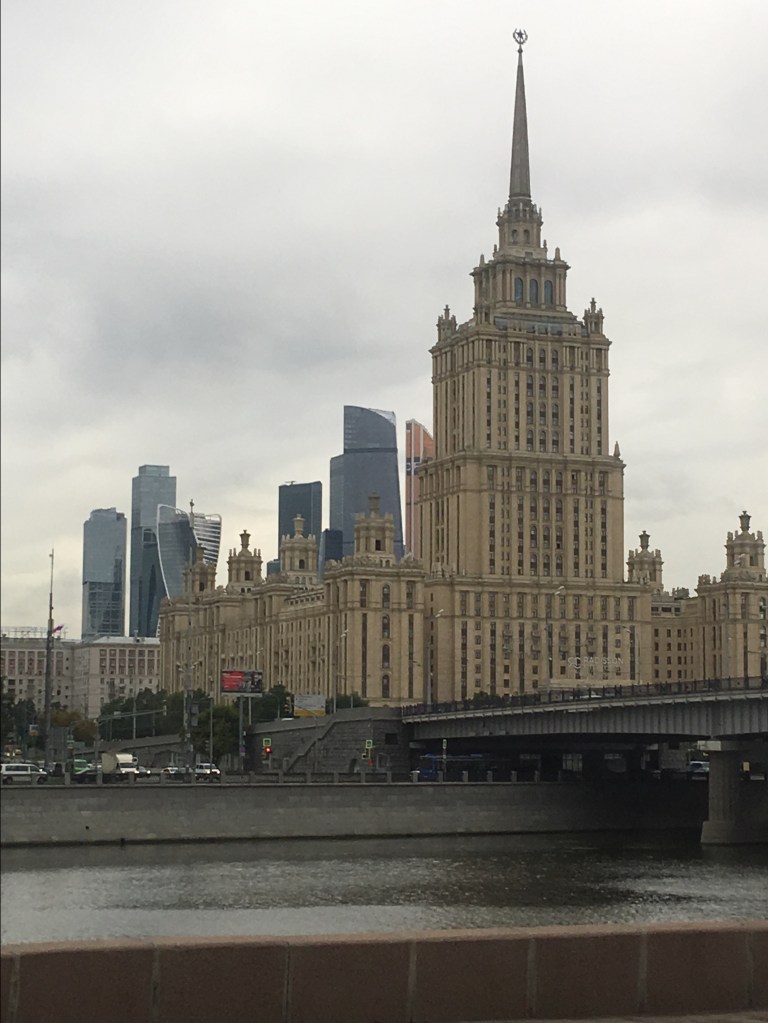
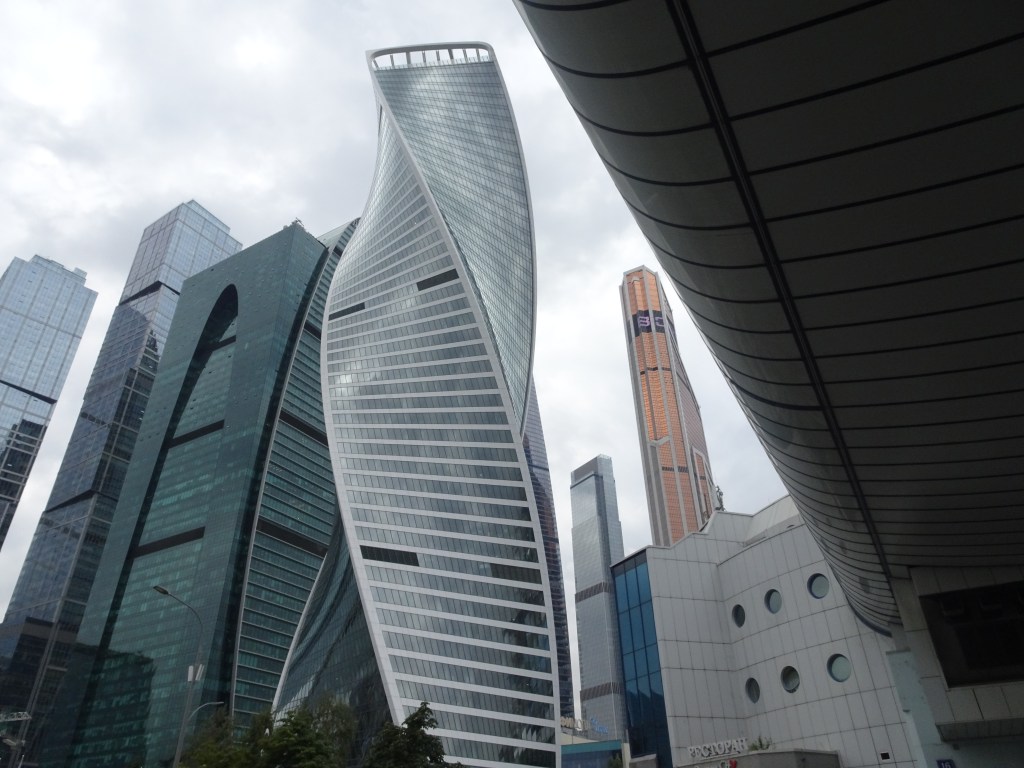
Moscow, what a magnificent city. Thirteen million people. The Metro is world famous.
Tuesday July 23rd
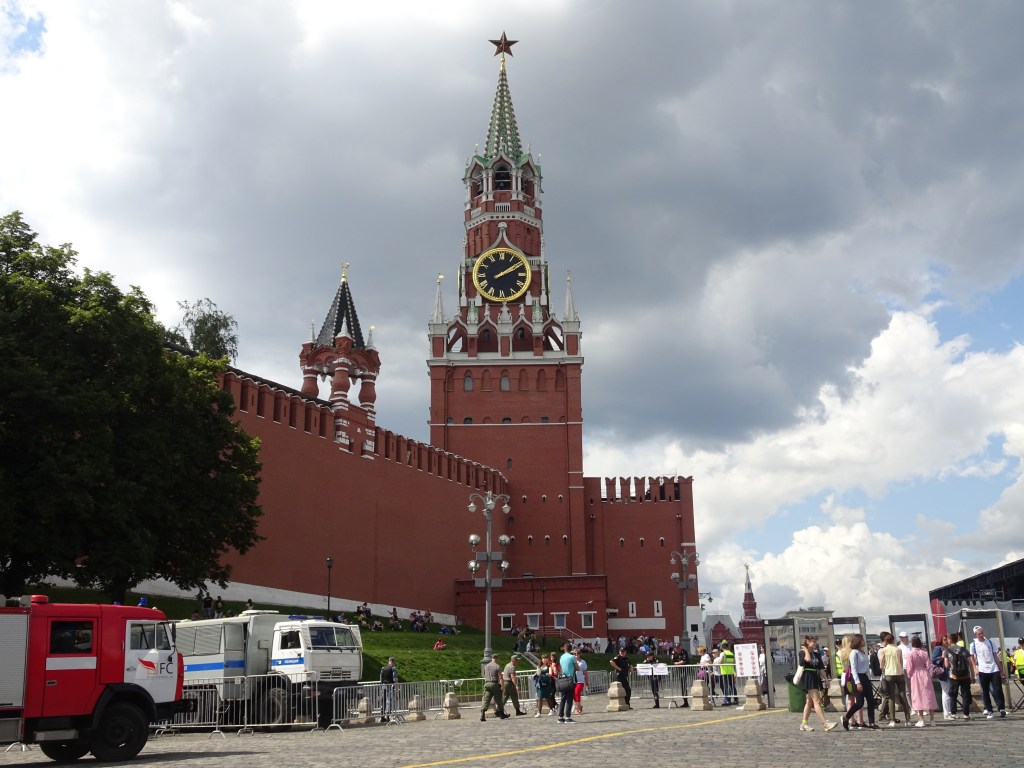
Another day in Moscow. we have a bus trip with an excellent tour guide.
Wednesday July 24th
An intensely miserable journey from Moscow to Suzdal. Heavy rain, and massive traffic jams on the M7. The roof rack that we bought on Ebay is totally crap; all the bolts are snapped. The waterpump in the kitchen is leaking, and the Garmin cannot connect to its maps for Russia. We take about 6 hours to do 230km!.
The highlight of the journey is a visit to an English cheese farmer; four thousands cows and a lot of wonderful cheese and yoghurt.
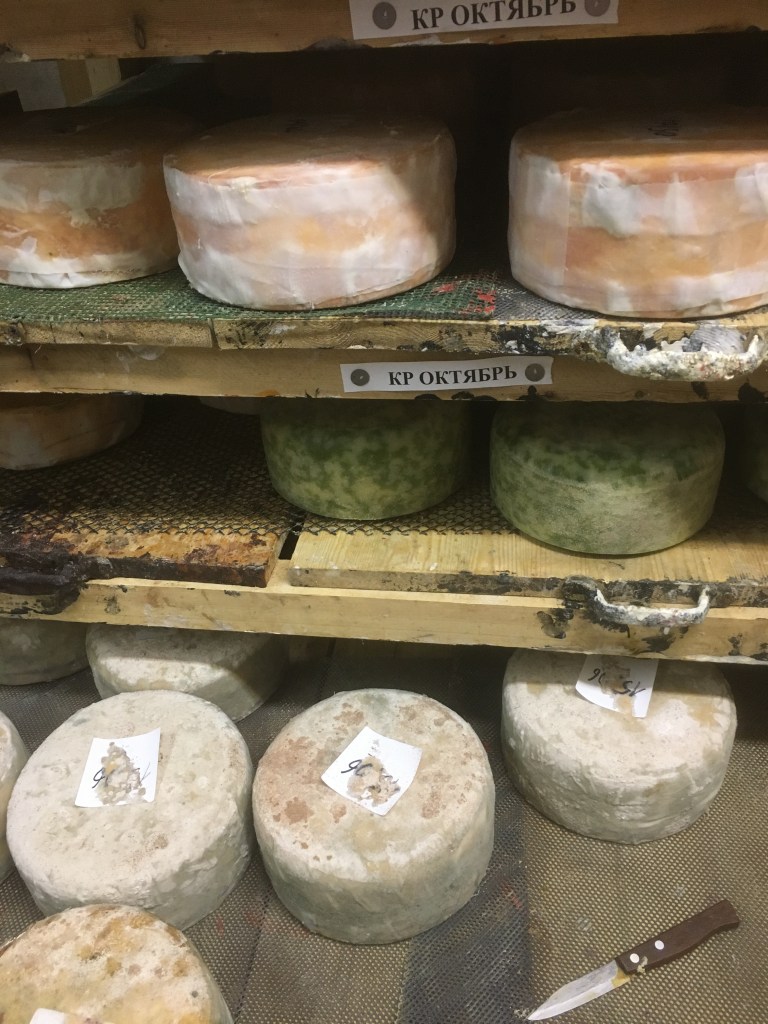
John the farmer, came to Russia in 1993. He married a Russian wife and took Russian citizenship. He takes a pragmatic view on politics saying that Putin is the right guy for this moment and has given the Russians self belief. Before he came the people had no confidence and did not believe in tomorrow. He laughs off criticism by people from the UK saying that if we are stupid enough to elect someone like Boris Johnson, we should keep our mouths well shut!. His young aide who shows us round does not agree with him and says change is needed.
John’s yoghurt is out of this world; pity our fridge is so small…
Thursday July 25th
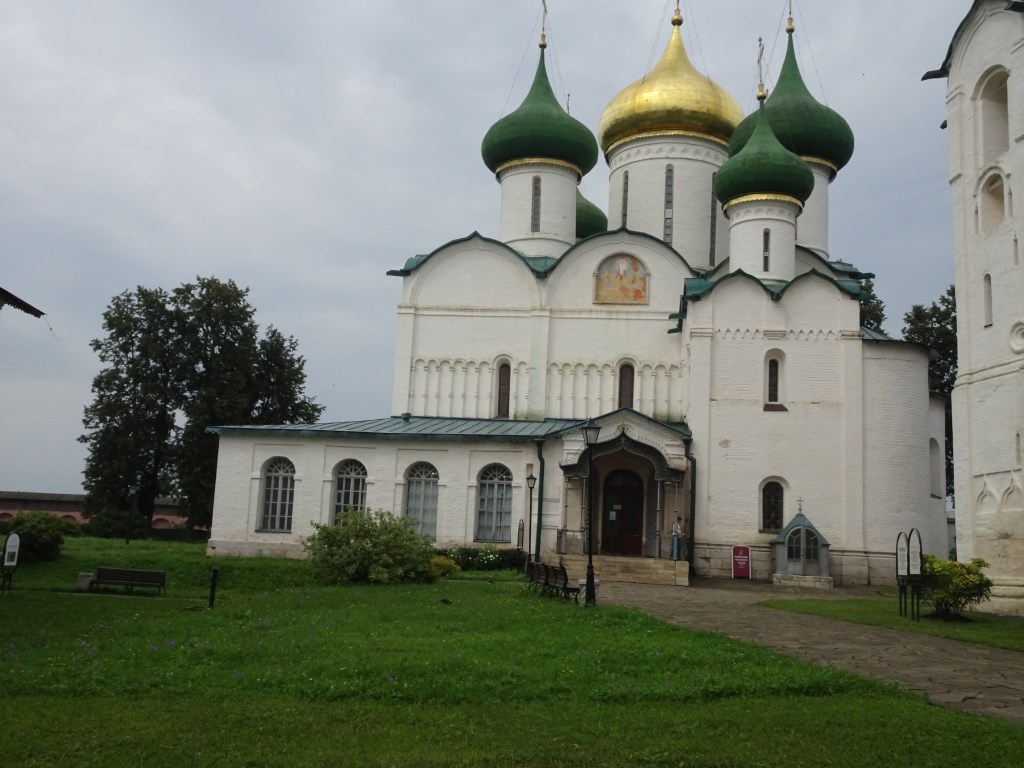
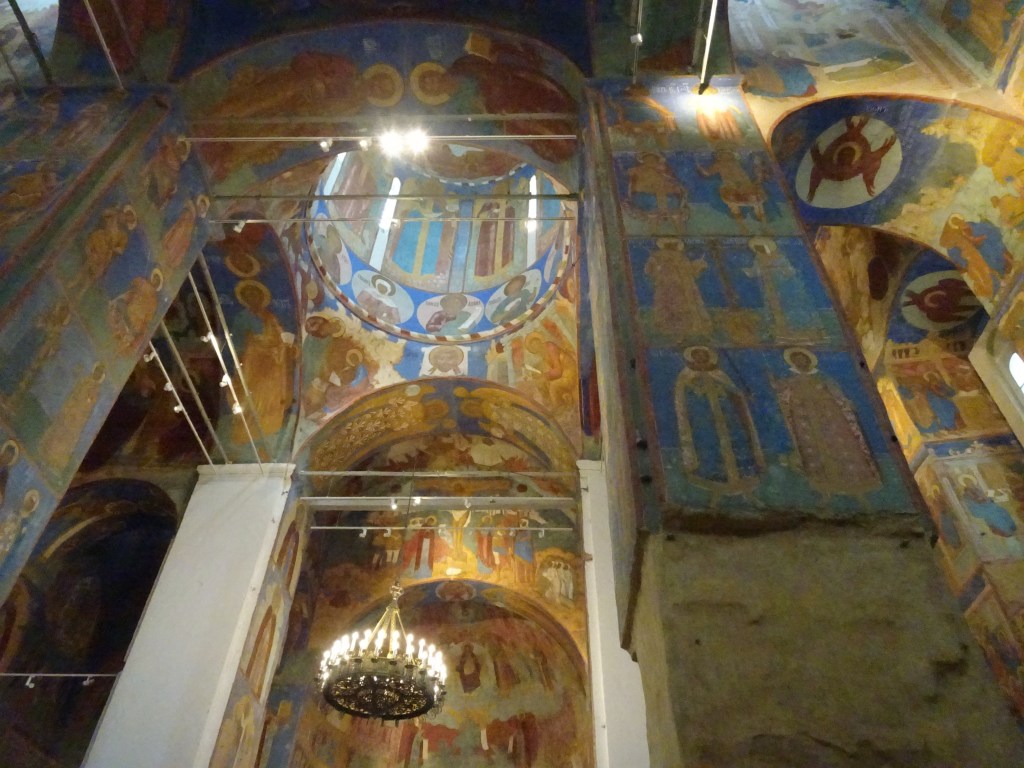
We wake up on a very soggy campsite in Suzdal. Reluctantly, we start our repairs on the Mog in the pouring rain. The weather gets a bit better in the afternoon and we take a tour through this historic town. It was the capital of the principality of Rostov and more powerful than Moscow, until the 14th century. Its story seems typical for the loose federation of principalities of Kievan Rus who were always quarrelling and disunited making them an easy prey for the Mongol conquerors who totally destroyed the infrastructure in the 1240s.
During the heydays of the Russian Empire, Suzdal was a market town.
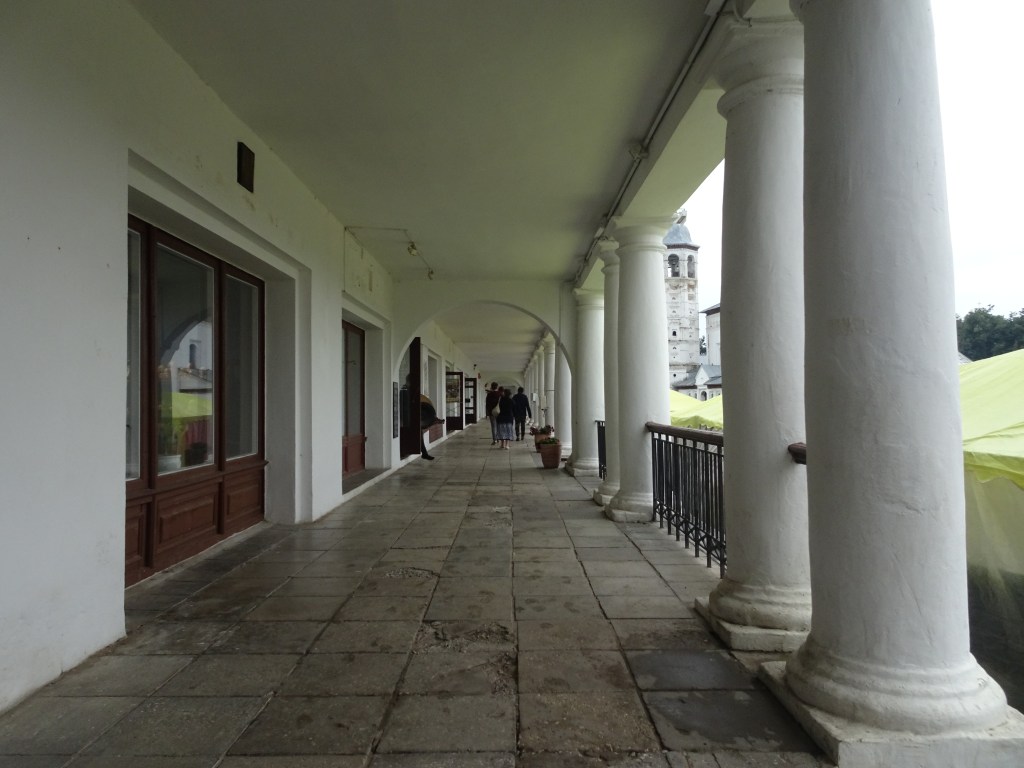
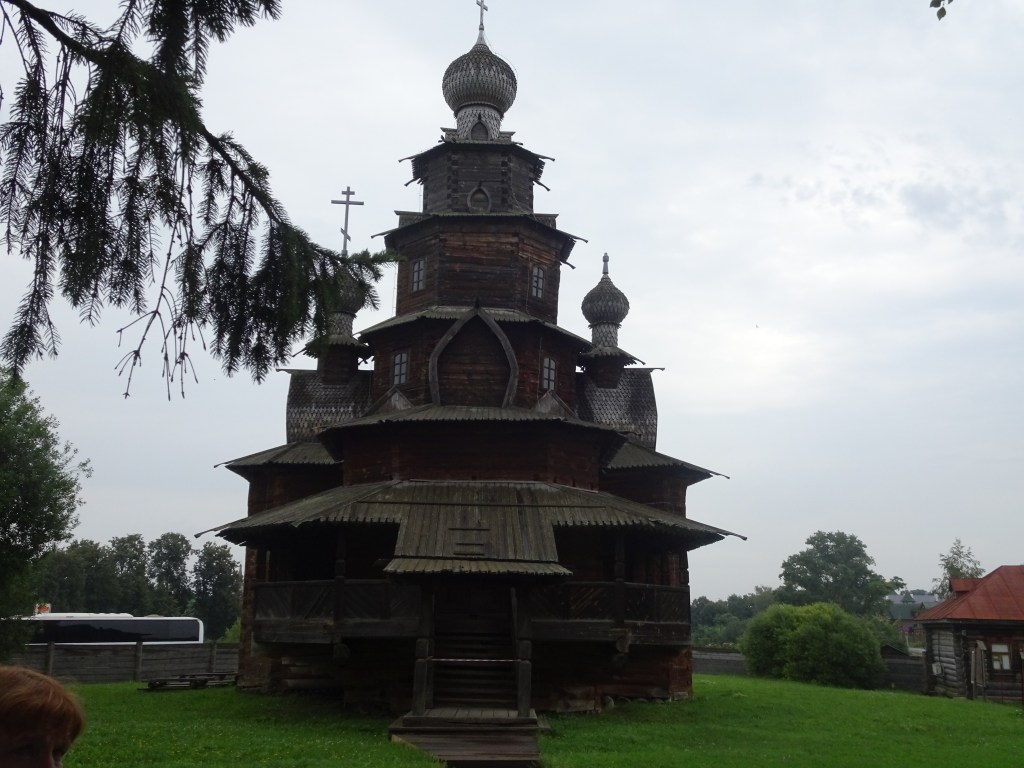
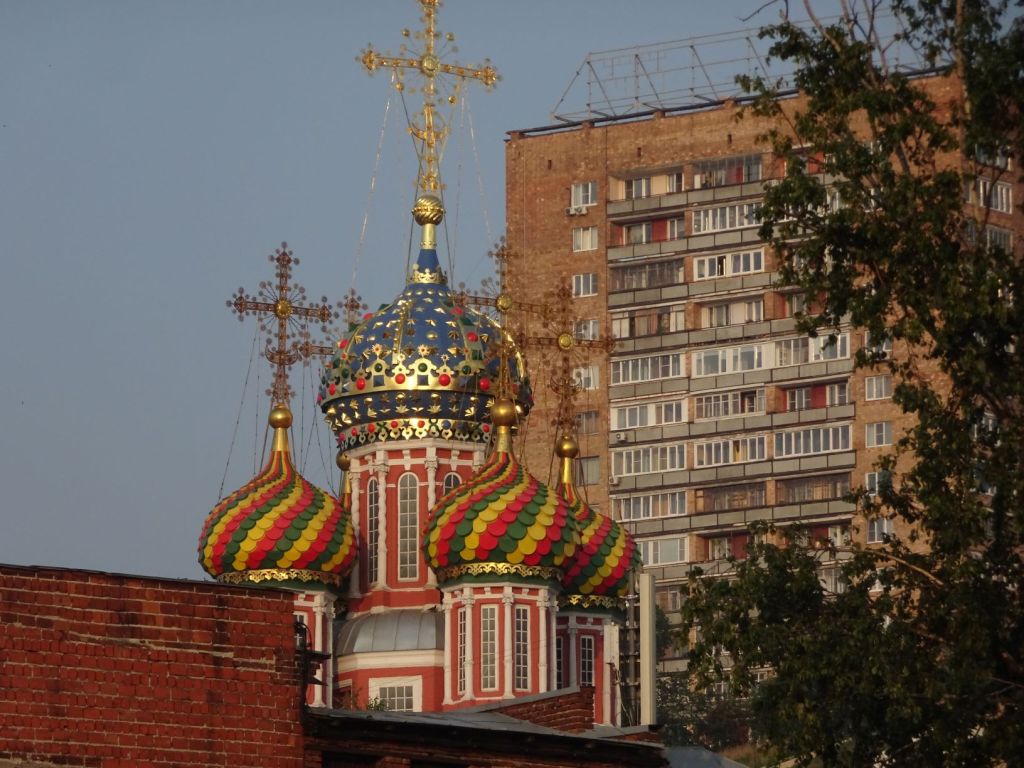
The merchants showed off their wealth by building churches, one even more magnificent than the other. we were told that the typical domes of orthodox churches came in to being because they allow snow to run off the roof naturally.
Friday July 26th
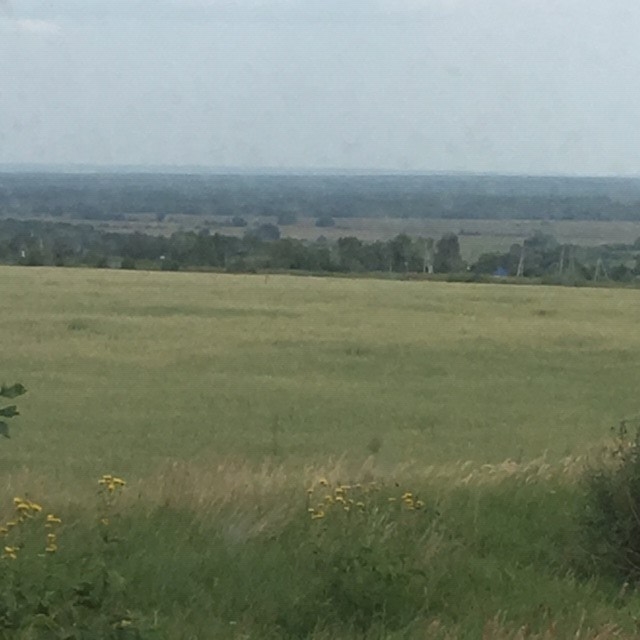
A very warm day but we do not have far to drive. The 250 plus km takes the total to 4,5 k for the trip to date. The landscape is quite empty; we are talking how it must have been for the soldiers of the countries who have tried to occupy Russia. The armies of Napoleon in 1812, and Hitler in 1942 got hopelessly lost in this vastness. In the 17th and 18th centuries the Russian Empire had found it hard to occupy and control the steppes when they were fighting the pastoralists of the Golden Horde and Crimean Khanate. The pastoralists tempted vast Russian armies deeper and deeper in to the steppes without giving them a real fight until supply lines got in to trouble and the armies were weakened by water shortage and disease. Only then the pastoralists would attack. The Russians learned from this and did exactly the same to the French in 1812 and Hitler in 1942.
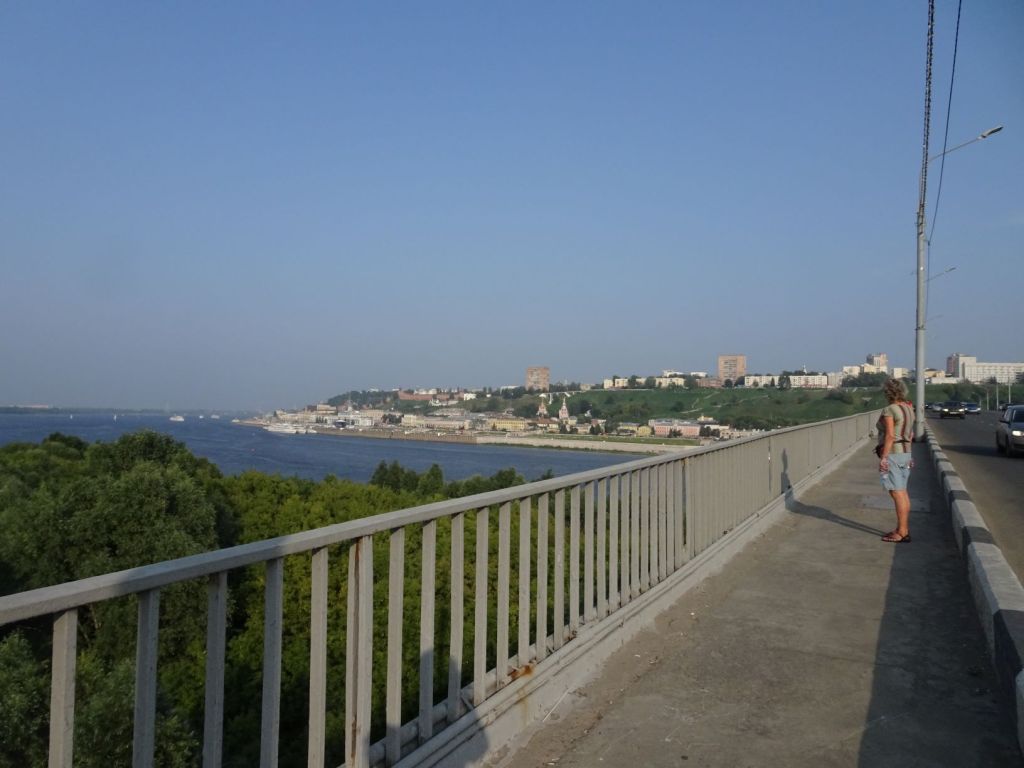
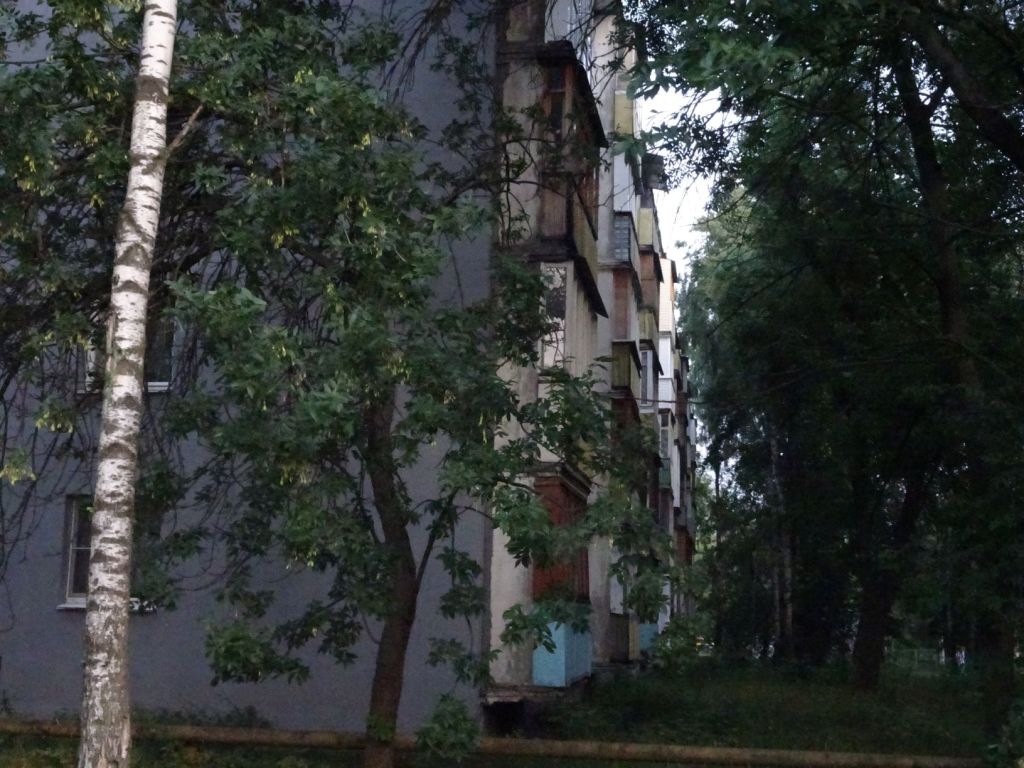
We arrive in Nizhny Novgorod, a historic city beautifully located where the river Oka and the mightly Wolga meet. This point is known as Strelka, “the Arrow” and it certainly looks like that. On one side is a brand new football stadium built for the 2018 Worldcup and on the other bank is the old city with its Kremlin . Wonderful contrasts throughout this town. An upmarket boulevard with party atmosphere lines the Oka but cross the river over the high bridge that gives the best views of the Strelka and on the other side you find old run down flats. In one view you catch the golden and sugar cane domes of a church and right behind it a drab highrise. On our way back to our camping spot just outside a sportscomplex we walk endlessly through residential areas with identical flatbuildings. The balconies look like they can fall off any minute. The trams are so old they look like they cannot function, but we are so wrong: they run and run frequently. The metro runs like clockwork and is cheap. In fact, all public transport we have seen so far is working well and is cheap. And in the Moscow metro you can even charge your phone!
Saturday July 27th
Along drive to Ulyanovsk, 470km. This city is situated on the Volga also. In fact the river is the longest river in Europe, a bit more than 3.5 thousand kilometres. It starts North West of Moscow in hills only 225m above sea level, runs east, and than south to the Caspian Sea. The river forms the water basin of most major cities in Russia, and is connected with canals to the Baltic Sea near St Petersburg and to the sea of Azov and Black Sea via a canal to the more westerly river Don.
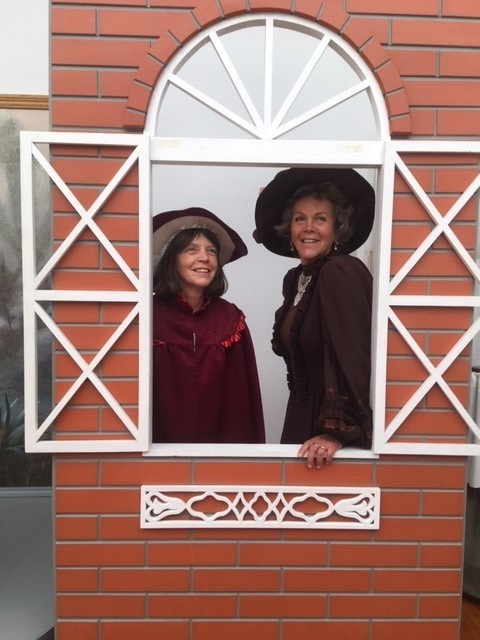
We stay over on the open air museum parking lot in the middle of the old town. We are near the house where Vladimir Ilyich Ulyanov, better known as Lenin, was born in 1870. The tour through the house was a bit tedious, as they wanted us to know everything about how they made tea in this middle class household, but did not say anything about the family’s thoughts and motivations (Lenin’s elder brother Aleksander was involved in the attempted assasination of Tsar Alexander III and executed for his efforts).
We do get the opportunity to dress up in the style of the time.
Sunday July 28th
Short drive to Samara 240km. Nice swim along the way.
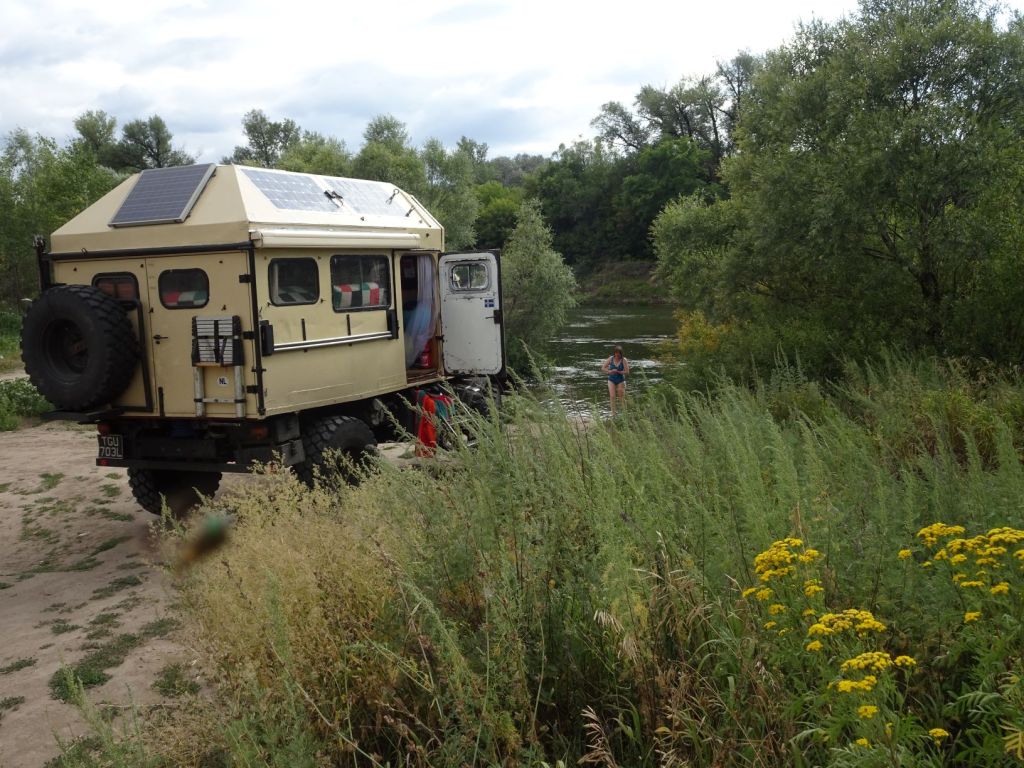
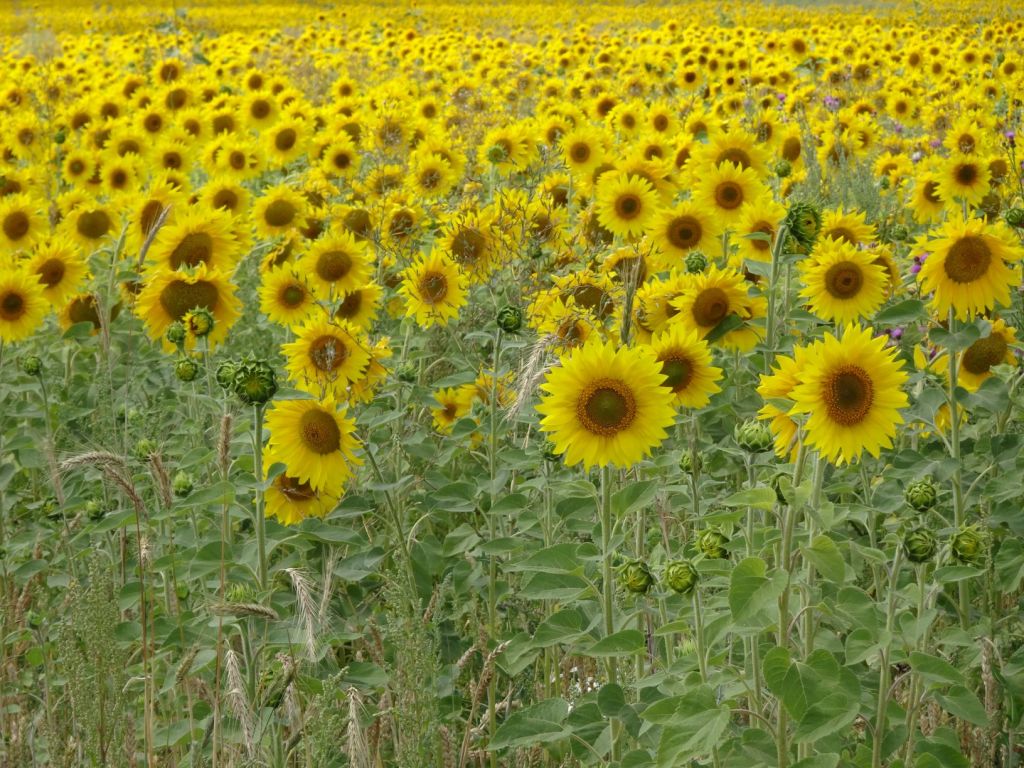
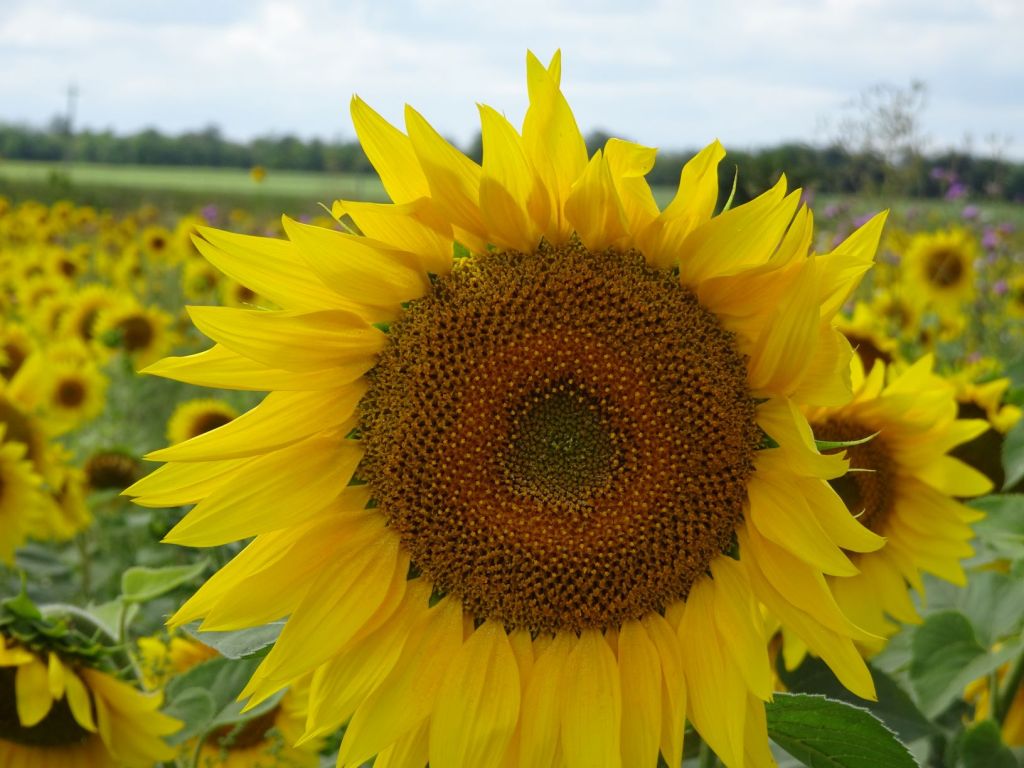
Some beautiful sun flower fields too.
Monday July 29th
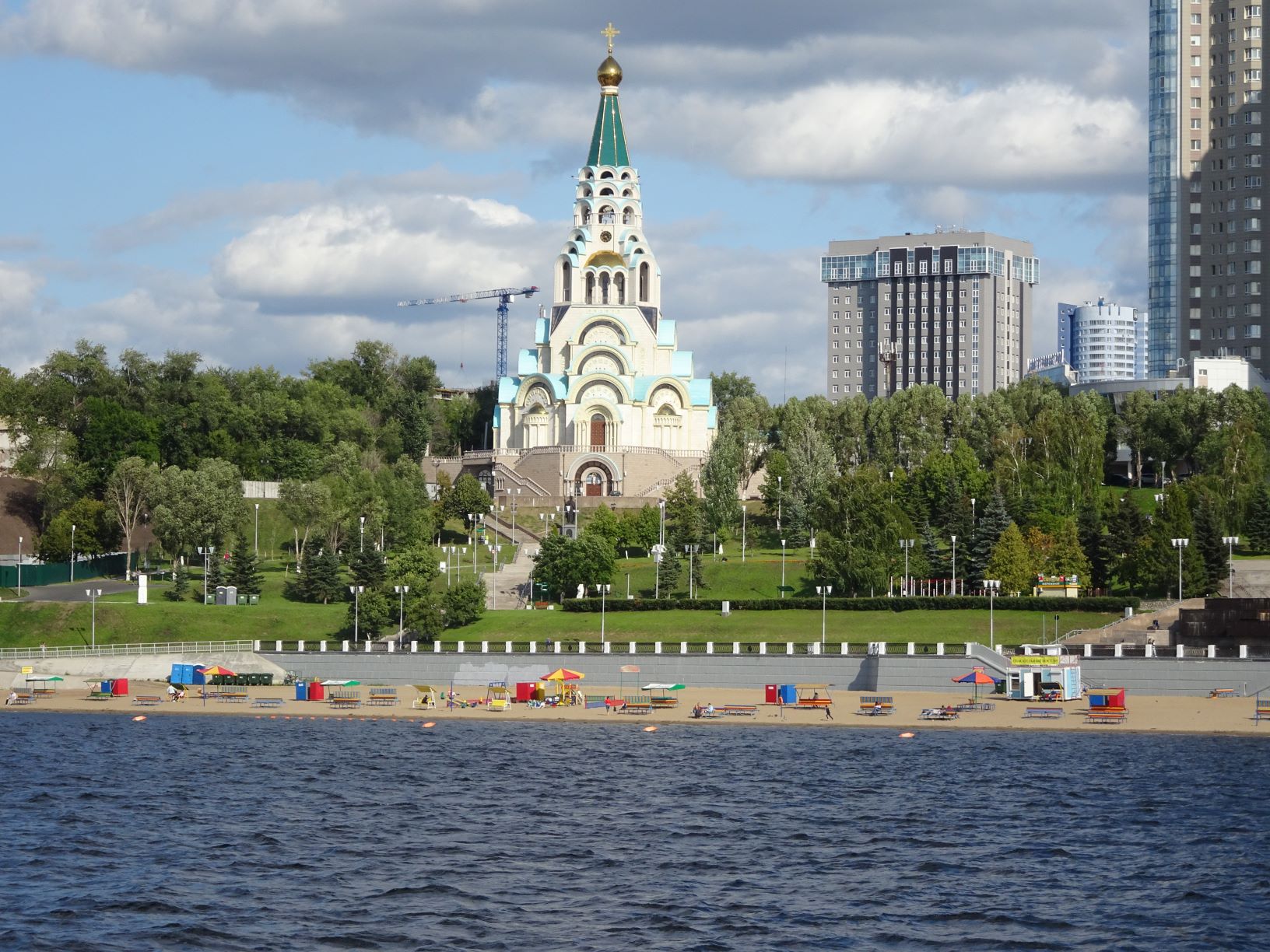
Samara is situated on the river Volga in a magnificent setting. Its boulevard along the river bank is 5km long and has sandy beaches.
It was the alternative capital of Russia during WWII when Moscow was under threat. Stalin’s bunker is a famous attraction.
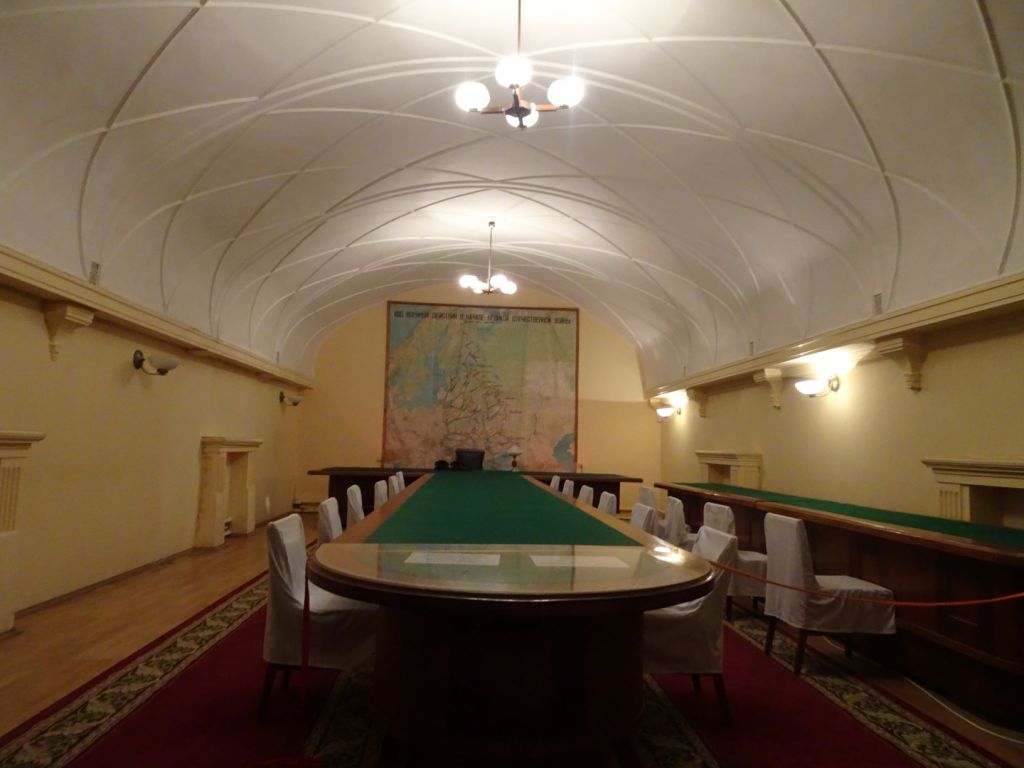
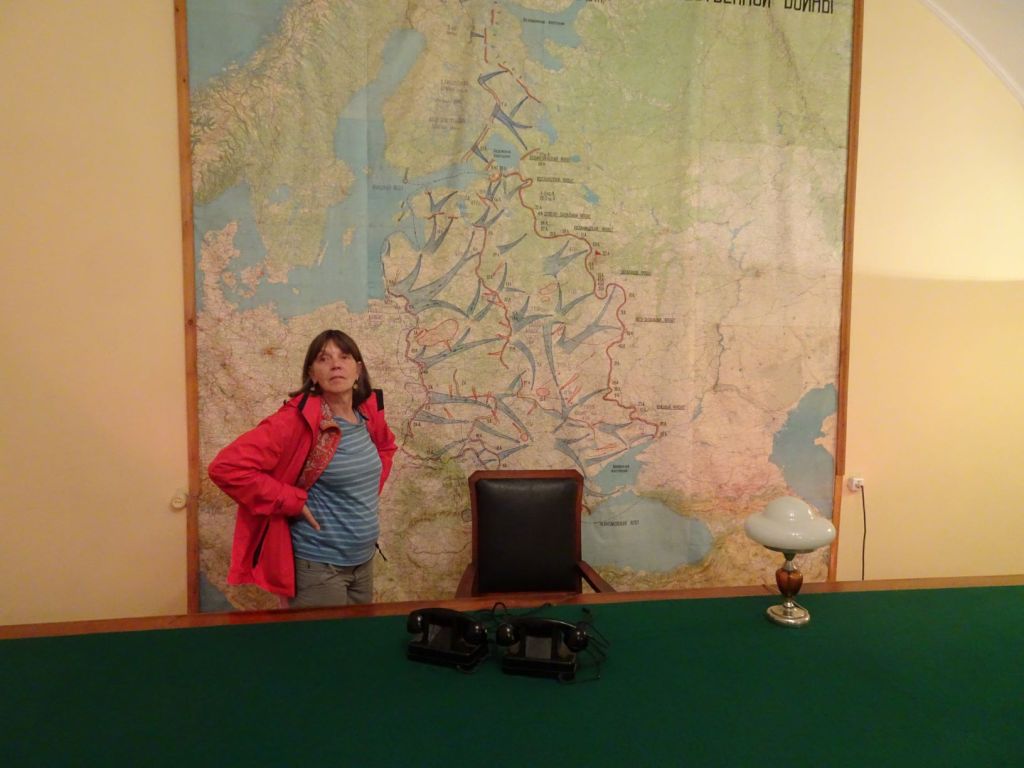
The bunker is the deepest of the WWII bunkers build for leaders of the countries involved. It is 45 meters underground and has this magnificent meeting room with a map of the war situation on the wall.
Another ‘star’ attraction in Samara is the space museum. The Soyuz rocket is visible from afar.
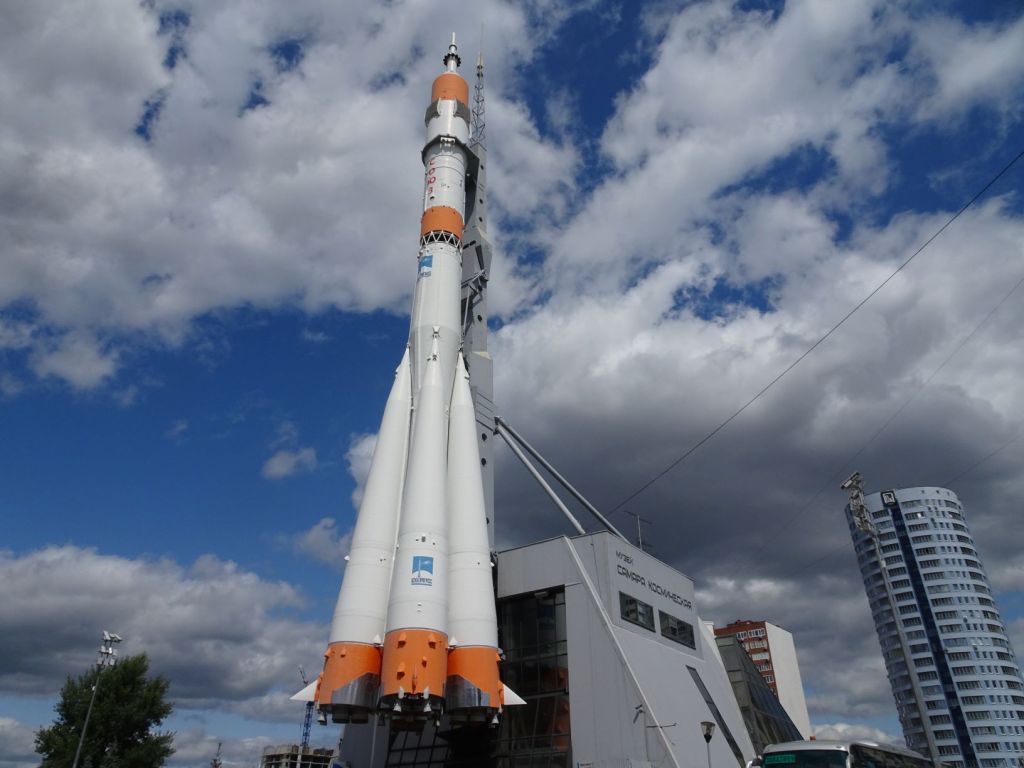
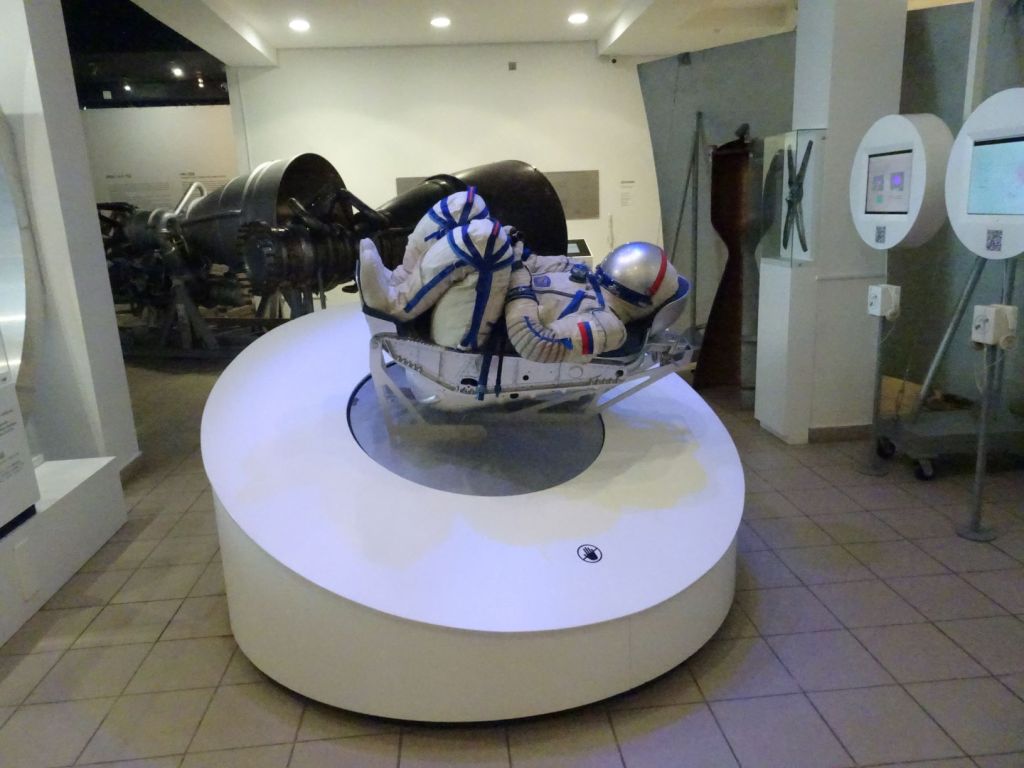
These rockets were build in Samara. Yuri Gagarin was the first human being to journey in to outer space and complete one orbit of Earth on 12 April 1961.
This was his position during take off and landing.
The day was rounded off with a boat tour on the mighty Volga river.
This was our last day in Russia; tomorrow we will cross the border to Kazakhstan.
 Central Asia Roadtrip