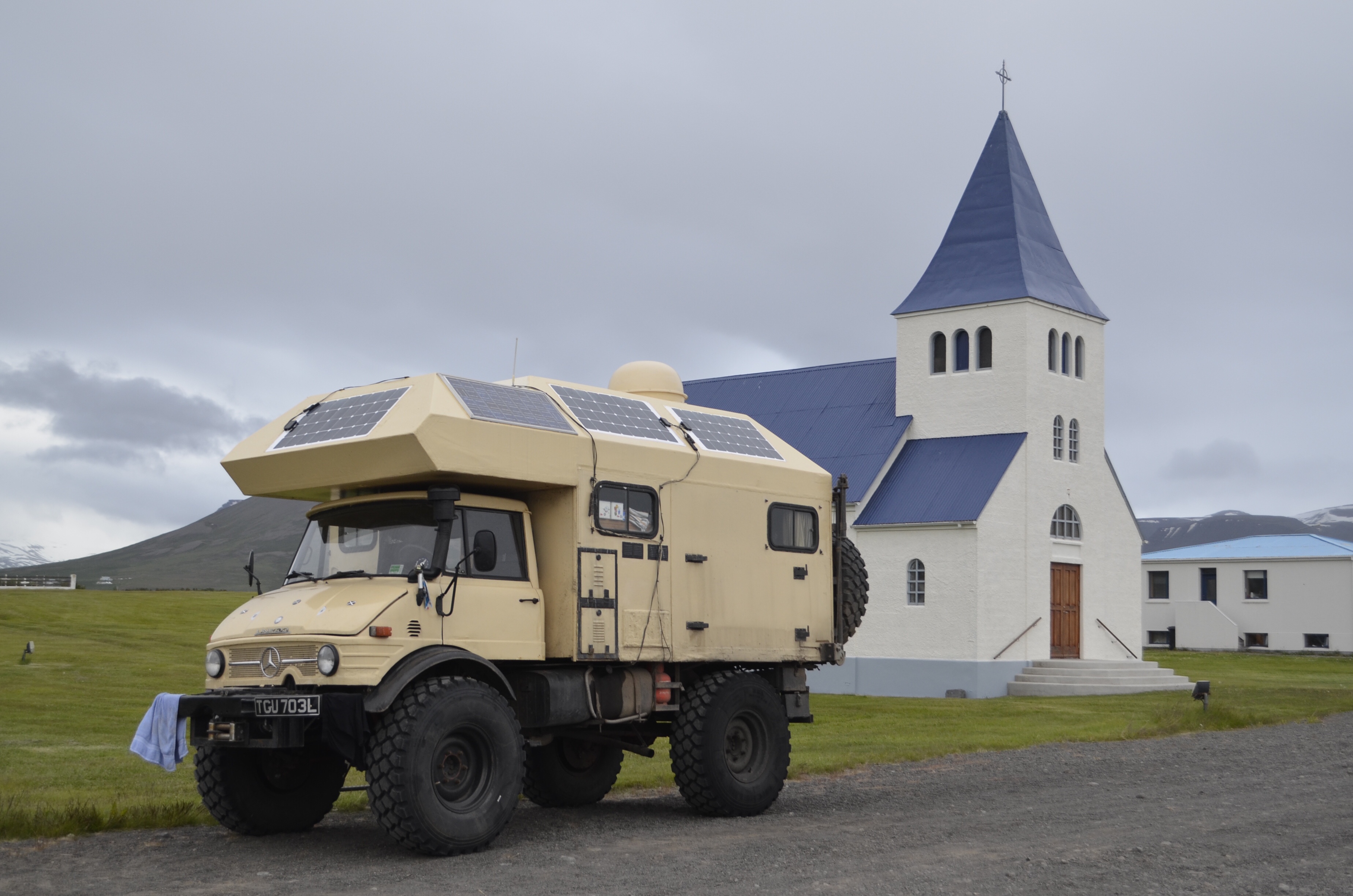
 This is our Unimog 416 as it was.
Getting ready for the road trip to Central Asia the gear box oil was changed by Atkinson Vos to see this come out: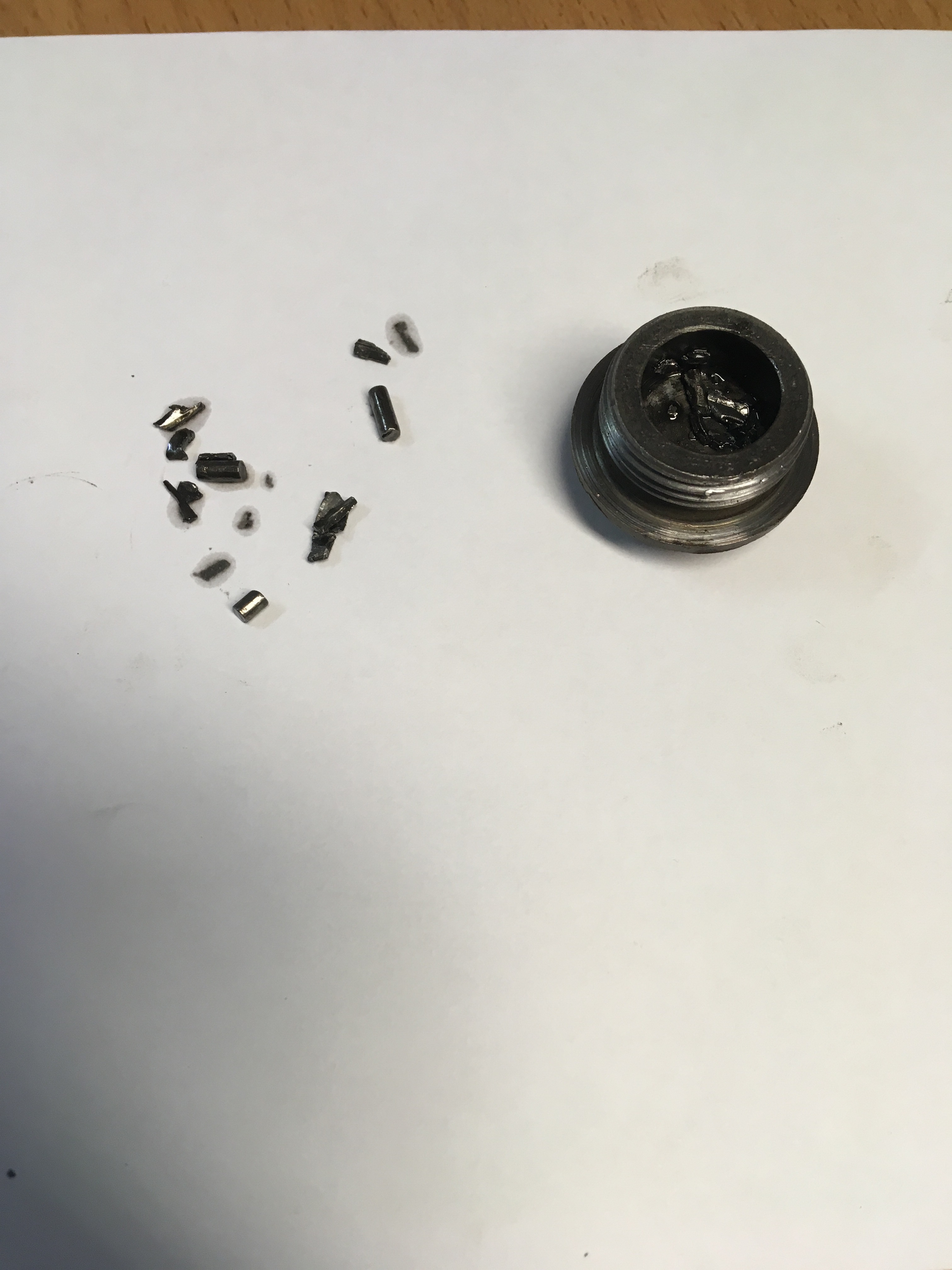
Little metal bits; that could not be right!
To check the gear box, the driver’s cab had to be tilted; not possible because of the overhang.
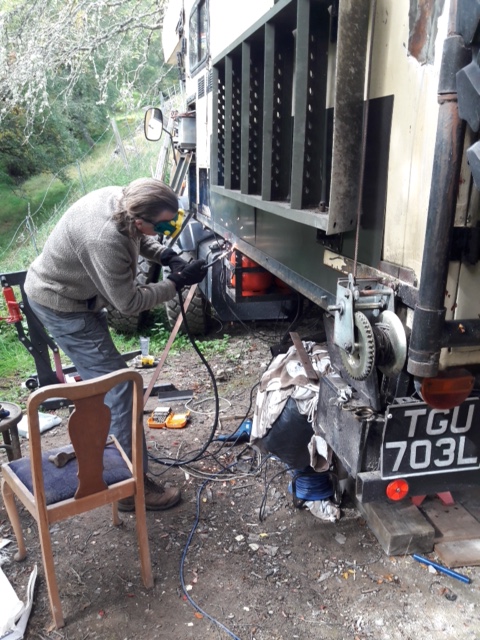
So the overhang was cut off: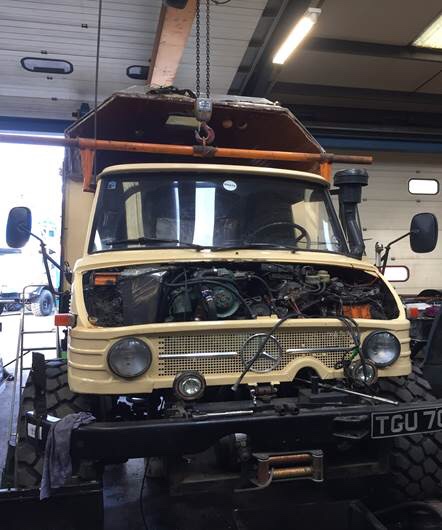
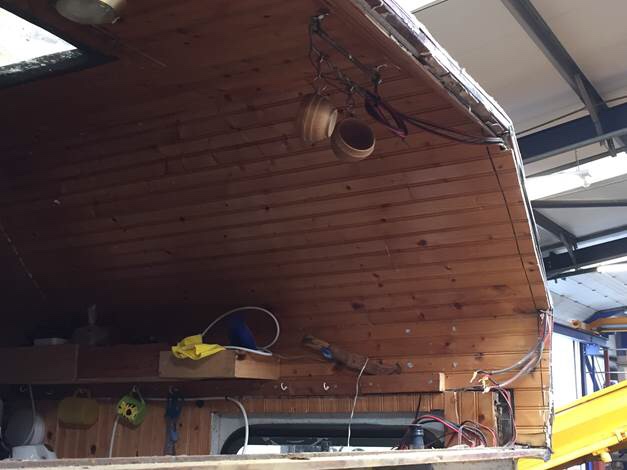
Gearbox was replaced and the stump of the amputated Mog was sealed; rusty panels cut out, and a bit of paintwork:
Ready to go!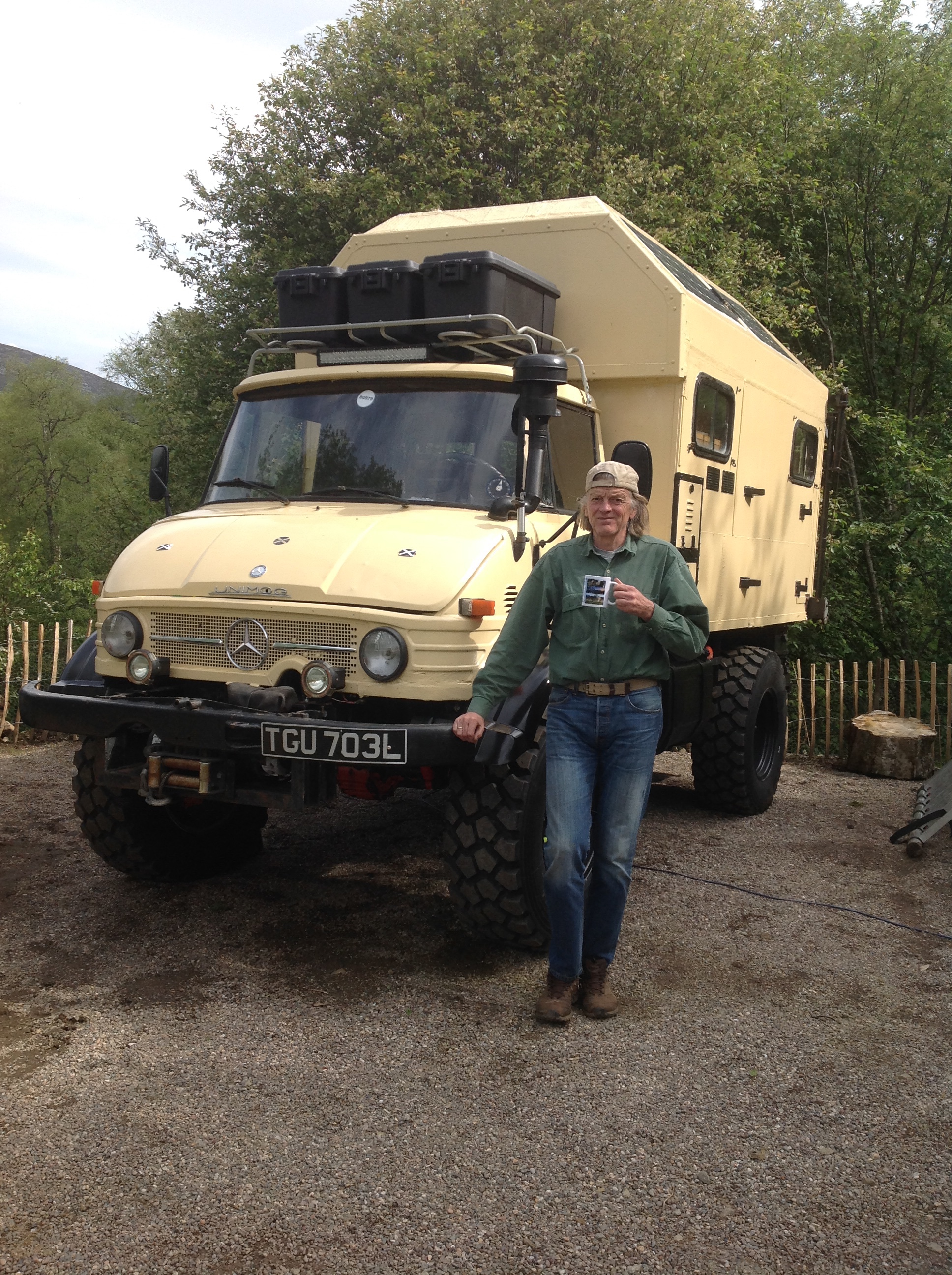
Where we are from
Our starting point is our home in the Central Highlands of Scotland. Their place in history was determined by the resistance of ancient tribes against foreign domination:
Long before England and Scotland came in to being, our Isles were inhabited by a range of Celtic tribes. When they invaded 50AD, the Romans called the country Brittannia, and its inhabitants The Britons.
The tribes in the very north of Britannia including the Central Highlands were named the Caledonii (the hard ones). A federation of Caledonian tribes, the Picts (the painted ones) stopped the advance of the Romans north of the line between what we now know as Edinburgh and Glasgow.
The notion of Scotland emerged only after the Romans had left and the Scotii from Ireland established settlements along the West Coast. They merged with the Picts during the eight and ninth centuries to produce the first Scottish Kings.
In the mean time, the Anglo Saxons had arrived from Germany and Denmark in East Anglia making their way west and north, displacing and absorbing the Britons. The only people that can still be recognised as Britons today are the Welsh (the aliens) in Wales (the alien land).
Like the Romans, the English found it hard to penetrate and dominate the lands north of the Hadrian wall. Scotland considered itself equal but different to England until the Union three hundred years ago. Even today there are marked differences between Scotland and England in terms of their culture and societal beliefs.
Where we are going
The trip is an organised tour with 10 campers. We will not travel together but will finish at a common destination every day and camp as a group. The group comes together for the first time in Latvia 19/7, and will travel for 95 days:
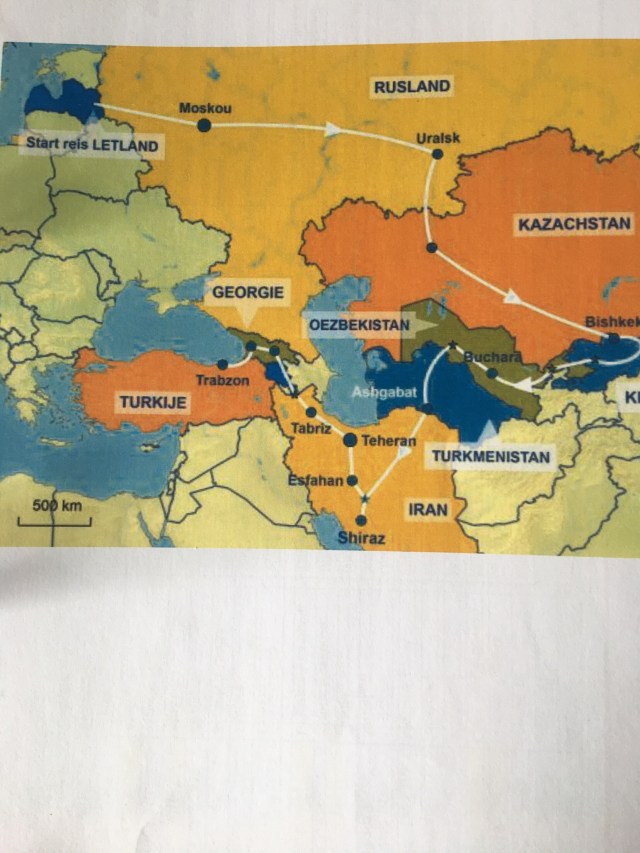
To get to the start we first have to travel from Scotland to Latvia. We will say goodbye to family in the Netherlands and then make our way through Germany, Poland, and Lithuania to Latvia where we meet the group a few miles from the Russian border.
The trip will take us through countries with a long history we know little about. At school we learned about the Greeks and the Romans as the first civilisations of Eurasia. The Persians are only mentioned as the barbarics that the Greek city states waged war against but not much more. The Greeks used the word barbaric as they could not understand the Persian language which they gave the phonetic caricature of “barbar”.
In reality, the Persian, better named the Iranian, Empire predated the Greek city states and was much more impressive and extensive than even the Roman Empire in its prime. The Iranian Empires had an enormous influence on the cultural and religious development of the classical civilisations in the Mediterranean.
The first Iranian Empire, the Achaemenid Empire, was founded by Cyrus the Great in 550BC. It became larger than any previous empire in the world and stretched from the Balkans in the West to the Indus Valley in the East. It was the antagonist of the Greek City States and had enormous cultural, social, technological and religious influence.
The Achaemenid Empire was overrun by Alexander the Great in 330BC. After his death in 323BC, the territory was divided between his generals under the umbrella of the Seleucid Empire. The Iranian elite regained control from their Hellenistic overlords when the second Iranian Empire, the Parthian Empire was founded in 247BC.
The Third Iranian Empire, The Sassanid Empire, came about from a rebellion by a local Shah (king) in Firuzabad, South West Iran in 224AD. The Sassanian Empire is also called the neo-Persian Empire because it represents a second highlight of social, cultural and religious influence in the classical world. Eventually, it was overwhelmed by the spread of Islam in 651AD.
Zoroastrianism was the state religion of the three Iranian Empires over a period of more than a thousand years. Zoroaster, also known as Zarathustra, was a prophet who may have lived sometime in the second millennium BC. This makes the religion one of the oldest religions in the world, still followed by some 300.000 people today. It is mono-theistic and based on a dualistic world view of good and bad, where the good will eventually win over the bad. Man has a free will and is accountable for their actions after death. These characteristics together with the notion of judgement after death with access to heaven or hell contributed to the formation of later religions such as Christianity, Judaism, Islam, and Buddhism.
On our journey we will travel through more countries which were part of some incredible empires over the years. We will complement our travel blog with these countries’ back ground history as we go along.
Monday July 8th
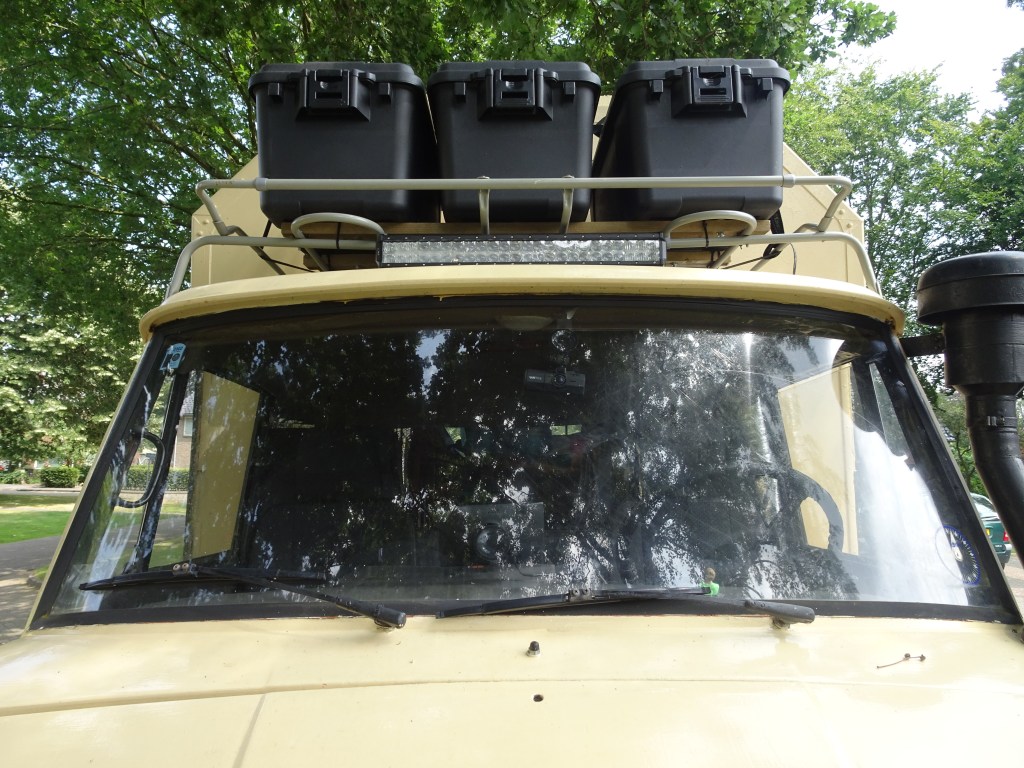
At the very start, late Monday evening, the boxes on the roof rack came off. Good piece of engineering… We put them in the cabin and drove our first 3 hours to stop on a parking lot on the M73 south of Glasgow. First use of floodlights to read the payment instructions for the overnight parking.
Tuesday July 9th
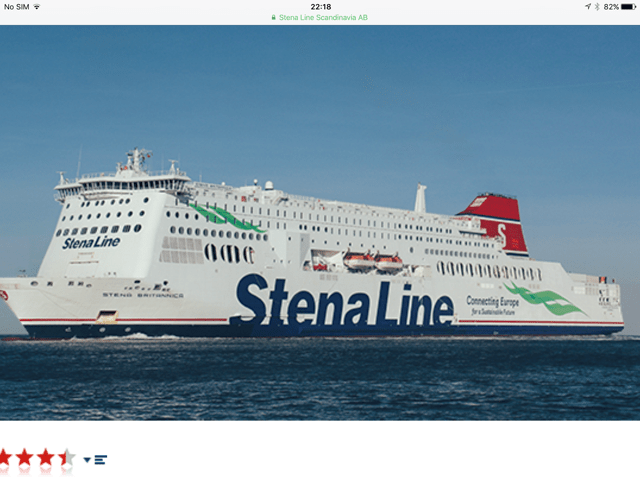
A most horrific downpour when going through the Scottish Borders; rain enters the drivers cabin through connection with living quarters. Water still coming out hours later when taking petrol. Drive to Harwich total 856km. Apparently, the ferry between Harwich and Hoek of Holland is the largest in the world.
Wednesday July 10th
Arrived in Hoek van Holland. Met some dear Dutch family members on a parking lot of a Shell station near Gouda. Indicators repaired; boxes fixed but not working, they keep sliding.
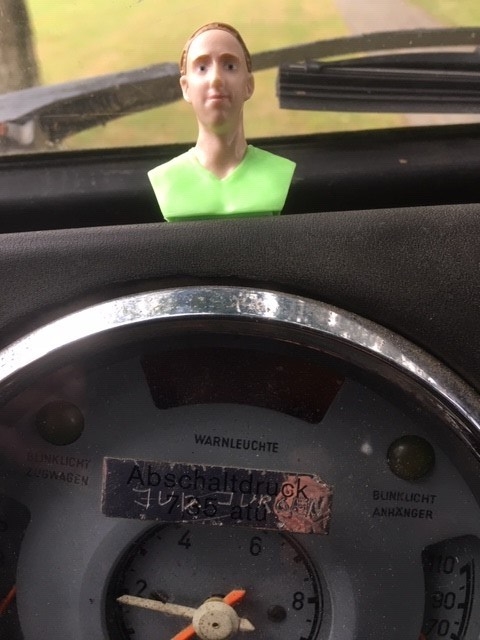
Overnight parking on a farm of friends in Luxwoude. Their old pony is happy to see us. Holland is still in thrall of the achievements of the lady’s football team who came second in the world cup a week ago. There is a real ladyfootballmania! This is the goalie, Sari van Veenendaal, who received the golden glove as the best goalie of the tournament:
Thursday July 11th
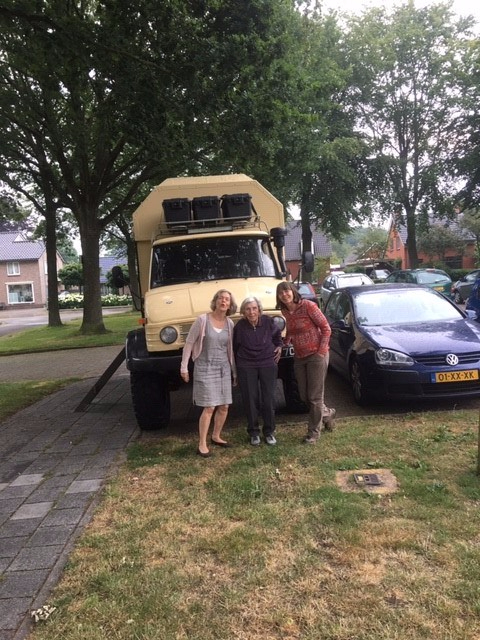
More goodbyes! Our 94 year old mother is very impressed with the Mog. We are in Zuidlaren, near the city of Groningen.
Friday July 12th
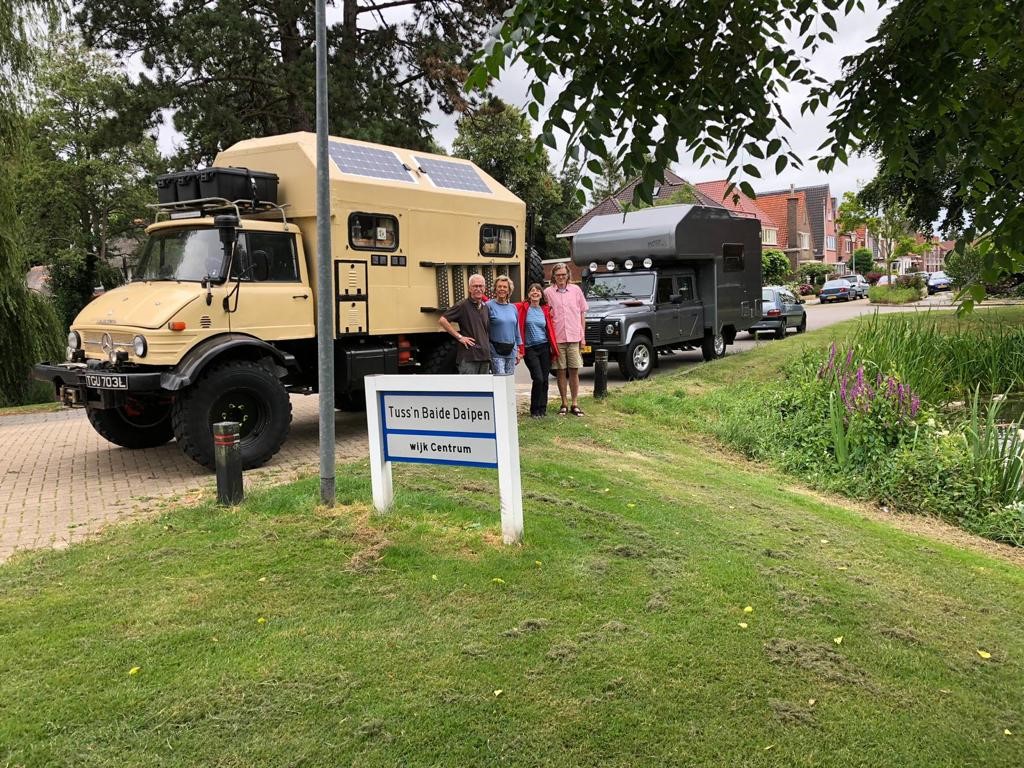
This was our last day in the Netherlands. We are joined by our friends from Veendam who will join the trip with their beautiful Landrover Defender.
Saturday July 13th
Day starts with a break of the hand gas cable of the Mog. Fixed with a break cable from a bike shop in Veendam.
First stop is Magdeburg in former Eastern Germany. We find a great camper spot on the river Elbe.
Magdeburg is famous for the ‘Magedburg hemispheres’. You find them everywhere in the city. Some may remember from their physics lessons at school that if you place the hemispheres together and suck the contents empty, not even two teams of horses pulling in opposite directions will be able to pull them apart.
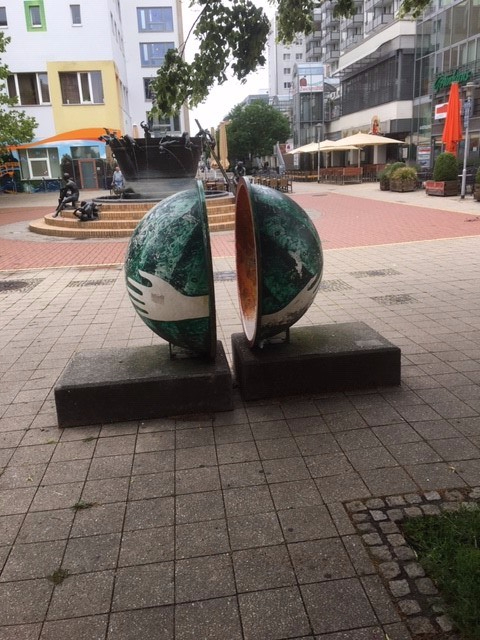
Sunday July 14th
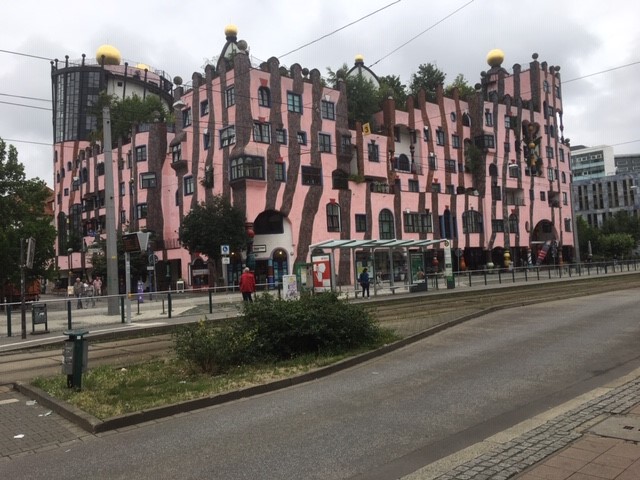
Before we leave Magdeburg we visit the famous Hundertwasser House, ‘Die Gruene Zittadelle’; with the communist regime gone, another playful lifeway is being proposed by this famous architect.
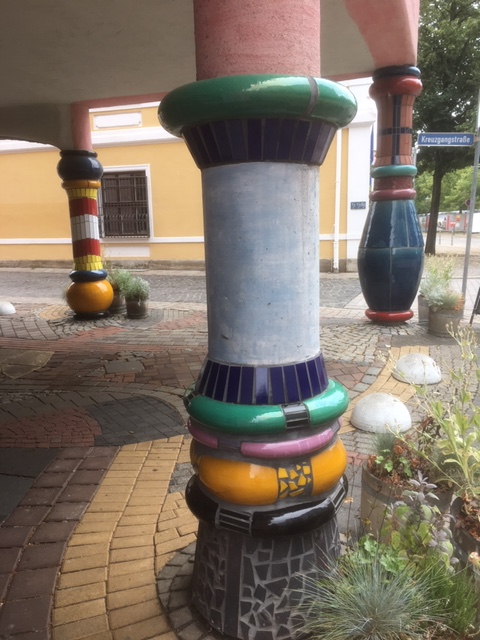
The pillars are wonderfully colourful and make for great knitting inspiration. Watch this space….
We came across these tiles on the streets of Magdeburg:
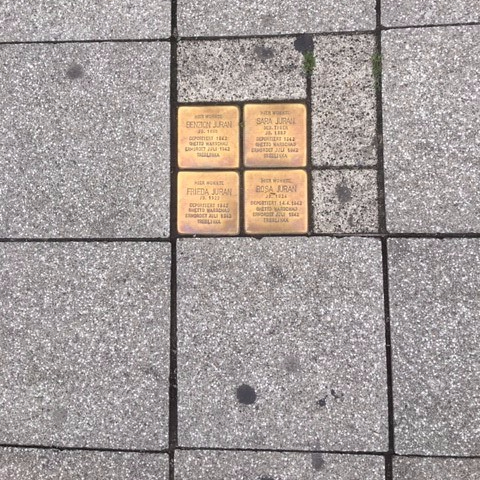
You see these tiles in other European countries also; the names are from Jewish people who lived on the address until they were deported during the second world war, not to come back. Germany has these tiles too and is very open and reflective on its past. When we were young students during the early seventies, our German peers were very confused and depressed about the war. Their parents were so traumatised by events that the subject was not discussed at home. But now people are trying to think it through and somehow come to terms with events. Angela Merkel, herself from East Germany showed the state of mind of her compatriots when she took a very welcoming attitude towards refugees coming to Germany.
On to Poland. When taking diesel near Poznan we noticed a drip under the car.
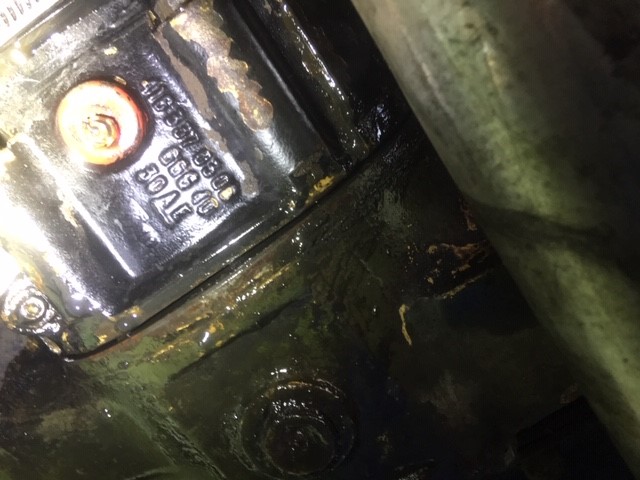
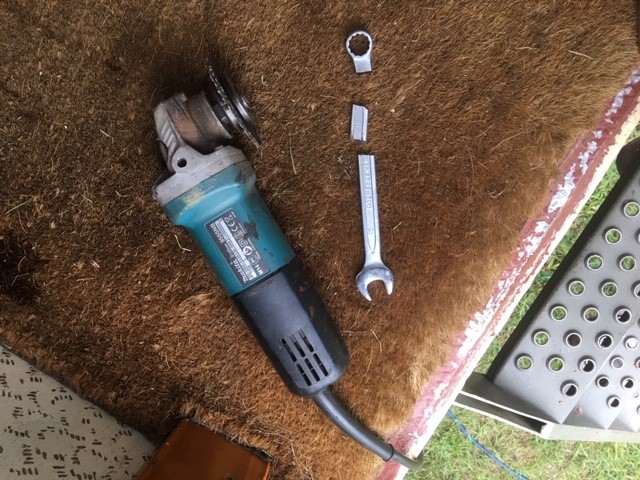
The gearbox was trying to leave the engine. A gap of 3 millimetres had appeared; all the bolts were loose. We could fasten these with the tools we had but one was difficult to reach. Good to take a grinder on your trip.
Monday July 15th
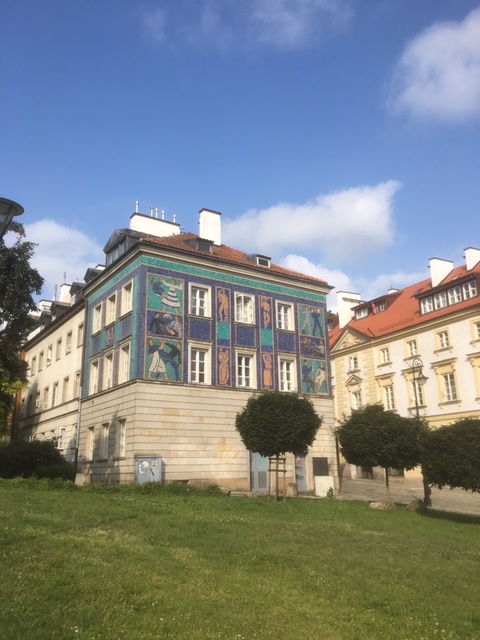
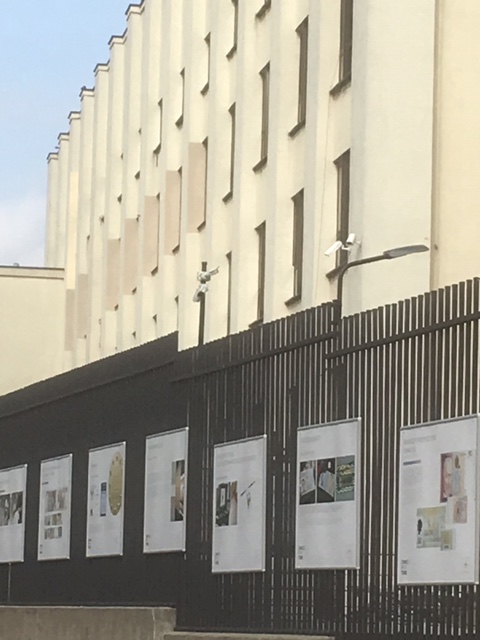
From Poznan to Warsaw. The camper place was just 5 minutes walk from the city centre. Beautiful city centre with magnificent buildings, largely restored during the 1950s, during the time of communist overlordship.
Tuesday July 16th
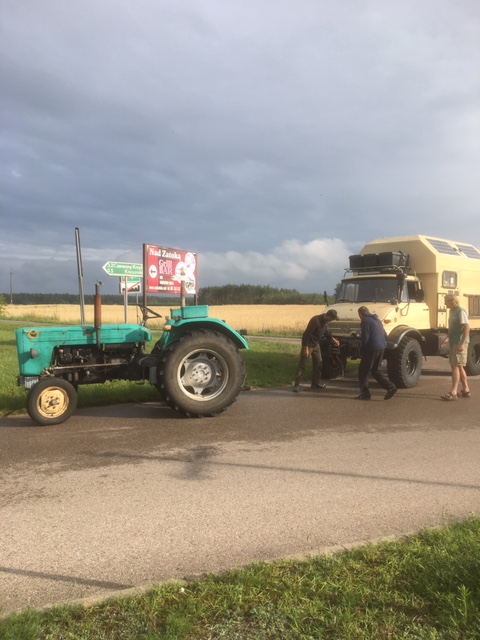
We left Warsaw for Bryzgiel. Just when we arrived at the campsite, the Mog decided it would not start. Some friendly local farmers helped us out. Problem had been that the electromagnetic coil of the starter motor got stuck.
Wednesday July 17th
On to Lithuania. Because the Mog weighs >3.5 tonnes, we had to pay road tax (38 Euros). The tax office at the border showed us what birdlife to expect.
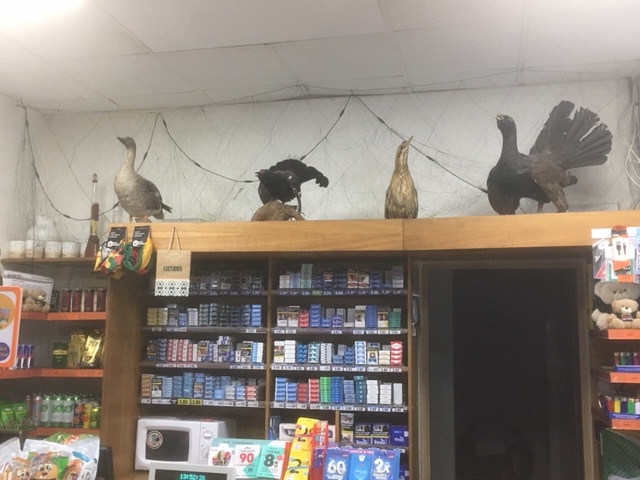
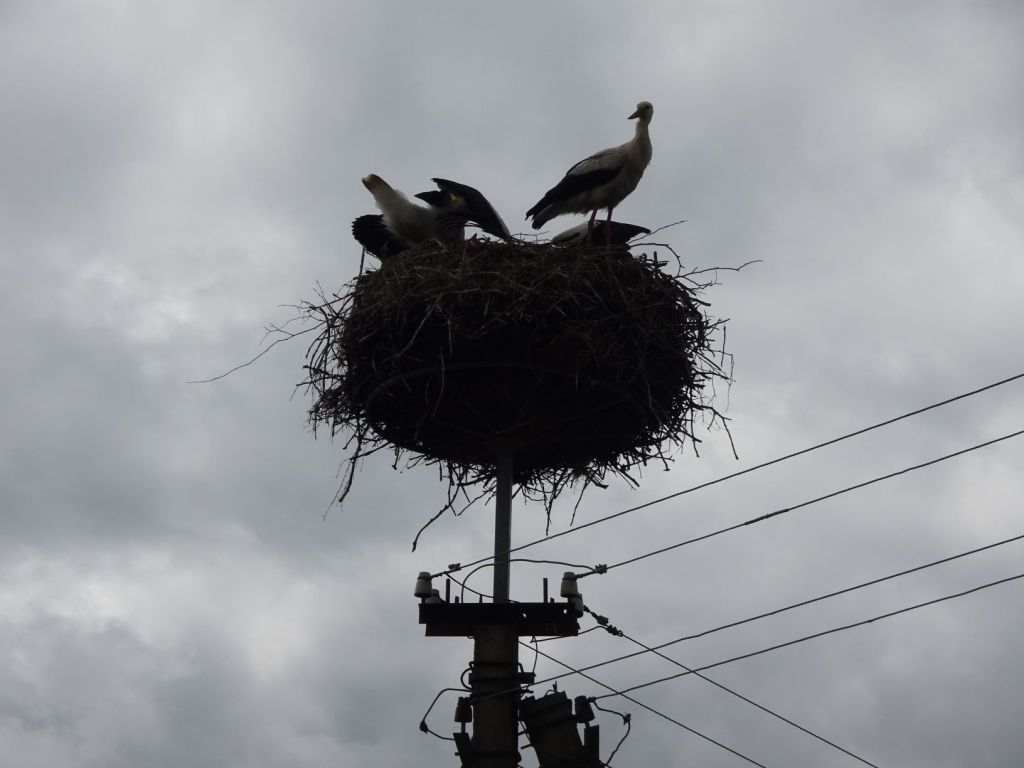
Not unlike what you might also find in Scotland. But we also saw these fellows:
Thursday July 18th
Stayed the night in Vilnius. Walked round the city the following morning. It has a nice city centre with many churches for different kind of faiths; a splendour of diversity which was a hallmark of the Polish-Lithuanian Commonwealth (1569-1795).
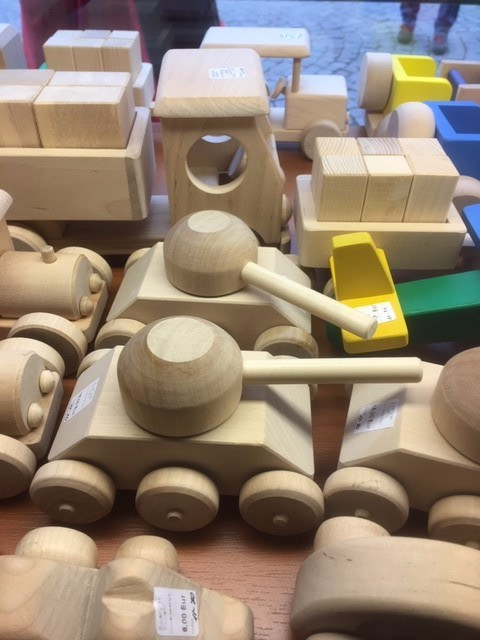
Also some strange children’s toys:
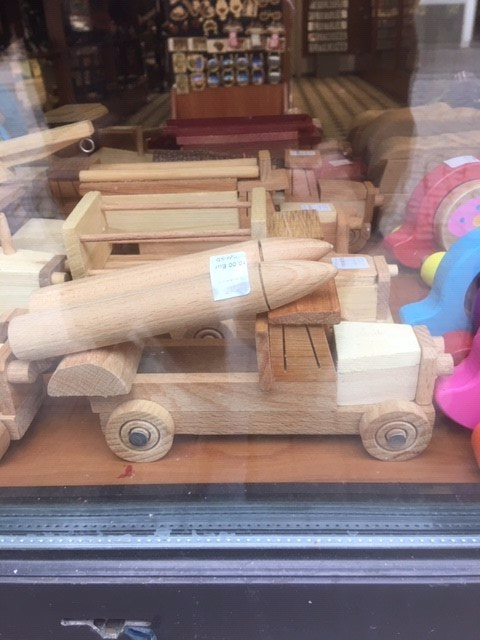
Or would you give these to your kids?
Finished the day on a wonderful campsite near Utena, close to the Latvian border. We have now driven >3000 km since we left Scotland.
Friday July 19th
Today we woke up with beautiful weather, and drove across Latvia to Terehova, the border post with Russia, Sari van Veenendaal looking after the Mog all the way.
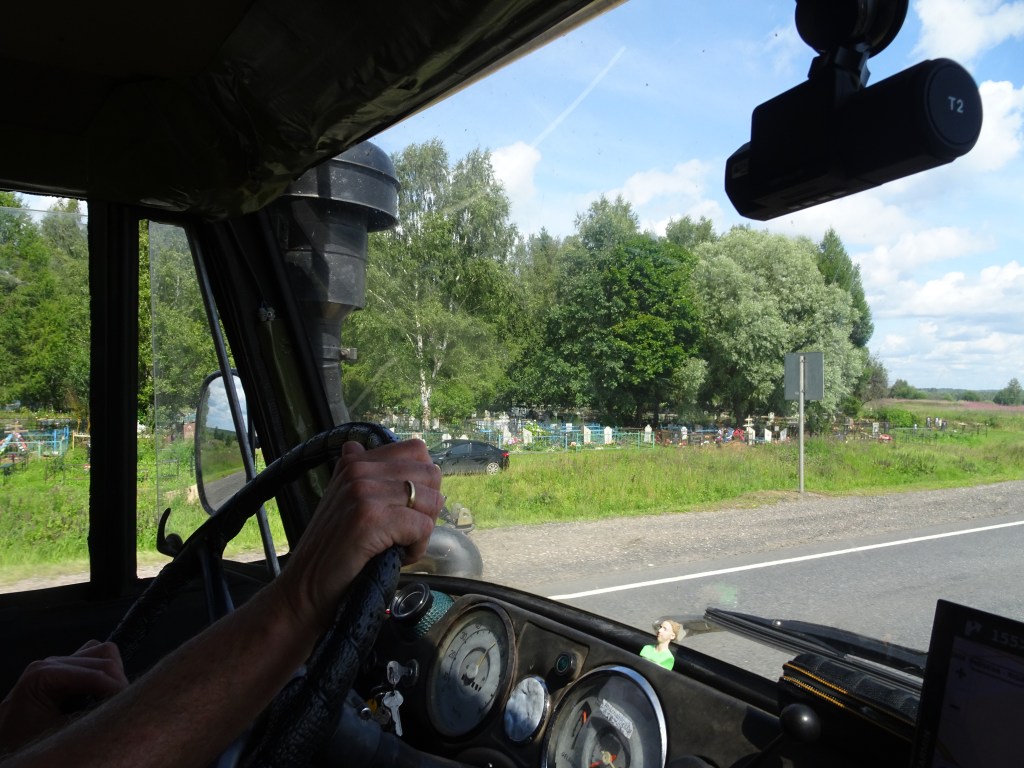
We meet up with the other travellers at Café Texas, a very basic place. We are the last to arrive; all the others are there. The big journey can now begin.
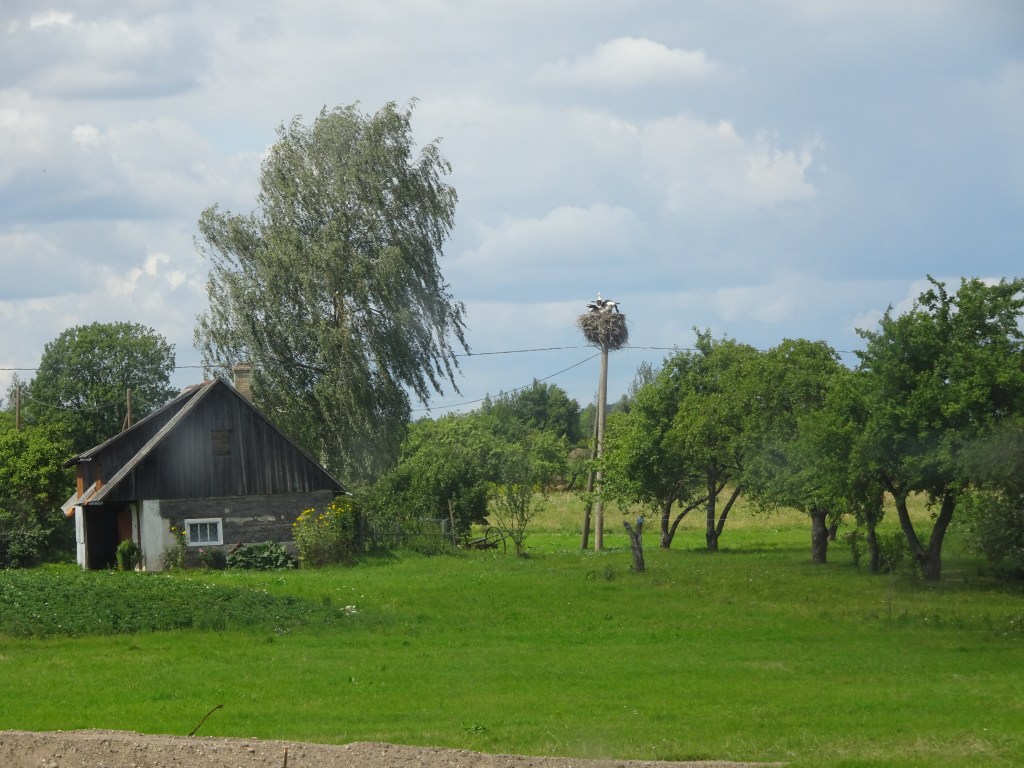
Just some final thoughts before we leave the countries of the European Union (at least for the time being). The landscape changes since we left Holland have been interesting: from the highly structured and organised agricultural lands of Holland and Germany we moved into increasingly rural landscapes and increasingly wooded areas. Especially east of Warsaw and into Lithuania we started to see a landscape that we imagine may have existed in the UK and Scotland too at some time in the past. Cultivated fields are interspersed with woodland and with flower meadows. Clearly there are different owners of these lands, but there are no fences, no clear boundaries. The landscape just flows seamlessly without interruptions. There are no high structures, no longer the large wind mills that dominated in Holland and Germany and the western part of Poland. Now the highest structures are the stork nests on top of the power lines. The woodlands are glorious with so many different species of trees, rowan, birch and spruce and pine as we are used to at home, but also elm, lime, oak, beech, cherry and many types of fruit trees. Here every house has a big wood pile, a vegetable garden and an orchard.
 Central Asia Roadtrip